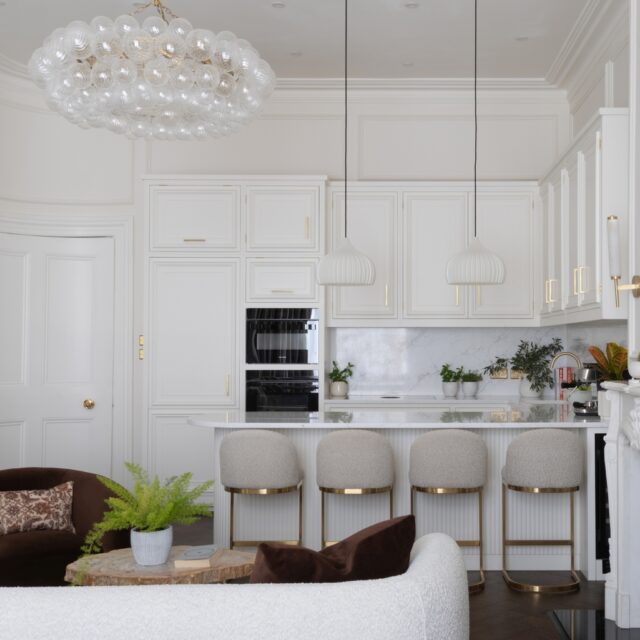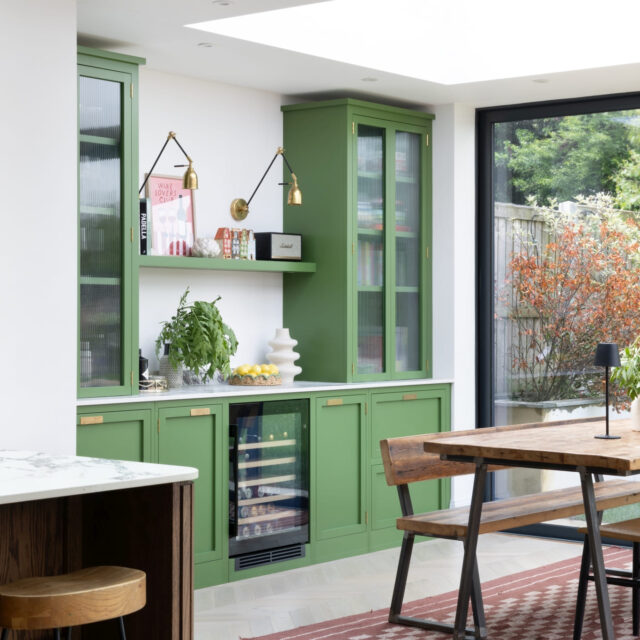

The distinction between a kitchen designer and a kitchen showroom matters more than most buyers realise when they begin a kitchen project. The two are not the same thing, and confusing them can lead to a process that feels like a design experience but produces something closer to a product selection.
Understanding the difference helps you choose the right kind of partner for your project. At Higham Furniture, we work as a kitchen designer and maker, not as a showroom. This article explains what that difference means in practice.

What a Kitchen Showroom Is
A kitchen showroom is a retail environment where you can see kitchen designs on display and select products from a range. Showrooms vary enormously in quality, from high street chains with hundreds of display options to premium independents with carefully curated displays and design consultants.
In a showroom-based model, the process typically begins with a showroom visit, moves through a design process led by the showroom’s range, and results in the selection of products from that range. The design work is done in the context of what the showroom sells. If your room has an unusual feature or an awkward dimension that the standard range cannot accommodate cleanly, a showroom is constrained in how it can respond.
Showrooms have significant overhead costs: retail space, display kitchens that need updating, showroom staff, and the physical presence in locations that drive footfall. These costs are reflected in the pricing of everything the showroom sells.
What a Kitchen Designer Is
A kitchen designer starts from your space and your brief, not from a product range. The design is generated by the requirements of the room and the priorities of the client, not by what happens to be available in a showroom.
In a genuine kitchen design practice connected to its own manufacturing, the designer is not constrained by standard sizes, standard configurations, or a range. Unusual dimensions are accommodated by making the cabinetry to the required size. Architectural features are worked with rather than around. The outcome is a kitchen designed for a specific room rather than a room fitted with a selected product.
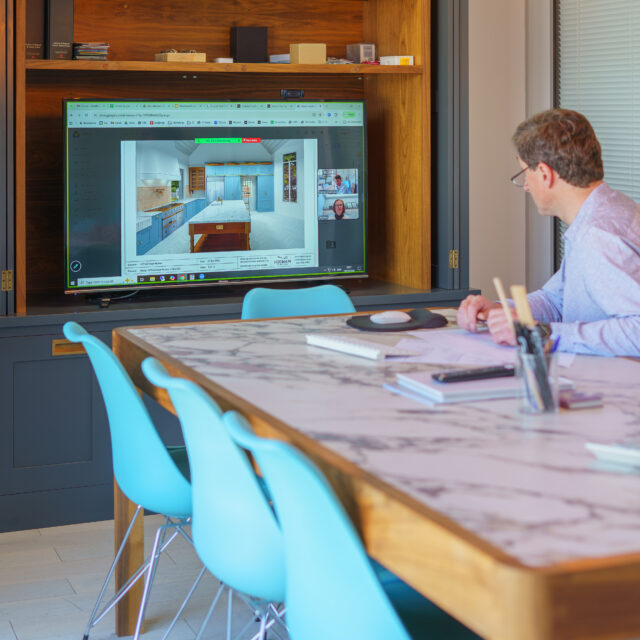
At Higham Furniture, the design process begins with a private 30-minute call with a senior designer, not a visit to a showroom. There is no display to walk around, and there is no range to select from. The design is generated from your room. For more on how the design process develops from that first call, see our article on what happens during a kitchen design consultation.
The Implications for Your Project
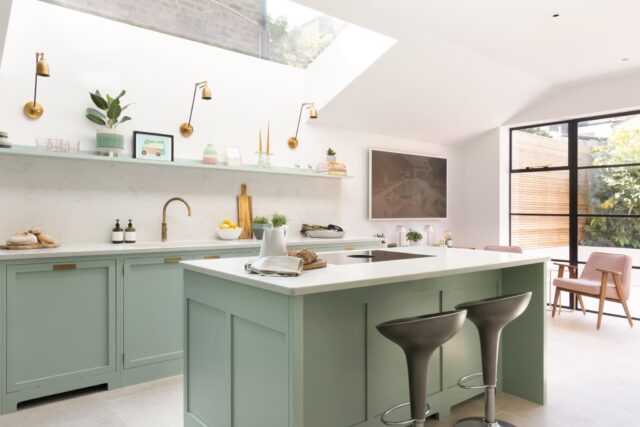
The difference between a showroom and a designer-maker has practical implications for your project. A showroom-based kitchen will be assembled from standard units sized to fill your room as closely as possible, with filler strips used to close gaps. A kitchen designed and made for your room will fit it exactly.
The overhead difference also matters. A company without a showroom does not carry the cost of retail space and display kitchens. At Higham Furniture, the absence of a showroom means those overhead savings are available to invest in the quality of the cabinetry itself. Clients receive more kitchen for their investment compared to what a showroom-based company at a similar quality level would charge.
Which Is Right for Your Project?
If you are looking for a product from an established range, selected from a display, at a competitive price point, a showroom is an appropriate choice. If you are investing in a kitchen designed and made specifically for your home, by makers who control the full process, a designer-maker is the right partner.
Book a design call with Higham Furniture to experience the difference.

Frequently Asked Questions
Do I need to visit a showroom to design a bespoke kitchen?
No. Higham Furniture’s process begins with a private 30-minute design call. There is no showroom to visit. The design is developed from your room and your brief, through measured survey, 2D and 3D design, and a review process with you until the design is right.
Is a kitchen designer more expensive than a kitchen showroom?
Not necessarily. Showrooms carry significant overhead costs that are reflected in their pricing. Higham Furniture operates without a showroom, which means those overhead savings are passed to clients in the form of a better quality of cabinetry at a comparable price point.
What are the advantages of working directly with a kitchen maker?
Direct access to the makers means no communication gaps between designer, manufacturer, and installer. It means accountability sits with one team. It means changes during the design process are handled by the people who will build the kitchen. And it means the kitchen is designed to your exact specifications rather than selected from a range.
Can a kitchen showroom produce a genuinely bespoke kitchen?
Some showrooms work with bespoke manufacturers and can produce genuinely bespoke cabinetry. Others cannot. The key question is whether the company manufactures its own cabinetry or buys it in from a manufacturer. This determines whether bespoke in the company’s language means designed from scratch for your room or selected and adjusted from a standard range.
How do I know if a kitchen company is a designer-maker or a showroom?
Ask whether they have their own workshop and whether you can visit it. Ask where the cabinets are made and who makes them. A genuine designer-maker will answer both directly and welcome the interest. A showroom that buys in cabinetry will give less direct answers.
Written by the Higham Furniture design team. Higham Furniture is an award-winning cabinetmaker based in Denmead, Hampshire, with a design studio in Fulham, London. Tim Higham and his team have been designing and building bespoke handmade kitchens for discerning homeowners across London and the South East.