Renovating a kitchen in a listed building involves a set of considerations that do not apply to standard kitchen projects. The planning framework, the sensitivity of the work, and the nature of the space all require a more careful and informed approach than a kitchen renovation in an unlisted property.
At Higham Furniture, we have experience of kitchen projects in listed buildings, and we understand the constraints and opportunities they present. This guide covers the key planning and design considerations.

Do You Need Listed Building Consent?
Listed building consent is required for any works that affect the character of a listed building, both internally and externally. Internal alterations, including kitchen installation, are within scope. The test is whether the works would affect the special architectural or historic interest of the building.
In practice, this means that removing original features, altering historic fabric, or making changes that are not reversible may require consent. A kitchen installation that does not involve structural alteration, does not remove original features, and is reversible in principle may not require consent, but this depends on the specific building and the local planning authority’s interpretation.
The safest approach is to consult your local planning authority before beginning any work. The consequences of carrying out unauthorised works on a listed building are significant, and it is not worth the risk. This is not a step to skip in the planning process.
Working with Original Features
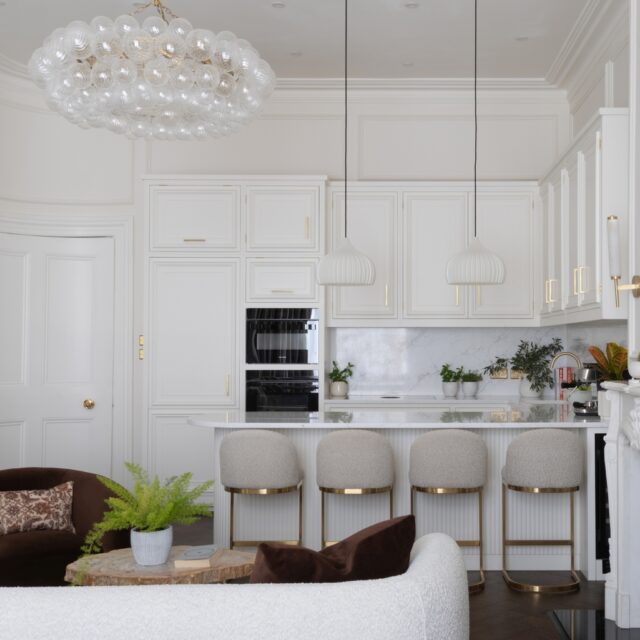
Listed buildings typically have original features that define their significance: fireplaces, original joinery, historic floor materials, panelling, and original structural elements. The kitchen design must work with these features rather than removing or concealing them.
A chimney breast in the kitchen of a listed building may not be able to be removed or significantly altered. It can, however, become an anchor point for the kitchen design, housing a cooking range or providing a focal point around which the cabinetry is organised. For more on how to work with original features, see our guide to the best kitchen design for a period property.

The Case for Bespoke Cabinetry in Listed Buildings
Standard kitchen units are at their least suited to listed buildings. Irregular wall angles, historic floor levels that do not run true, original features that create unusual dimensions, and ceilings that do not conform to standard heights all require cabinetry that can be designed and built to the exact conditions of the room.
Bespoke cabinetry is not simply preferable in a listed building. It is often the only way to produce a kitchen that fits the room correctly without creating the kind of visual compromise that damages the character of the space.
Material and Style Choices
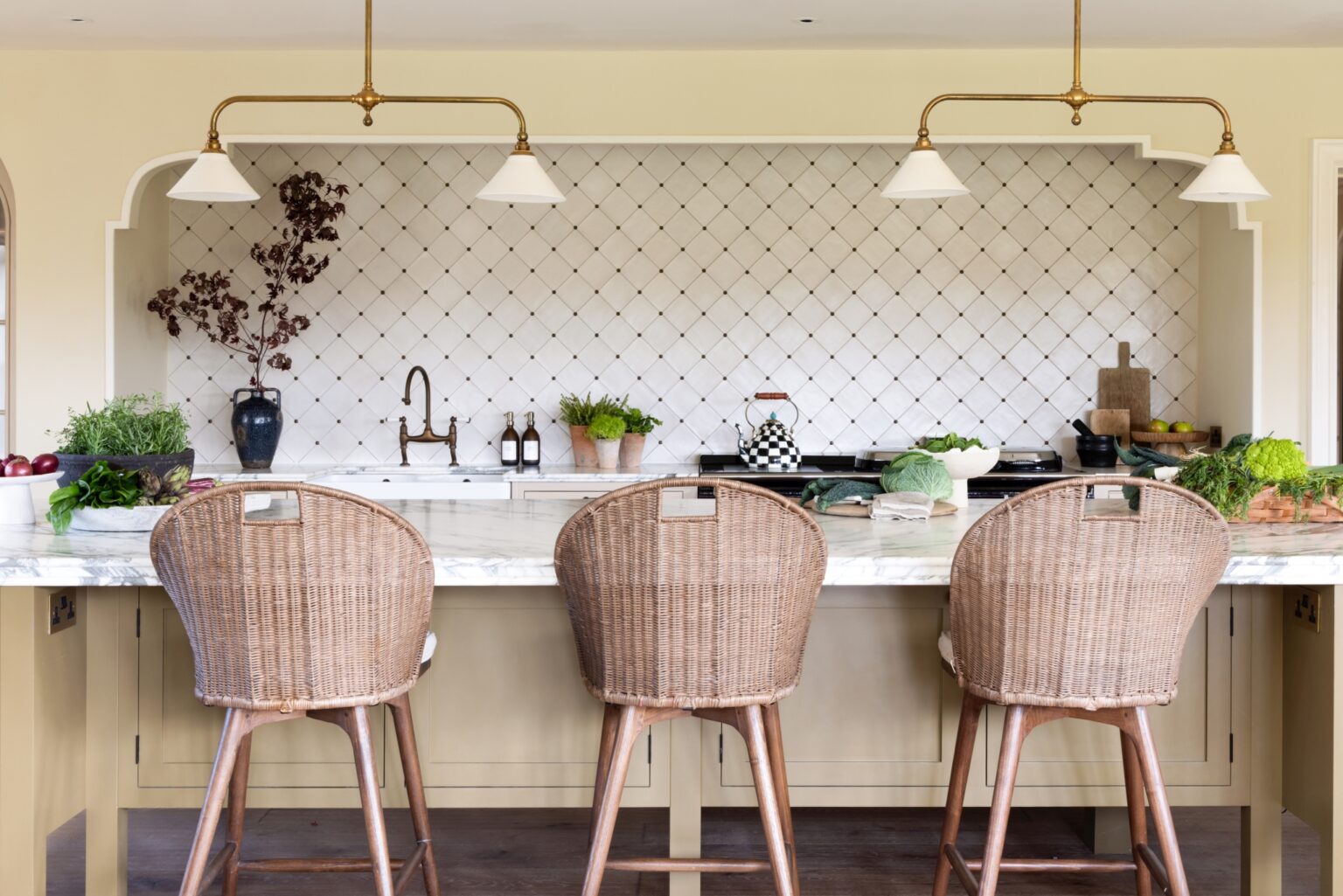
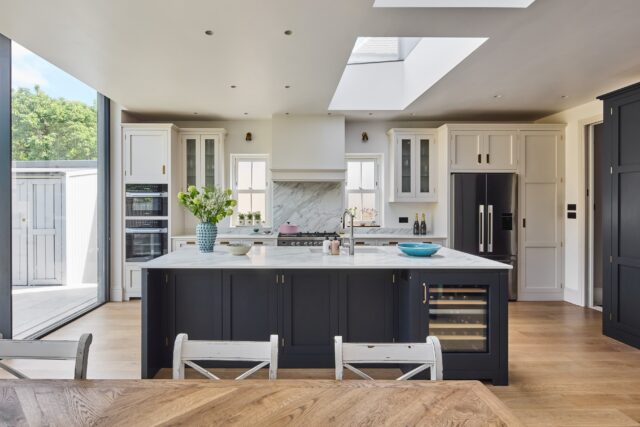
Listed buildings benefit from kitchen styles and materials that respect the character of the building. Shaker and in-frame styles, hand-painted in considered tones, sit well in historic interiors. Contemporary handleless styles can be appropriate in some listed buildings but require careful consideration of how the visual language relates to the historic fabric of the building.
Material choices, particularly for worktops, should be considered in relation to the existing palette of the building. Natural stone, solid timber, and Corian all have precedents in historic interiors. Highly polished or very contemporary surface materials can look incongruous in a genuinely historic space.
Starting Your Listed Building Kitchen Project
If you are planning a kitchen in a listed building and want to discuss the specific considerations of your project, book a design call with Higham Furniture. Home visits are available for clients who want a designer to assess the space in person.
Frequently Asked Questions
Do I always need listed building consent for a kitchen renovation?
Not necessarily, but you should always check with your local planning authority before beginning work. The test is whether the works affect the character of the listed building. Structural changes, removal of original features, and irreversible alterations are more likely to require consent than a straightforward kitchen installation that does not alter historic fabric.
Can I have a modern kitchen in a listed building?
Yes, within the constraints of what is appropriate for the character of the building. A kitchen that functions to a fully modern standard can be designed in a style and using materials that respect the historic character of the building. The key is making design choices that are sensitive to the specific building rather than importing a style that conflicts with it.
What kitchen styles work best in listed buildings?
Shaker and in-frame styles, hand-painted in considered tones, work well in most listed buildings. They have the architectural depth and restraint that relates naturally to historic interiors. Very contemporary or minimal styles can be appropriate in some listed buildings, particularly where there is a deliberate design narrative about the relationship between old and new.
Are there restrictions on kitchen worktops in listed buildings?
Worktop choice is not typically restricted by planning conditions in the same way that structural changes might be. The design consideration is whether the worktop material is appropriate for the character of the building. Natural stone and solid timber are the most appropriate choices in historic interiors.
How does bespoke cabinetry help in a listed building kitchen?
Listed buildings frequently have irregular dimensions, historic features that create unusual constraints, and rooms that do not conform to standard proportions. Bespoke cabinetry designed to the exact conditions of the room is the only way to produce a kitchen that fits without visual compromise, which is why standard units are particularly poorly suited to historic buildings.
Written by the Higham Furniture design team. Higham Furniture is an award-winning cabinetmaker based in Denmead, Hampshire, with a design studio in Fulham, London. Tim Higham and his team have been designing and building bespoke handmade kitchens for discerning homeowners across London and the South East.