If you’re deciding between a handleless, shaker, or in-frame kitchen, the honest answer is this: each suits a different kind of buyer, home, and long-term relationship with a space. Shaker kitchens offer timeless versatility and work in almost any property. In-frame kitchens represent the highest construction standard in the industry, a hallmark of fine cabinetmaking. Handleless kitchens deliver clean contemporary lines with a seamless visual finish. At Higham Furniture, our Fulham design studio works with clients across all three styles, every one handmade to order at our workshop in Denmead, Hampshire. This guide cuts through the noise so you can make a confident style decision before your first design conversation.
What Is a Shaker Kitchen and Who Is It Right For?
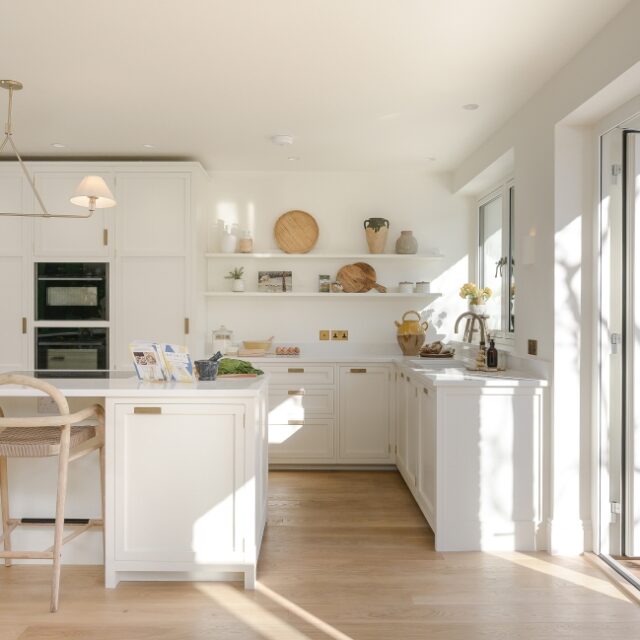
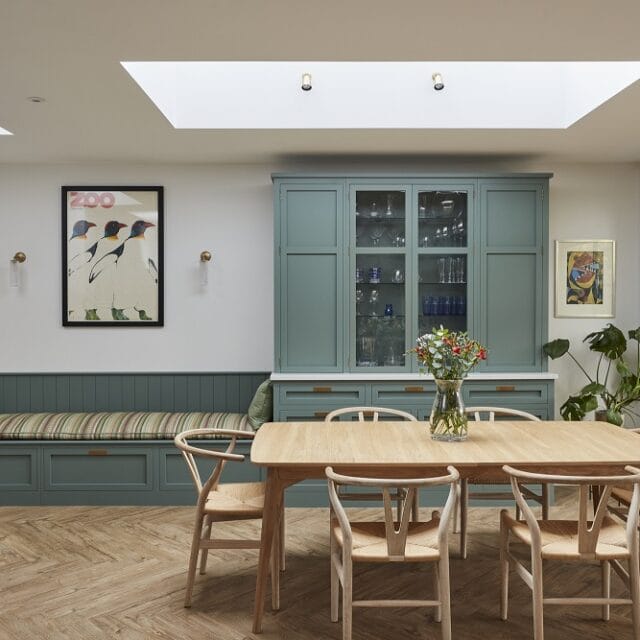
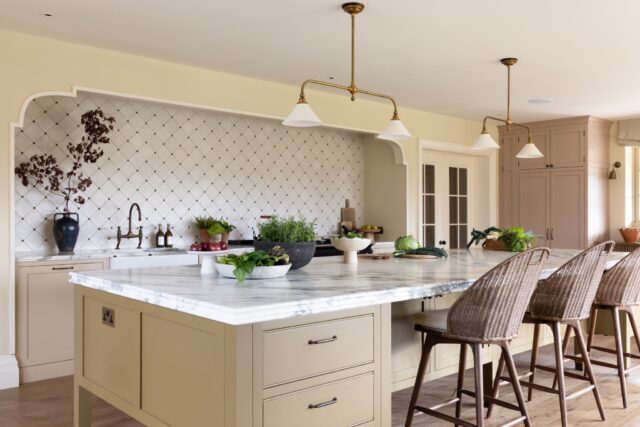
The shaker style is, without question, the most enduring kitchen design in British homes. Its defining features: recessed-panel doors, clean straight lines, and understated proportions — originate from the 18th-century Shaker movement, which prized function, simplicity, and craftsmanship above ornamentation.
What makes the shaker style so enduring is its neutrality. It doesn’t compete with a period property’s original features, and it doesn’t look out of place in a clean-lined modern extension. It works equally well painted in a muted off-white or a deep forest green, dressed with brass hardware or brushed nickel, topped with Carrara marble or with engineered oak. It is the rarest thing in interior design: a style that neither dates nor demands compromise.
At Higham Furniture, the shaker is our signature style. Our Putney Painted Oak Framed Shaker Kitchen won the British Design and Manufacturing Award at the Designerati Awards UK 2025, recognition that reflects the calibre of cabinetmaking at our Denmead workshop rather than the style itself. A shaker kitchen can look ordinary or extraordinary depending almost entirely on who makes it and how.
Who a shaker kitchen suits most:
- Homeowners in Victorian, Edwardian, or Georgian properties who want a kitchen that respects the architecture
- Buyers who value timelessness over trend, the shaker looks as relevant in 20 years as it does today
- Those who want design flexibility: shaker works across colour, hardware, and worktop combinations more readily than any other style
What Is an In-Frame Kitchen, and Why Does Construction Matter?
In-frame is the most important construction distinction in kitchen cabinetmaking, and it’s one most buyers don’t fully understand when they begin their search.
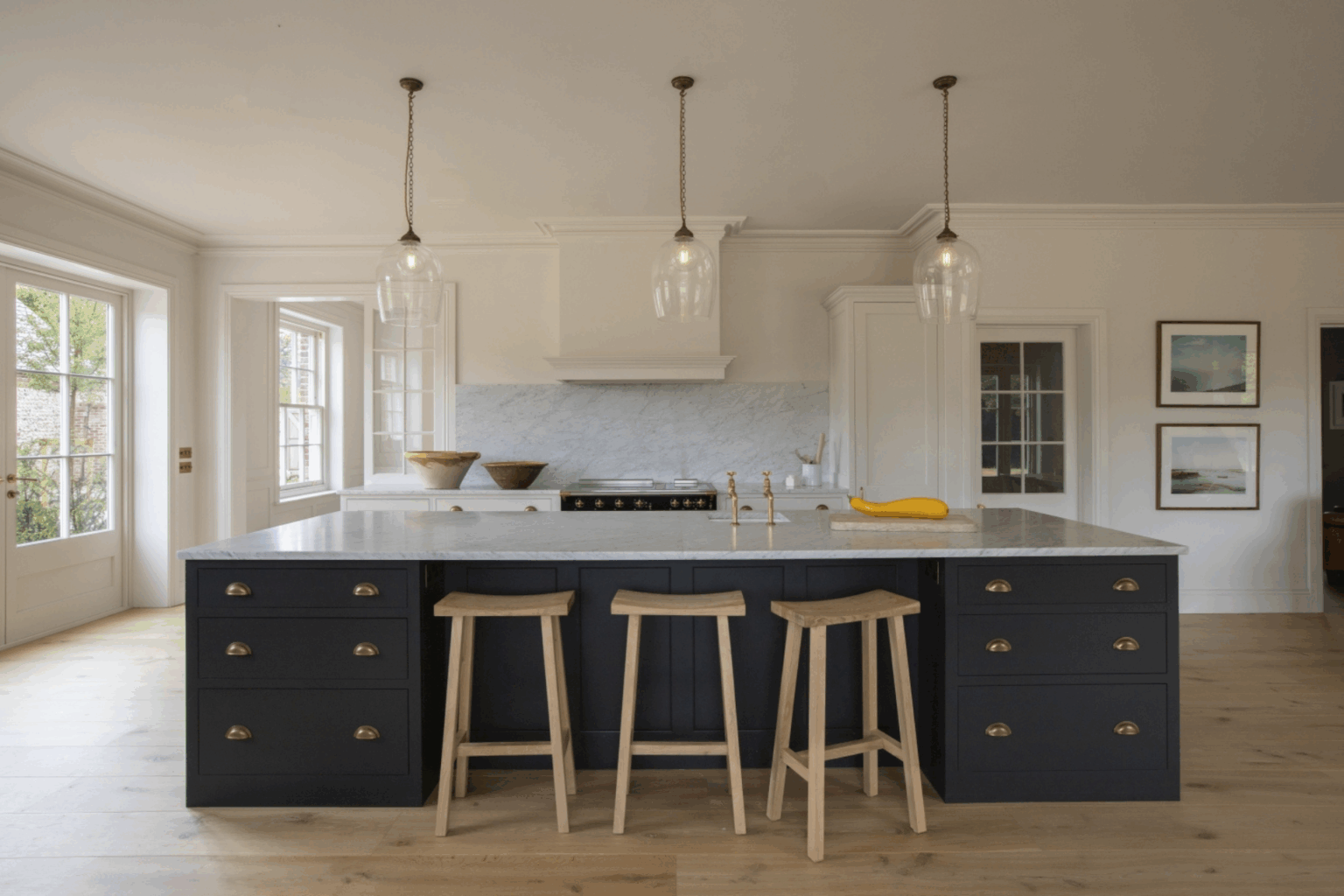
In a standard overlay kitchen cabinet, the door is attached to the front of the carcase. It overlays the frame. In an in-frame kitchen, the door sits within a solid timber frame that forms part of the cabinet structure itself. The frame is visible when the doors are open, and the door sits flush inside it.
The significance is both practical and aesthetic. In-frame construction requires more material, more precision, and considerably more time in the workshop. The frame must be exactly square; the doors must be fitted to tolerances that overlay construction simply doesn’t demand. It is the construction method used by furniture makers, not flat-pack assemblers.You can read more about designing a kitchen with longevity in mind in our blog, Sustainable Kitchens: How a 30-Year Kitchen Is the Greenest Kitchen.
Aesthetically, in-frame creates a sense of architectural solidity. The face of the kitchen has depth and structure, the frames cast subtle shadows, the doors sit with purpose. It’s the construction method most closely associated with traditional fitted furniture, and it’s why in-frame kitchens are disproportionately found at the premium end of the market.
At Higham Furniture, in-frame construction is central to what Tim Higham’s workshop team produces. Every in-frame kitchen is built to the same joinery standards applied to fine furniture. If you’d like to understand the difference physically, our Fulham design studio can walk you through it, the contrast between in-frame and overlay construction is immediately apparent once you see it.
Who an in-frame kitchen suits most:
- Buyers who want the highest construction standard available
- Homes where the kitchen is intended to last 25–30 years
- Period properties where the kitchen should feel like fine fitted furniture, not an appliance installation
What Is a Handleless Kitchen?
Handleless kitchens, sometimes called J-pull or G-rail kitchens – replace traditional door handles with integrated finger channels built into the door profile, or with a rail mechanism beneath the upper cabinets. The result is a clean, uninterrupted front elevation: no protruding hardware, no visual breaks.
This style is often labelled “modern” or “contemporary,” but that framing undersells it. In the right space – a well-proportioned open-plan kitchen-dining room, a rear extension with full-width glazing, a converted industrial building – a handleless kitchen from a skilled cabinetmaker is architecturally striking. The absence of hardware focuses everything on surface quality, proportion, and material.
Where handleless falls short is in execution. Off-the-shelf handleless kitchens produced at volume tend to look thin and unconvincing because the construction materials don’t support the visual simplicity the style demands. A handleless kitchen only looks genuinely premium when the doors have the right mass, the right surface texture, and the right junction details at edges and corners. These are things handmade construction – using solid timber or quality-veneered materials, not MDF board – delivers in a way that factory-produced alternatives cannot.
At Higham Furniture, our handleless range is built to the same material and construction standards as our in-frame and shaker kitchens. The seamless finish you see on the outside is backed by the same quality of cabinetmaking behind every kitchen we produce in Denmead.
Who a handleless kitchen suits most:
- Buyers who want a contemporary, minimal aesthetic
- Open-plan spaces where visual continuity and clean lines are priorities
- Modern extensions, converted spaces, or newly built properties
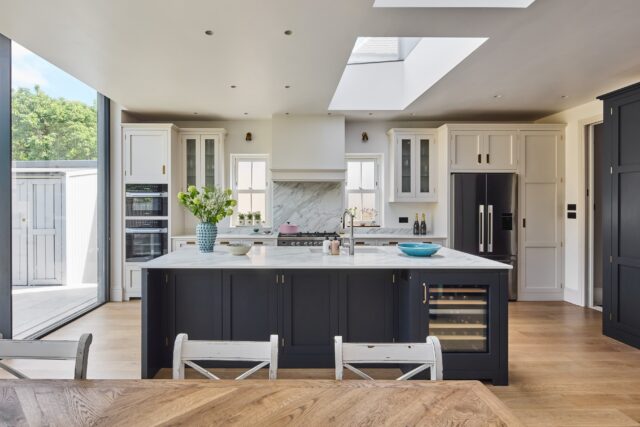
Shaker, In-Frame, and Handleless: The Key Differences
The most important practical distinction in this comparison isn’t between door styles – it’s between construction methods: in-frame versus overlay. An in-frame shaker kitchen and an overlay shaker kitchen look broadly similar from a distance but represent meaningfully different levels of cabinetmaking. The same applies to handleless: an in-frame handleless kitchen is built to a fundamentally higher standard than an overlay handleless equivalent.
When comparing quotes from different makers, always ask whether the construction is in-frame or overlay. It’s one of the clearest quality indicators — and one of the most frequently glossed over in kitchen sales conversations.
Which Kitchen Style Works Best in London Period Homes?
The majority of Higham Furniture clients across London – from Fulham and Kensington to Putney and Wimbledon – live in Victorian or Edwardian properties. These homes have specific characteristics that influence kitchen style choices.
Period properties typically have relatively compact kitchen footprints, high ceilings, original architectural features (cornicing, ceiling roses, panelled hallways), and a strong visual language of detail and texture. The kitchen styles that sit most naturally within this context are those with depth, texture, and restraint – which in practice means shaker or in-frame.
A handleless kitchen in a Victorian terraced house can read as flat and at odds with the richness of period features. The absence of hardware detail that feels architecturally appropriate in a modern extension can look stark and thin in an original Victorian kitchen space. That said, some period homes with significant rear extensions successfully use handleless in the new space while using more traditional cabinetry in the original footprint – the deliberate contrast can work well when the two zones are architecturally distinct.
If you’re renovating a London period home and aren’t certain which style suits your specific property, it’s worth having the conversation before committing to anything. The geometry of your space, the direction the light falls, the height of the ceilings, and the scale of the room all matter – and they all influence which style looks right and which looks wrong. For practical design advice, explore Designing a Kitchen That Works for Real Life, Not Just Photography.
Choosing Your Style with Higham Furniture
The right kitchen style isn’t just about aesthetics. It’s about how a kitchen wears over 20 or 30 years, how it holds its value, and whether the cabinetmaker behind it has the skill and the standards to execute the style at its best.
At Higham Furniture, we offer all three styles: shaker, in-frame, and handleless – handmade at our workshop in Denmead, Hampshire and designed through our Fulham studio. Every kitchen is made to the exact dimensions of your space. Every one is backed by a direct relationship with the makers who build it. There is no showroom mark-up, no middle layer between designer and cabinetmaker, and no compromise on materials.
If you’re at the stage of exploring styles and thinking through which direction fits your home, book a 30-minute design call. You can speak to us by phone, on video, or come into our Fulham studio. It’s free, there’s no obligation, and it’s the clearest first step toward a kitchen built for the long term. To compare materials and finishes, take a look at How to Choose the Right Worktop for a Luxury Kitchen.
Clarity before commitment. That’s how we work.
Frequently Asked Questions
What is the difference between a shaker and an in-frame kitchen?
A shaker kitchen refers to a door style, recessed-panel doors with clean, straight lines. An in-frame kitchen refers to a construction method, where doors sit within a solid timber frame that forms part of the cabinet structure. You can have an in-frame shaker kitchen (combining the shaker door style with in-frame construction) or an overlay shaker (where the door attaches to the front of the carcase without a surrounding frame). The construction distinction matters more to quality than the door profile.
Which kitchen style lasts the longest: shaker, in-frame, or handleless?
Construction quality and materials matter more than style when it comes to longevity. A well-made in-frame kitchen built with solid timber, quality hardware, and dovetail joinery can last 30 years or more with normal care. At Higham Furniture, all three styles are built in our Hampshire workshop to the same standards – using oak-veneered plywood rather than MDF and hand-painted finishes – so longevity comes down to the maker, not the style.
Are handleless kitchens more expensive than shaker kitchens?
The door profile alone doesn’t determine cost. A handmade handleless kitchen built with in-frame construction and quality timber will cost more than a flat-pack shaker kitchen – but a handmade overlay shaker may cost less than a handleless kitchen with more complex integrated rail mechanisms. When comparing kitchen quotes, always ask about construction method (in-frame vs overlay) and materials, not just the door style.
Is a handleless kitchen suitable for a Victorian house?
In most cases, a handleless kitchen can feel visually at odds with the texture and architectural detail of a Victorian or Edwardian period property. The style works best in clean, contemporary spaces – modern extensions, open-plan layouts, or newly built homes. Some period homes use handleless successfully in a new rear extension alongside more traditional cabinetry in the original footprint. Higham Furniture’s 30-minute design call is a good place to explore what works for your specific property and layout.
What is the most popular kitchen style for London homes?
Shaker is consistently the most popular style across Higham Furniture’s London client base – particularly in period properties across areas including Fulham, Chelsea, Kensington, Putney, and Wimbledon. Its versatility across colour, hardware, and worktop combinations, combined with its timeless aesthetic, makes it the most reliable choice for homes where the kitchen is intended to last decades rather than follow a trend.
Written by the Higham Furniture design team. Higham Furniture is an award-winning cabinetmaker based in Denmead, Hampshire, with a design studio in Fulham, London. Tim Higham and his team have been designing and building bespoke handmade kitchens for discerning homeowners across London and the South East.