
The worktop is the hardest-working surface in your kitchen, and in a handmade luxury kitchen, it is also one of the most visible design statements you will make. The right choice depends on four things: the style of your cabinetry, your household’s daily demands, the look you want to live with, and your maintenance tolerance. For most clients working with Higham Furniture at our Fulham design studio or visiting our workshop in Denmead, Hampshire, the decision comes down to one of five materials: marble, granite, quartz, solid oak, or concrete – each of which suits a different kind of kitchen and a different kind of life. In this guide, we walk through every major option, what drives the cost, what the practical trade-offs are, and how to make a decision you won’t regret.
What Are the Most Popular Worktop Materials for a Luxury Kitchen?
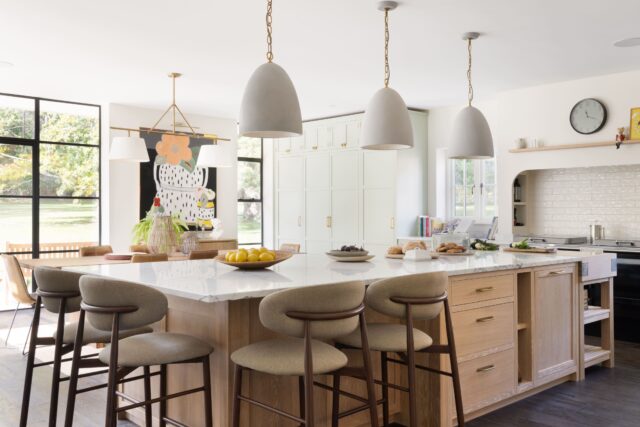
There is no single “best” worktop, there is only the right worktop for your kitchen, your lifestyle, and your aesthetic. That said, certain materials dominate at the premium end of the market, and understanding why helps you make a more confident decision.
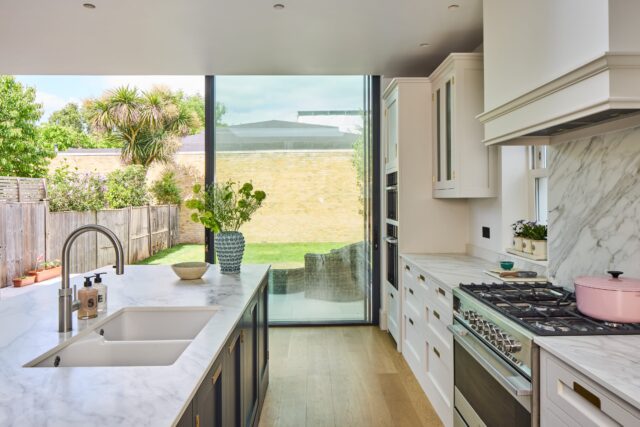
Marble is the material people tend to dream about. Its veining is unique, its surface is cool to the touch, and it has been gracing the finest kitchens in Europe for centuries. Carrara marble is the most common choice at the premium end, while Calacatta and Statuario varieties offer more dramatic veining for statement designs. The honest caveat: marble is porous and will stain if not sealed regularly. It scratches. It etches when acidic liquids, lemon juice, wine, tomato, are left in contact with the surface. For clients who cook seriously and want a worktop that looks immaculate ten years from now, we would recommend pairing marble with a secondary, more hardwearing material on the main prep area.
Granite is everything marble is not in terms of durability. It is one of the hardest natural stones available, highly resistant to heat, scratches, and staining, and requires minimal maintenance once sealed. Granite lacks marble’s fashionable status, but for clients who want a natural stone surface that genuinely performs, it is often the more intelligent choice. Its speckled, multi-tonal nature also means it hides day-to-day marks far better than a book-matched marble slab.
Quartz (engineered stone) combines the look of natural stone with significantly improved performance. Brands such as Silestone, Caesarstone, and Dekton produce engineered surfaces that are non-porous, highly resistant to staining, and require virtually no maintenance. Quartz suits clients who want a pristine, consistent look, particularly in handleless or contemporary kitchens, without the upkeep demands of natural stone. The trade-off is that the look is manufactured rather than genuinely unique; no two slabs are identical in marble, whereas quartz is consistent by design.
Solid oak or hardwood worktops bring warmth, texture, and a connection to natural materials that stone cannot match. At Higham Furniture, oak is one of our signature materials, it runs through our cabinetry work and translates naturally into worktop form, particularly in shaker and in-frame kitchen designs. A solid oak worktop oiled regularly with a quality Danish or tung oil will develop a patina over time that many clients come to love. The caveats are real: wood is susceptible to heat, standing water, and sharp knives. It requires more maintenance than stone. But for clients who embrace the idea of a worktop that ages gracefully, it is genuinely beautiful.
Concrete worktops have carved out a niche in the high-end market for clients who want an industrial, bespoke surface with real presence. Cast in situ or prefabricated in slabs, concrete can be pigmented, polished, or left with a raw finish. It is heavy, requires professional installation, and must be properly sealed. But as a design statement in a contemporary or modern kitchen, there is nothing quite like it.
For more inspiration, you may also find these guides helpful: Open-Plan Kitchen Design Ideas for London Period Homes.
How Does Your Kitchen Style Affect Worktop Choice?
The material you choose needs to work with your cabinetry, not compete with it. This is one of the most common mistakes clients make when choosing worktops independently of their kitchen design, they fall in love with a material in a showroom without testing how it will read alongside their actual door colour, profile, and grain.
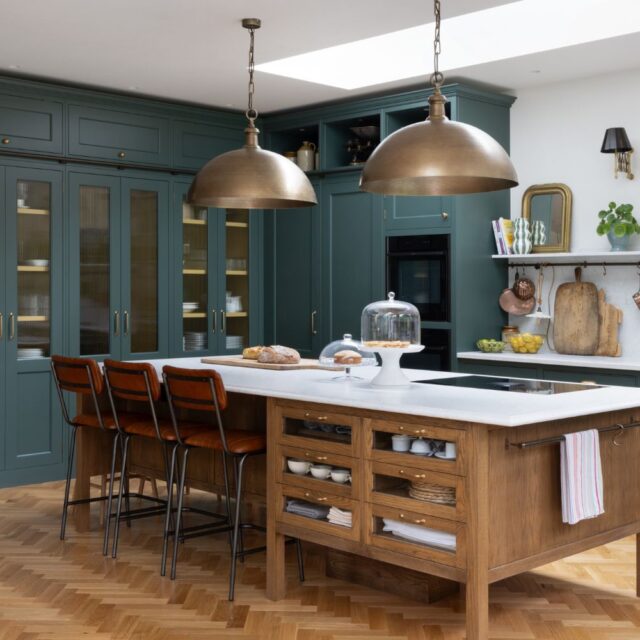
At Higham Furniture, we work through worktop choices as part of the broader design conversation. When a client is designing an in-frame shaker kitchen, particularly one with a painted finish in a warm or classic tone, a marble or oak worktop typically provides the most cohesive result. The tactility and warmth of the materials complement each other. A cool, hard quartz can sit awkwardly against a hand-painted door with a traditional profile.
Conversely, if a client is commissioning a handleless or modern kitchen, quartz or concrete can be the better call. The clean, non-porous surfaces suit the precision geometry of contemporary cabinetry, and the minimal maintenance requirement aligns with the sleeker aesthetic.
Higham’s award-winning Putney Painted Oak Framed Shaker Kitchen, which won the British Design and Manufacturing Award at the Designerati Awards UK 2025, demonstrates this principle clearly: the material palette was considered as a whole, from the cabinetry to the worktop to the hardware, rather than chosen piecemeal.
The right worktop is the one that makes the kitchen feel considered from every angle.


How Much Do Luxury Worktops Cost?
Worktop costs vary significantly depending on material, slab size, edge profile, and installation complexity. As a general guide for the London market:
- Marble: £300–£700 per square metre, depending on the variety and source. Rare varieties such as Calacatta Oro can exceed £1,000 per square metre.
- Granite: £250–£500 per square metre for most varieties. Exotic granites with complex grain patterns sit at the higher end.
- Quartz (engineered stone): £300–£600 per square metre. Premium brands and thicker slabs (30mm vs 20mm) command higher prices.
- Solid oak: £150–£350 per square metre, depending on thickness and quality.
- Concrete: £400–£800 per square metre, often more if cast in situ.
These figures are for the material only. Professional templating, stone cutting, edge profiling, and installation add further cost, typically £500–£1,500 depending on the complexity of the job, the number of cutouts (hob, sink), and access constraints.
The most important thing to understand is that the worktop is not the place to under-invest. A client who spends months on the design of their handmade kitchen and then opts for a budget worktop to save money will see the compromise immediately. The worktop accounts for perhaps 10–15% of the total kitchen budget, but it influences the feel of the space far beyond its proportion.
How do you use your kitchen? A family with young children who cooks every evening needs a different worktop than someone who entertains occasionally and travels frequently. Marble is unforgiving in the first scenario. Quartz or granite is more sensible.
How much maintenance are you prepared to do? Natural stone, marble, granite, limestone, requires annual sealing at minimum. Oak requires periodic oiling. Quartz requires almost none. If you are not the kind of person who enjoys upkeep tasks, this should guide your choice.
How does light behave in the space? Dark granite or concrete can feel heavy and absorbing in a north-facing kitchen with limited natural light. A lighter quartz or book-matched marble can help bounce light. The material should be tested in the actual light conditions of the space, not under bright showroom lighting.
What is the sink and hob arrangement? The position and profile of your cutouts affects which materials are practical. Thin-edge slabs (12mm) look elegant but are more fragile around cutouts. Thicker slabs (30mm) are more robust. Undermount sinks, the preferred option in luxury kitchens, require a clean, sealed edge on the worktop material, which some stones handle better than others.
How Do You Integrate the Worktop into the Overall Design?
This is where working with an experienced cabinetmaker makes the most difference. At Higham Furniture, the worktop decision happens within the context of the full design — the cabinetry, hardware, wall finish, flooring, and lighting are all considered together. This is very different from choosing a worktop from a stone supplier after the kitchen has already been designed.
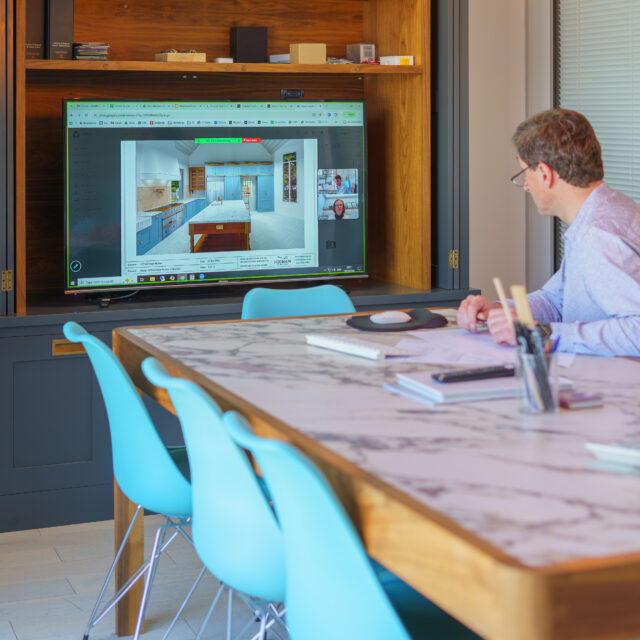
Tim Higham and the design team at our Fulham studio will typically present two or three worktop options at sample scale during the design process, positioned against the actual door samples, paint chips, and hardware choices for that specific project. This allows clients to see exactly how the materials sit together before committing.
The most confident worktop decisions come from clients who treat it as part of the whole, not as a separate purchase.
A worktop chosen in isolation will always feel like a worktop. A worktop chosen as part of a considered design will feel like it could not have been anything else.
Clarity Before Commitment
Choosing the right worktop is genuinely complex — not because there are too many options, but because the right answer depends entirely on how you live and what your kitchen is designed to do. If you are at the research stage and want to talk through the options without any obligation, Higham Furniture offers a 30-minute design call with the team, by phone, video, or in person at the Fulham studio.
It is not a sales call. It is a conversation about your kitchen, your space, and what would actually work for you. Many clients find that a single 30-minute conversation brings more clarity than six months of browsing showrooms.
Book your free 30-minute design call with Higham Furniture →
Written by the Higham Furniture design team. Higham Furniture is a British cabinetmaker specialising in handmade luxury kitchens, designed in Fulham, London and built in their own workshop in Denmead, Hampshire.
Frequently Asked Questions
What is the most popular worktop material for a luxury handmade kitchen?
Marble and engineered quartz are the most commonly chosen worktop materials at the premium end of the market. Marble is chosen for its beauty and uniqueness, while quartz is preferred by clients who want similar aesthetics with significantly lower maintenance demands. At Higham Furniture, solid oak worktops are also popular in shaker and in-frame kitchen designs, where the warmth of the timber complements the handmade cabinetry.
Is marble a practical choice for a family kitchen?
Marble can work in a family kitchen if you understand and accept its maintenance requirements. It is porous, susceptible to etching from acidic liquids, and will show marks over time. Many clients choose to use marble as a statement material in lower-traffic areas, a baking section or island top, while opting for a more hardwearing material such as granite or quartz on the main preparation surface.
How thick should a luxury kitchen worktop be?
Most luxury kitchen worktops are either 20mm or 30mm thick. A 20mm profile looks more refined and modern; 30mm reads as more substantial and traditional. Stone worktops of 30mm are also more robust around sink cutouts, which matters for undermount sink installations. The right thickness depends on the profile of your kitchen design and the material you are working with.
What is the difference between marble and quartz for a kitchen worktop?
Marble is a natural stone with unique veining, a cool surface, and a heritage feel, but it is porous and requires regular sealing and careful maintenance. Quartz is an engineered material that mimics the look of natural stone while being non-porous, stain-resistant, and almost maintenance-free. Marble is often chosen for its beauty and character; quartz is chosen for its performance and consistency.
How long does a stone worktop last?
A well-maintained stone worktop, whether marble, granite, or quartz, should last the lifetime of the kitchen and beyond. Granite and quartz in particular are extremely durable under everyday use. The kitchen itself, when handmade to the standard Higham Furniture works to, is designed to be a 20–30 year investment. Choosing a worktop material that is equally durable is part of making that investment worthwhile.
Do I need to seal a marble or granite worktop?
Yes. Both marble and granite are porous natural stones that require sealing on installation and resealing approximately once a year, depending on usage and the quality of the initial seal. Some granite varieties are denser and require less frequent sealing than others. Your stone supplier should advise on the specific sealing requirements for the variety you choose. Quartz, being engineered and non-porous, does not require sealing.