In-frame kitchens cost more than overlay designs, typically 20 to 30% more for an equivalent specification, and they’re worth it if craftsmanship, longevity, and traditional British cabinetmaking matter to you. The difference comes down to construction method: in-frame doors sit within a solid timber frame around each cabinet, while overlay (or frameless) doors cover the carcass entirely. At Higham Furniture, in-frame construction is a core part of what we build at our Denmead workshop in Hampshire, it’s not an upgrade option, it’s a demonstration of how serious cabinetmaking is done.
This guide explains exactly what sets the two methods apart, why the cost difference exists, and how to decide which is right for your kitchen.

What Is the Difference Between In-Frame and Overlay Kitchen Construction?
The distinction sounds technical, but it’s easy to see once you know what to look for.
In an overlay kitchen, sometimes called frameless or full-overlay, the cabinet doors and drawer fronts are mounted directly onto the face of the carcass box. When the doors are closed, they cover nearly all of the cabinet front, leaving only a small gap between adjacent doors. The structural frame sits inside, invisible. This is the most common method used by volume manufacturers and many mid-market kitchen brands, because it’s faster to produce, requires fewer components, and needs less precision in the fitting of each individual door.
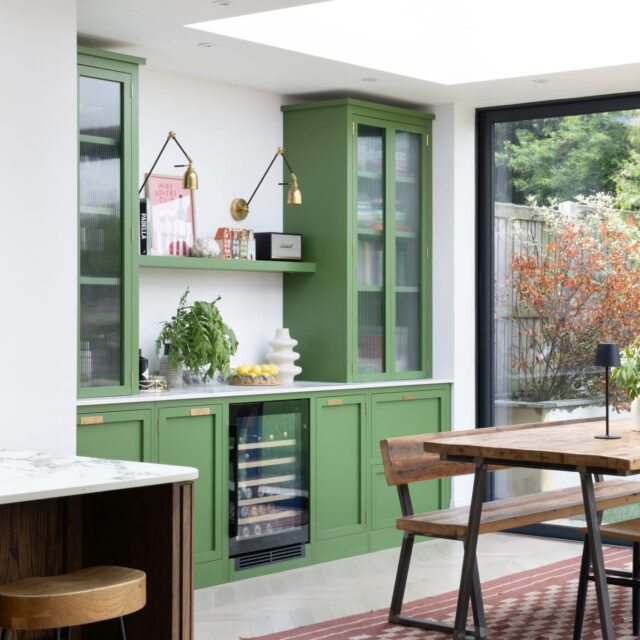
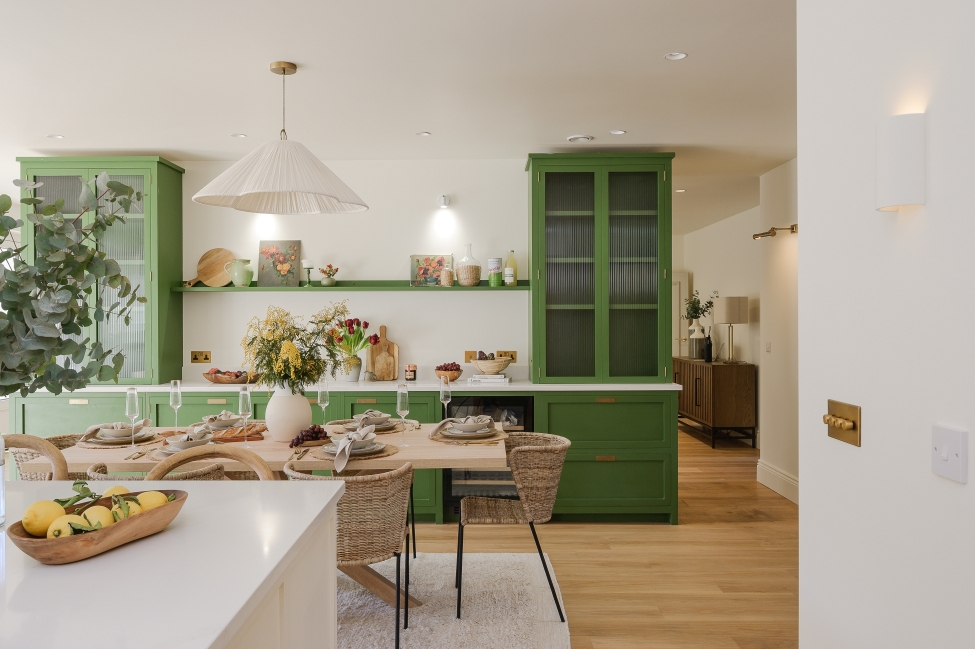
In an in-frame kitchen, a solid timber frame, typically 45 to 55mm wide, is constructed around the front of each cabinet before the doors are hung. The doors sit within this frame, framed on all four sides by visible timber when closed. This is the hallmark of fine British cabinetmaking: the frame is structural, the joints are real, and every door must be individually fitted to sit square within its opening. There are no shortcuts in good in-frame work, you can see them immediately if there are.
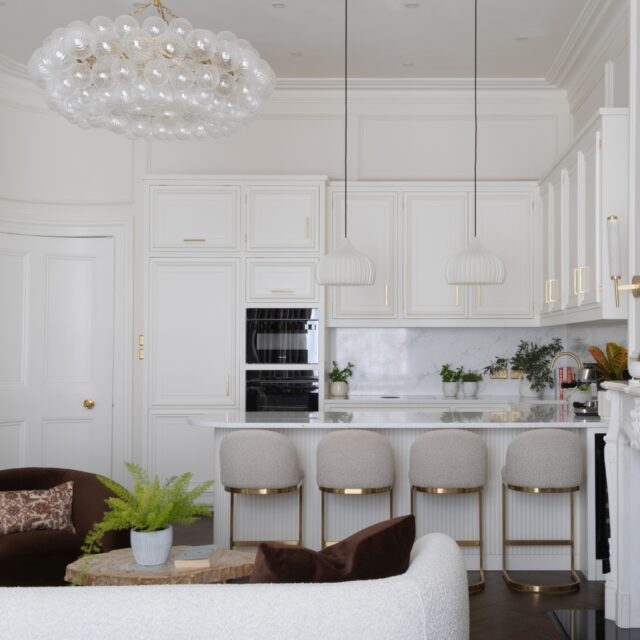
The visual result is a kitchen that looks more like fine furniture than fitted cabinetry. The frame creates shadow lines, depth, and a sense of weight that overlay kitchens cannot replicate. For period homes, classic Shaker designs, and buyers who want a kitchen that feels as though it’s been in the house for decades, in-frame is the natural choice. For a deeper look at this style, you can also read our article: How to Tell If a Kitchen Is Truly Well Made: 7 Things to Inspect
Why Does In-Frame Construction Cost More?
The cost premium on in-frame kitchens is real, and it’s justified by the additional time, skill, and materials required.
Building an in-frame kitchen involves three significant additional steps that an overlay kitchen does not require.
First, the frame itself. Each cabinet needs a solid timber frame constructed and joined before the carcass is assembled. At Higham Furniture’s workshop in Denmead, Hampshire, this framing is done in solid oak, a material that costs significantly more than the MDF used in the face frames of lesser products, and that requires a skilled cabinetmaker to work with accurately.
Second, the door fitting. In an overlay kitchen, door alignment is adjusted after installation using hinge mechanics, there’s considerable tolerance built in. In an in-frame kitchen, each door must be planed, fitted, and hung to sit perfectly within its individual opening. This is hand work. It requires time, a trained eye, and the kind of patience that distinguishes a cabinetmaker from an assembler. A typical in-frame kitchen requires 15 to 25% more production hours than an equivalent overlay design.
Third, the tolerance for movement. Good in-frame cabinets are designed to accommodate the natural movement of timber, the slight expansion and contraction that happens with seasonal changes in humidity. Building in that tolerance correctly, so doors stay true over decades, takes genuine knowledge of the material. Get it wrong, and the doors bind in summer and rattle in winter. Get it right, and the kitchen looks as good in 30 years as it does on the day it’s installed.
None of this is recoverable at the lower end of the market. You cannot make a cheap in-frame kitchen. The method exposes every shortcut.
What Are the Signs of a Truly Well-Made In-Frame Kitchen?
If you’re assessing whether an in-frame kitchen is genuinely well made or merely styled to look that way, there are five things to look for.
Even reveals all around every door. The gap between the door and the surrounding frame should be consistent, typically 2 to 3mm, on all four sides of every door. Uneven reveals indicate rushed fitting or poor construction tolerances.
Frame material. The frame should be solid timber, not MDF or particleboard dressed to look like wood. Run your finger across a cut edge or a corner joint and you’ll know the difference immediately. Solid oak frames, as used by Higham Furniture, are hard, tight-grained, and feel nothing like an MDF substitute.
Dovetail drawer construction. In a properly made kitchen, the drawer boxes, not just the fronts, should be built with dovetail joints at the corners. This is the structural test of quality. Pull a drawer out fully and look at the front corners. If you see interlocking pins and tails cut from solid timber, you’re looking at real cabinetmaking.
The frame-to-carcass junction. Where the frame meets the cabinet body, there should be no visible gap, no filler strip, and no flex when you press gently on it. It should feel like one solid piece.
The hinges. In-frame kitchens require specific in-frame hinges, not the standard concealed hinges used in overlay kitchens. The hinge type matters because it affects how the door moves and how adjustment is made over time. Ask your maker what hinges they specify.
Is an In-Frame Kitchen More Durable Than an Overlay Design?
Durability in kitchen furniture is determined by three factors: the materials used in the carcass, the quality of the joinery, and the robustness of the fittings. In-frame construction scores well on all three, not because the method is inherently stronger, but because it tends to go hand in hand with higher standards throughout.
The solid timber frame itself adds structural rigidity to the cabinet face. Over time, this matters: overlay cabinets with thin face frames or particleboard carcasses can flex, warp, or delaminate under the everyday use a kitchen receives. A properly made in-frame cabinet, built on an oak-veneered plywood carcass with dovetail drawers and solid timber framing, is designed to last 30 to 40 years without the kind of deterioration that afflicts volume-market alternatives.
That’s not a marketing claim. It’s the reason that Higham Furniture’s clients regularly describe their investment as the last kitchen they’ll ever need. When every component is chosen for longevity rather than price, the result is a kitchen that ages well rather than one that starts to look tired within a decade.
For London homeowners considering the long-term economics, a well-made in-frame kitchen that lasts 35 years represents considerably better value than a lower-quality replacement cycle every 10 to 12 years.

Which Style Is Right for Your Home?
In-frame is not the right choice for every project. Here’s an honest guide to which method suits which priorities.
Choose in-frame if:
- You live in a period property, Victorian, Edwardian, Georgian, where traditional cabinetmaking looks architecturally appropriate
- Your kitchen design uses a Shaker, classic, or traditional aesthetic
- Longevity and craftsmanship matter more to you than minimising the budget
- You want a kitchen that looks like furniture, not fitted units
Choose overlay if:
- Your design is strictly contemporary or handleless, where visible frames would conflict with the aesthetic
- Your project timeline is tight, as overlay production typically allows faster delivery
- You’re fitting a secondary kitchen, a utility room, a boot room, where premium craft is less of a priority
At Higham Furniture, we design and build both in-frame and overlay kitchens from our workshop in Denmead. The important difference from our competitors is that whichever method you choose, the construction standards are the same: solid timber, dovetail drawers, oak-veneered plywood carcasses, quality fittings. We don’t make a “budget” version of either.
Our award-winning Putney Painted Oak Framed Shaker Kitchen, which won the British Design and Manufacturing Award at the Designerati Awards UK 2025, is an in-frame design. It’s the project that best represents what this method of construction can achieve when it’s executed without compromise.
Clarity Before Commitment
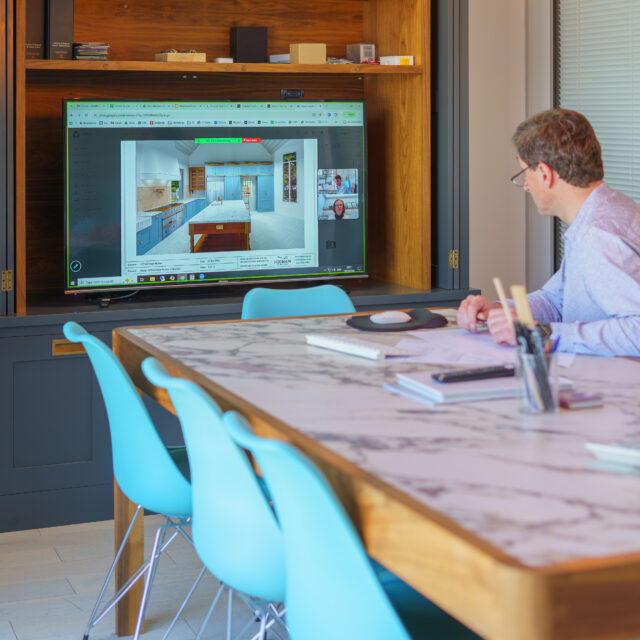
If you’re weighing up in-frame against overlay for your kitchen project, the clearest way to understand the difference is to see both in person and talk through what each involves. At Higham Furniture, we offer a free 30-minute design call, by phone, video, or in person at our Fulham studio in London, where you can ask exactly these kinds of questions. No pressure, no obligation. Just an honest conversation about what’s right for your home.
Book your design call at or call our Fulham studio directly.
Written by the Higham Furniture design team. Higham Furniture is a British cabinetmaker specialising in handmade luxury kitchens, designing from their Fulham studio and building at their workshop in Denmead, Hampshire.

Frequently Asked Questions
What is the difference between in-frame and overlay kitchen doors?
In an in-frame kitchen, each door sits within a solid timber frame that surrounds the cabinet opening, you can see the frame on all four sides when the door is closed. In an overlay kitchen, the door covers the cabinet front entirely, hiding the frame behind it. In-frame is a more labour-intensive construction method and is widely regarded as the hallmark of traditional British cabinetmaking.
How much more does an in-frame kitchen cost than overlay?
In-frame kitchens typically cost 20 to 30% more than an equivalent overlay design, reflecting the additional materials, skilled hand-fitting, and production time required. The premium is genuine, there is no way to build a good in-frame kitchen quickly or cheaply, and any significant undercutting of this premium is a signal that corners are being cut.
Is in-frame construction better quality than frameless?
In-frame construction requires higher precision and more skilled labour than overlay, but quality is ultimately determined by the standards applied throughout the build. A well-made overlay kitchen using solid timber, dovetail drawers, and quality fittings will outperform a poorly made in-frame product. At Higham Furniture, both construction methods are built to the same high standard at our Hampshire workshop.
Does an in-frame kitchen last longer than overlay?
A properly made in-frame kitchen, built with solid timber frames, oak-veneered plywood carcasses, and dovetail drawers, is designed to last 30 to 40 years under normal domestic use. Longevity depends more on the quality of materials and construction than on the door-fitting method alone. In practice, the craftsmanship standards associated with in-frame construction tend to produce kitchens that age better.
What style of kitchen suits in-frame construction?
In-frame construction is best suited to Shaker, traditional, or classic kitchen styles, and works particularly well in period properties, Victorian, Edwardian, and Georgian homes where the cabinetmaking aesthetic feels architecturally appropriate. It can also be used in more contemporary designs, though for strictly minimalist or handleless kitchens, an overlay design typically creates a cleaner visual result.
Can Higham Furniture build both in-frame and overlay kitchens?
Yes. Higham Furniture designs and builds both in-frame and frameless overlay kitchens from their workshop in Denmead, Hampshire. Both are made to the same construction standards, solid timber, dovetail drawer boxes, quality hardware, with the choice of method determined by the design brief and the client’s priorities. Our Fulham design studio is the right starting point for discussing which approach suits your home.