What Happens in the First Design Call?
The process begins not with a showroom visit, but with a conversation. Higham Furniture’s free 30-minute design call is deliberately framed as a low-pressure first step “Clarity Before Commitment” rather than a sales appointment.
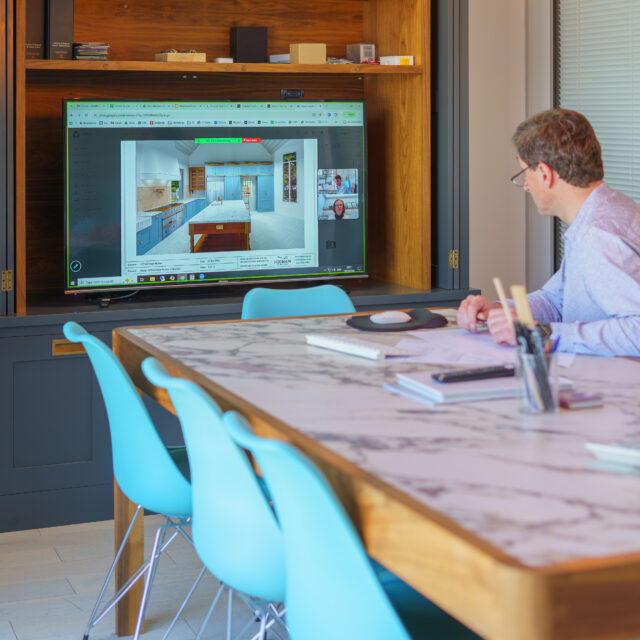
The call can be taken by phone, video, or in person at the Fulham design studio in London. It covers whatever is most useful to the prospective client: questions about budget and what it gets you, a discussion of the space and how it might best be used, thoughts on style and materials, or simply a chance to understand how the process works before committing to anything.
What the call is not: a pitch. There is no pressure to proceed, no quote presented before the client is ready, and no expectation that a brief be fully formed before picking up the phone. Many clients who book a design call have only a rough sense of what they want. That is precisely the point, the call is designed to help them think more clearly, not to sell them something.
Tim Higham, who founded the company, has built Higham around the principle that clients should understand what they are buying before they buy it. The design call is where that process begins.
How Does the Design Phase Work?
Once a client decides to proceed, the design phase begins in earnest. This is where the Fulham studio earns its place in the process.
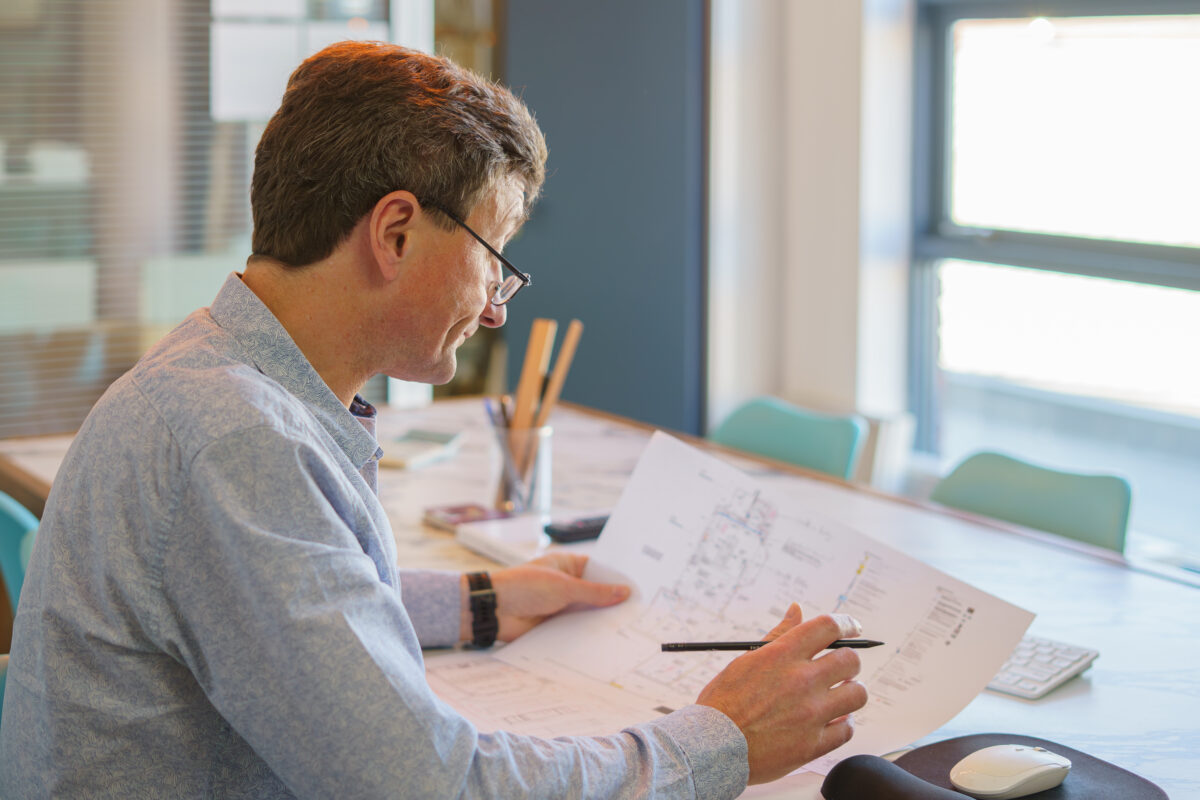
The design studio is not a showroom in the traditional sense, it is a working environment where ideas are developed. Clients bring their architectural drawings, inspiration images, and questions about what is possible. The Higham design team listens carefully, asks the right questions, and begins to translate the brief into a kitchen that is specific to that space.
Every design decision is made from first principles. Cabinet dimensions are not drawn from a standard catalogue and adjusted to fit, they are determined by the room, the ceiling height, the position of structural elements, and the way the homeowner actually uses their kitchen. If a run of base units needs to be 847mm deep rather than 600mm to make a kitchen island work properly, that is what gets built.
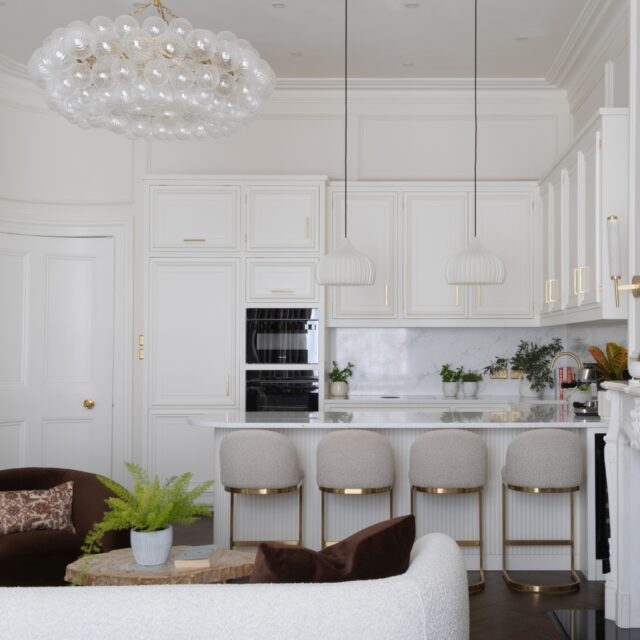
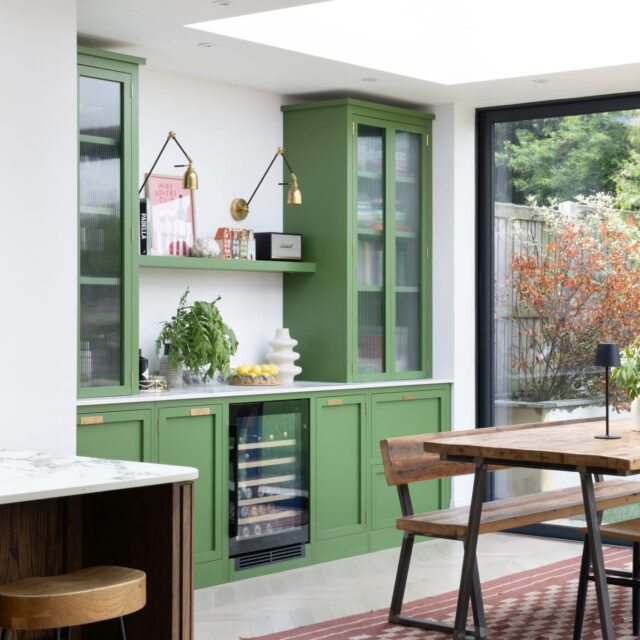
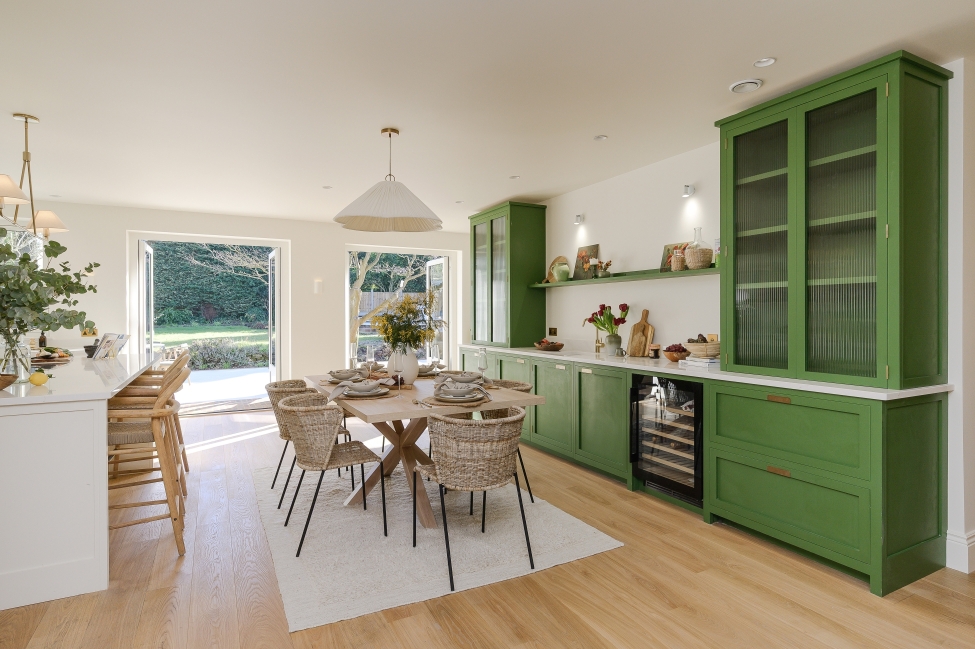
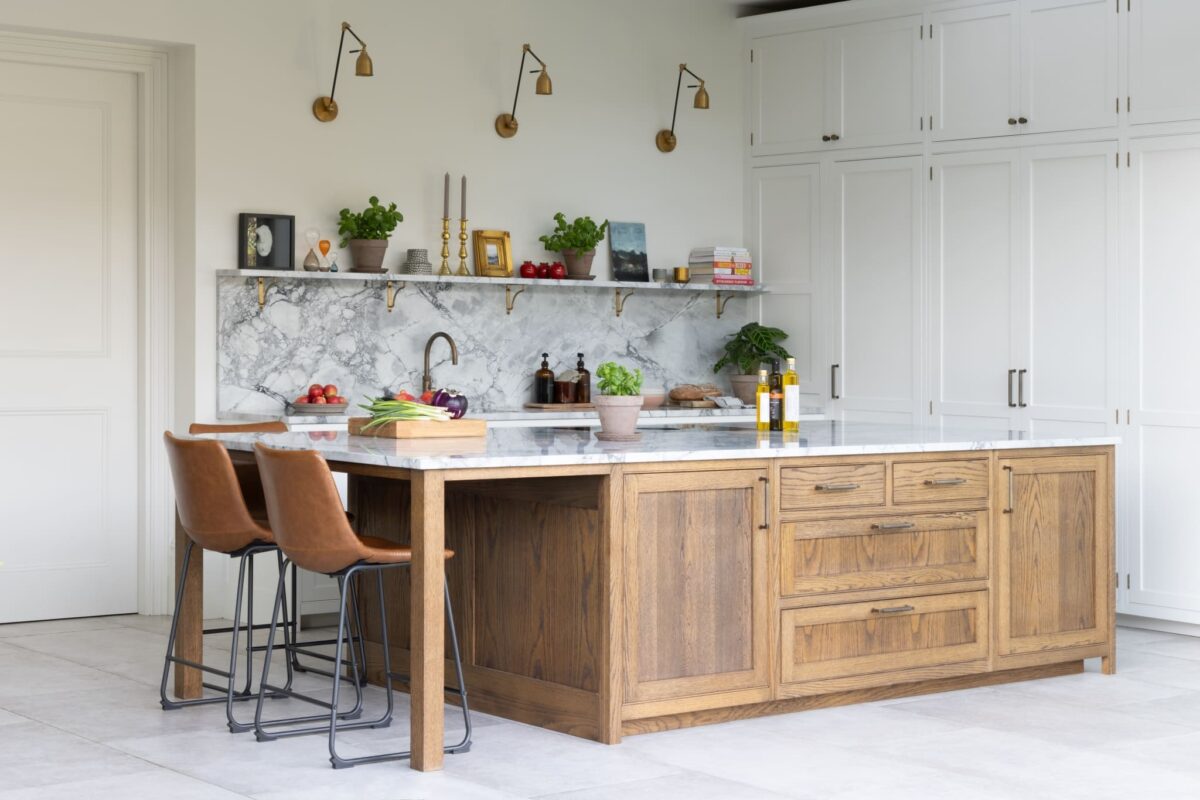
Higham offers several distinct kitchen styles, Shaker, In-Frame, Handleless, and Modern, each of which can be executed in a range of finishes, paint colours, and timber species. The award-winning Putney Painted Oak Framed Shaker Kitchen, which won the British Design & Manufacturing Award at the Designerati Awards UK 2025, is a good example of how a classic style can be taken to a different level through precision of proportion and quality of material.
Material selections, worktops, handles, hardware, paint colour are all made collaboratively. Clients see samples, consider alternatives, and arrive at a final specification they are genuinely confident about.
What Happens in the Hampshire Workshop?
Once the design is signed off and materials confirmed, production moves to Denmead, Hampshire, where all Higham kitchens are built.
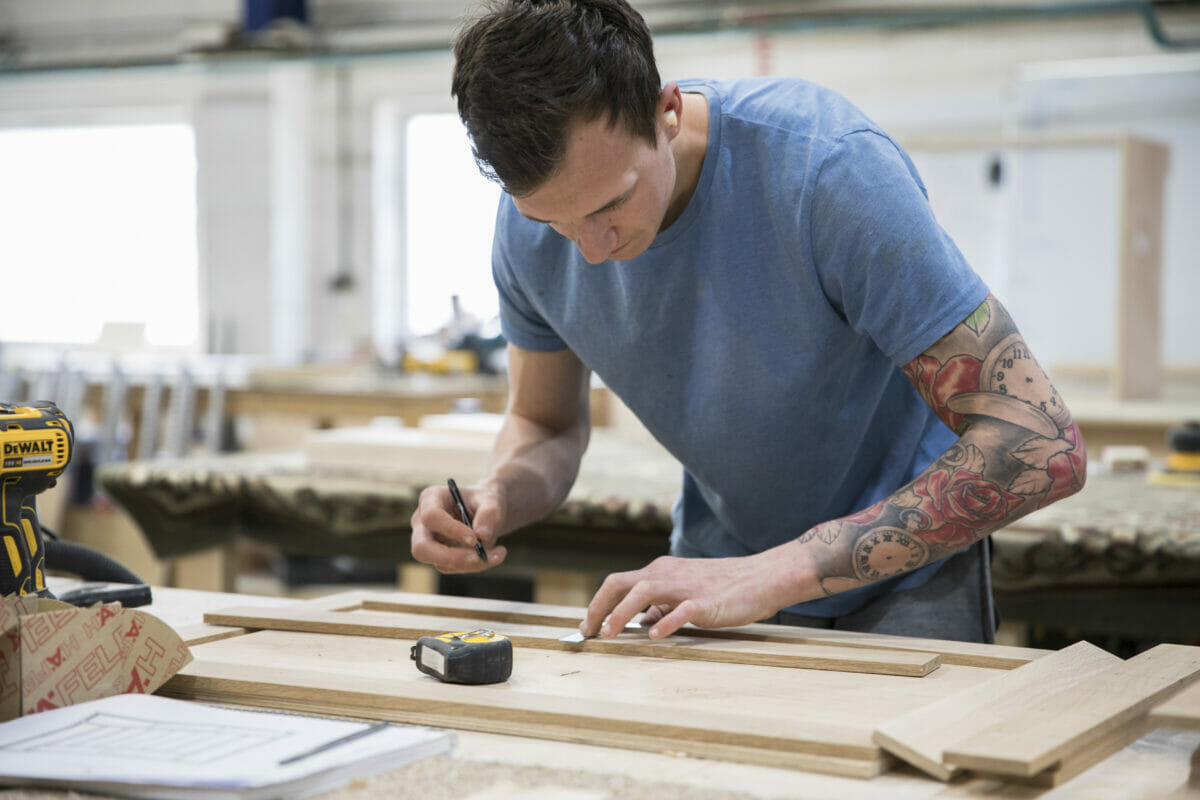
The workshop is where the real making happens. Solid timber frames are cut and jointed. Oak-veneered plywood carcases, chosen for their dimensional stability, moisture resistance, and ability to hold fixings reliably over decades are constructed to the exact dimensions specified in the design drawings.
Drawer boxes are built using dovetail joints: the interlocking pin-and-tail technique that has been used by fine cabinetmakers for centuries precisely because it produces a joint stronger than the timber around it.
In-frame construction, where each door sits within a structural timber frame rather than overlaying the carcase front, demands considerably more precision and material than standard overlay construction.
The tolerances involved are tight. A frame that is fractionally out of square will be visible in the finished door. This is not an assembly process; it is a craft process, and the difference shows in the finished result.
Hand-painted finishes are applied in controlled conditions, in multiple coats, using premium paints matched to the client’s chosen colour. This is not a spray-line process.
It is applied by skilled painters who understand how paint behaves on timber, how to achieve a consistent sheen across complex mouldings, and how to match a finish exactly if a door needs to be replaced years later.
One of the less-discussed aspects of a genuine cabinetmaking relationship is that clients are welcome to visit the Denmead workshop at any point during production.
They can see their kitchen in progress, the carcases stacked against the workshop wall, the doors receiving their first coats of paint, the handles and hardware laid out for fitting. Very few kitchen companies can offer this, because very few kitchen companies actually make what they sell.
How Does Installation Work?
The final stage of the process is installation and it follows the same principle as the rest: direct, accountable, and done properly.
Higham’s installation teams work from the same detailed drawings that guided the workshop build. Because the cabinetry has been made to the precise dimensions of the space, there are no filler panels, no awkward gaps filled with trim, and no last-minute adjustments required on site. Everything fits because it was made to fit.
The installation process covers cabinet fitting, worktop templating and fitting, appliance integration, and the final dressing of the kitchen handles, lighting, cornicing, and any bespoke storage details. Higham’s teams do not hand over at the point of cabinet delivery and leave the finishing to someone else.
The project is considered complete when the kitchen is complete.
Clients who have worked with Higham Furniture consistently comment on the consistency of the team throughout the project the same people who took the brief are familiar with the project at installation stage.
With over 80 reviews on Houzz and 22 on Google, the pattern that emerges is one of a company that delivers what it promises, from first call to final fitting.
What Makes the Higham Process Different from Buying Through a Showroom?
The most significant difference is accountability. When a client buys a kitchen through a high-street showroom, the design is typically handled by a showroom salesperson, the manufacturing by a third-party factory, and the installation by a subcontracted team. Three separate organisations are involved, each with limited visibility of what the others are doing.
At Higham Furniture, the same team takes a project from design call to installation. Tim Higham and his team know every project personally. There is no handoff point where a file is passed from one organisation to another and something gets lost in translation.
The person who drew the kitchen is aware of how it was built, and the people who built it understand what the installation team will find when they arrive on site.
This direct relationship, between client and cabinetmaker, between designer and maker, is not just a marketing claim. It is a structural consequence of not having a showroom.
Without the overheads, intermediaries, and sales layers that high-street kitchen brands carry, Higham can work in a way that is genuinely more personal, more accountable, and ultimately more likely to produce a kitchen that matches what was agreed at the start.
This is also the reason the no-showroom model is a strength rather than a limitation. A showroom exists to create the impression of quality. A workshop exists to produce it.
Is It Worth Visiting the Studio Before Committing?
For many clients, the in-person design call at the Fulham studio is the point at which the decision becomes straightforward.
The studio is not a traditional kitchen showroom with a series of display installations. It is a design environment where ideas are worked through properly, samples are handled, and the people responsible for your kitchen are in the room.
Clients can see how Higham works, the level of detail that goes into a brief, the range of materials and finishes available, the way the design team approaches a complex layout, before committing to anything.
For those who cannot visit in person, the call works equally well by phone or video. The conversation covers the same ground. The only thing missing is the physical samples, which can be sent if needed.
The Fulham studio is on hand five days a week. The design call is free and carries no obligation.
Begin with a Conversation
If you are planning a kitchen renovation and want to understand what the process actually involves, from brief to build to installation, the 30-minute design call is the right starting point.
There is no prepared pitch, no obligation to proceed, and no expectation that you arrive with a fully formed brief. You can ask anything: about the process, the timescales, the materials, the design approach, or what distinguishes a Higham kitchen from what a showroom would offer you at a similar price point.
Higham Furniture’s design studio is in Fulham, London. The workshop is in Denmead, Hampshire. The first call is free.
Frequently Asked Questions
How does the Higham kitchen process work from start to finish?
The process begins with a free 30-minute design call at Higham Furniture’s Fulham studio, or by phone or video. From there, design is developed collaboratively with the client, materials and finishes are selected, and the kitchen is built by hand at Higham’s own workshop in Denmead, Hampshire. Installation is carried out by Higham’s own team, working from the same drawings that guided production. There is no factory, no middleman, and no disconnect between design and making.
Can I visit the Higham workshop while my kitchen is being made?
Yes. Clients are welcome to visit the Denmead workshop in Hampshire at any point during production to see their kitchen being built. This is something very few kitchen companies can offer, because most high-street brands do not manufacture in-house.
At Higham Furniture, the workshop is central to the brand, and clients are encouraged to experience it.
How long does it take to get a Higham kitchen from first call to installation?
The full journey from design call to installation typically spans several months, with the exact timeframe depending on the complexity of the project, the size of the kitchen, and the current workshop schedule. The design phase, material selection, and production all take time when done properly. Higham Furniture’s team will provide a clear timeline at the outset of every project. A dedicated guide on timescales is available for those planning ahead.
What is the Higham Furniture design call?
The design call is a free, 30-minute conversation with the Higham team, no obligation, no sales pressure. It can be held by phone, video, or in person at the Fulham studio in London. The call is designed to help prospective clients understand the process, discuss their space and brief, and get clarity on what is involved before committing to anything. Higham calls it “Clarity Before Commitment.”
Where is Higham Furniture based?
Higham Furniture has a design studio in Fulham, London, where client consultations and design development take place. All kitchens are manufactured at the company’s own workshop in Denmead, Hampshire. The two locations reflect the two sides of the business: London-facing design and genuine Hampshire craftsmanship.
What awards has Higham Furniture won?
Higham Furniture won the British Design & Manufacturing Award at the Designerati Awards UK 2025 for the Putney Painted Oak Framed Shaker Kitchen. The award recognises genuine design and manufacturing excellence. It is one of the central proof points that distinguishes Higham from kitchen brands whose claims of quality rest on marketing rather than independent recognition.
Written by the Higham Furniture design team. Higham Furniture is an award-winning cabinetmaker with a design studio in Fulham, London and a workshop in Denmead, Hampshire. Learn more about us.