When you are investing in a bespoke kitchen, visiting a showroom feels like the obvious first step. It is not. A showroom tells you how a kitchen company presents itself.
The workshop tells you how it actually builds. The quality of a handmade kitchen is determined entirely by what happens at the bench, not on a shop floor in Wigmore Street. If you would like to understand what “handmade” really means in kitchen cabinetmaking, read our Blog Post.
At Higham Furniture, there is no high-street showroom at all. Instead, there is a design studio in Fulham, London, and a dedicated cabinetmaking workshop in Denmead, Hampshire, where every kitchen is designed, built, and finished by hand.
That model is not a limitation. It is the point, and it is why clients who understand how bespoke kitchens are actually made tend to seek out the workshop over the showroom every time.
What Does a Kitchen Showroom Actually Sell You?
A showroom is a retail environment. Its purpose is to display products attractively and encourage purchase decisions. That is not a criticism – it is a description.
But it matters, because what a showroom displays and what you actually receive can be two very different things.
Most high-end kitchen showrooms stock display models of kitchens made by their manufacturer.
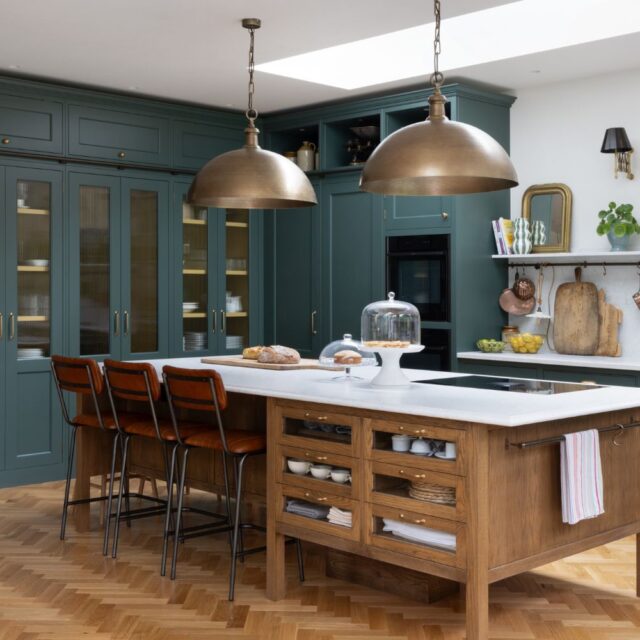
The models are presented at their absolute best: perfect lighting, professional styling, premium finish selections that may or may not reflect what is standard. You are invited to open doors, feel drawer runners, and assess quality, but you are always looking at a finished showpiece, not at the manufacturing process behind it.
The more important question, how is your kitchen actually going to be built, and by whom? Typically, it cannot be answered in a showroom.
The people in the showroom are designers and salespeople. The people building your kitchen are somewhere else entirely: in a factory or workshop, often contracted rather than employed, sometimes overseas.
There is a layer between what you see and what you get, and that layer is not always visible when you are standing on polished concrete surrounded by beautifully lit joinery.
This is not universal. But it is common enough in the premium kitchen market to be worth understanding before you begin your search.
What Actually Happens in a Cabinetmaker’s Workshop?
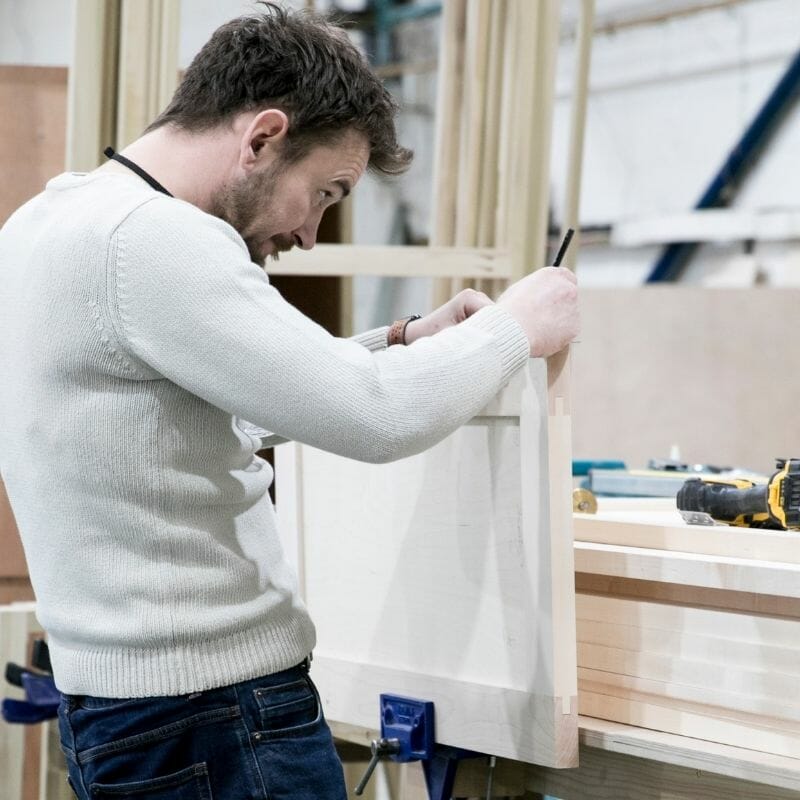
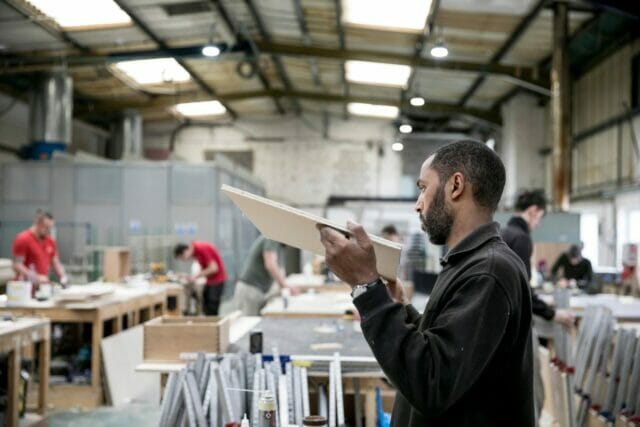
A working cabinetmaking workshop looks nothing like a showroom. It is where timber is measured, cut, jointed, and assembled by skilled craftspeople. It is where the real quality decisions happen, choices about which materials to use, how to construct a drawer box, whether to use a dovetail joint or something faster and cheaper, how paint is prepared and applied.
These decisions are invisible once a kitchen is installed. Their consequences are not.
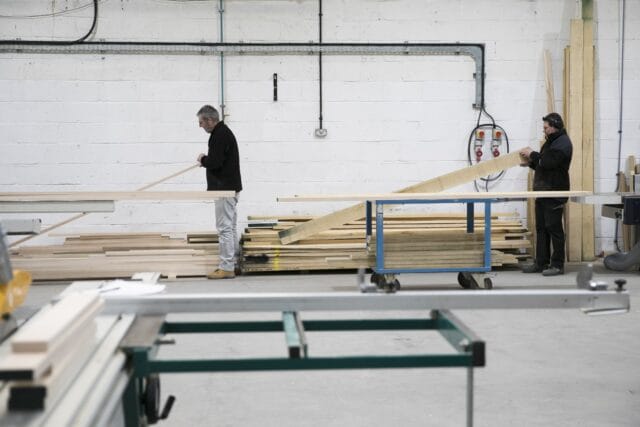
At the Higham Furniture workshop in Denmead, Hampshire, every kitchen is built from scratch to the exact specifications of each project.
Carcases are constructed from oak-veneered plywood rather than MDF, a material choice that sounds technical but has real consequences: plywood is stronger, holds fixings more securely, and is significantly more resistant to the moisture and temperature variation that kitchens endure over 20 or 30 years.
Drawer boxes are hand-crafted with dovetail joints, the interlocking pin-and-tail joinery that has been used by fine cabinetmakers for centuries because it produces stronger, more durable corners than any mechanical fixing.
Paint finishes are applied by hand, in multiple coats, to the precise colour specified for each project. Every kitchen is sized to the exact measurements of the space, not adjusted from a standard range with filler panels to cover the gaps.
This level of craft cannot happen in a showroom. It requires a dedicated workshop, skilled craftspeople, and a cabinetmaker who is directly accountable for what comes out the other end.
Why Does a Showroom Add to the Cost of Your Kitchen, Without Adding to Its Quality?
High-street showrooms are expensive to operate. Prime retail locations in London, the Home Counties, or affluent market towns carry substantial rental costs, often tens of thousands of pounds per month for flagship sites.
Add the cost of display kitchens (each one a significant fit-out in its own right), sales staff, interior design, lighting, and ongoing maintenance, and the overhead structure of a showroom-based kitchen brand is substantial.
Those overheads are recovered through pricing. When you buy a kitchen from a showroom-based brand, a portion of what you pay goes toward keeping the showroom running, not toward the materials, craftsmanship, or design complexity of your kitchen.
This is the mark-up that the showroom model imposes on every client, regardless of whether they found value in the showroom visit itself.
The direct-from-maker model removes this layer entirely. By operating without a high-street showroom, Higham Furniture directs more of the project budget toward the kitchen itself, the materials, the cabinetmaking, and the design process.
You are not paying for display models in a Fulham boutique. You are paying for your own kitchen.
This is not a claim about being cheap. Higham’s kitchens are premium investments, they compete on the quality of what is made, not on price.
The point is that what you pay for is directed toward craft and materials, not retail theatre. For a discerning buyer who understands how these businesses operate, that distinction is significant.
What Should You Look for in a Kitchen Maker’s Workshop?
Not all workshops are equal, and visiting one, or at least asking specific questions about it, is one of the most useful things you can do when evaluating a kitchen company. Here is what genuinely separates a strong cabinetmaking operation from one that uses workshop language as marketing rather than description.
Does the company own its workshop? A cabinetmaker who operates their own dedicated workshop has direct control over quality at every stage.
Companies that outsource production, even to well-regarded factories, introduce a layer of separation between the design intention and the manufactured result.
Can you visit during production? A genuine cabinetmaker will invite you to see your kitchen being built. At Higham Furniture, clients are welcome to visit the Denmead workshop in Hampshire at any point during the production process.
This is not a marketing gesture, it is a natural expression of transparency. If a company is reluctant for you to see the workshop, that reticence is worth noting.
What materials are used, and why? Ask specifically about carcase construction (plywood or MDF), drawer box joinery (dovetail or cam-lock), and paint finish application (hand-applied or factory spray).
A cabinetmaker who knows their craft will answer these questions fluently and specifically. Vague answers about “quality materials” and “premium finishes” without detail should prompt further questions.
Who is making the kitchen? In the best cabinetmaking businesses, there is a direct relationship between the client and the people building the kitchen.
Tim Higham built Higham Furniture around this principle, the idea that a client commissioning a significant piece of furniture should know who is making it and be able to speak to them directly.
How Does Higham Furniture Work Without a Showroom?
The Higham model replaces the showroom with two things that are more useful for prospective clients: a design studio and a working relationship.
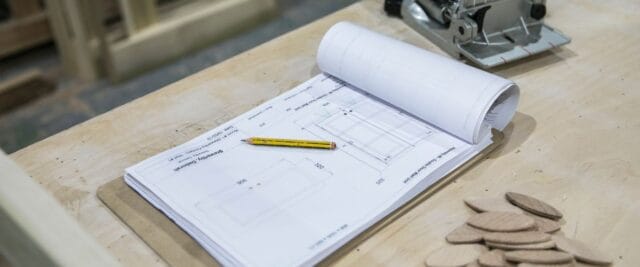
The Fulham design studio in London is where initial conversations happen. It is a consultation and design environment, a place to look at materials, discuss proportions and finishes, review drawings, and understand the process.
It is not a product display floor. It is closer to an architect’s studio than a kitchen retailer’s outlet.
For most clients in London and the South East, it is more convenient than a journey to a large showroom complex, and the conversation that happens there is more substantive.
The Denmead workshop in Hampshire is where kitchens are built. Clients who want to see their kitchen in production are welcome to visit, something showroom-based brands typically cannot offer because their manufacturing happens elsewhere.
Between the two, clients have a direct, continuous relationship with the people designing and making their kitchen.
There is no handoff from sales to production, no account manager managing a relationship with a factory, no distance between the design intention and the result.
This is a deliberately different model from the showroom norm, and it is one that rewards clients who value the relationship as much as the finished product.
Higham Furniture won the British Design & Manufacturing Award at the Designerati Awards UK 2025 for the Putney Painted Oak Framed Shaker Kitchen, a recognition of genuine design and manufacturing excellence from a panel judging the work itself, not the presentation.
The company holds 80 reviews on Houzz and 22 on Google, the majority from clients who have been through the full design, build, and installation process. These are the proof points that matter when evaluating a cabinetmaker: not the showroom, but the work.
What Is the Right First Step If There Is No Showroom to Visit?
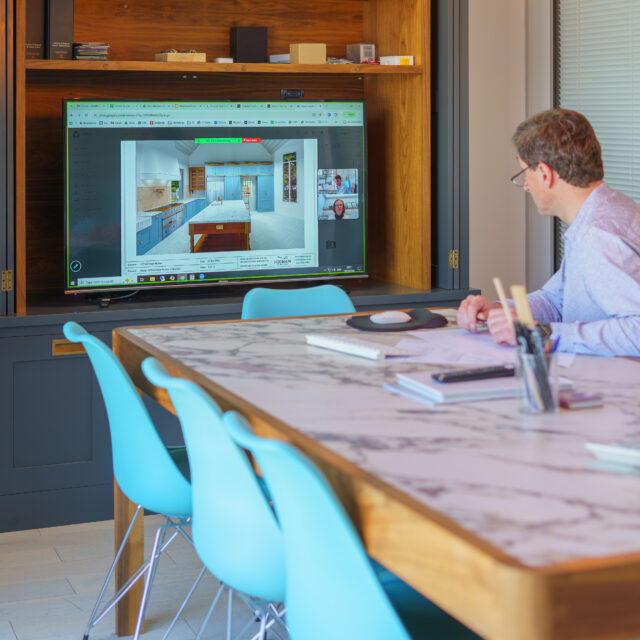
The equivalent of a showroom visit, done properly, is a 30-minute design call.
At Higham Furniture, every client relationship begins with a free 30-minute conversation, available by phone, video, or in person at the Fulham design studio. There is no obligation to proceed, no sales pressure, and no requirement to arrive with a formed brief.
It is a chance to ask any question about the process, the materials, the timelines, and what a bespoke kitchen project actually involves from first call to final installation.
Higham calls this “Clarity Before Commitment.” The purpose is to give you a genuinely useful first step, one that helps you understand whether a handmade kitchen made in a real workshop is the right choice for your home, and whether Higham Furniture is the right maker to build it.
That is a more honest and more informative starting point than walking through a showroom looking at kitchens that someone else commissioned.
For anyone considering a bespoke kitchen in London or the South East, the design call is the place to begin. Visit us to arrange yours, or contact the Fulham studio directly.
Frequently Asked Questions
Hampshire, giving clients direct confidence in what they are investing in.
Does Higham Furniture have a showroom?
Higham Furniture does not operate a traditional high-street showroom. Instead, the company runs a design studio in Fulham, London, where initial consultations, material reviews, and design conversations take place. Prospective clients can also visit the working workshop in Denmead, Hampshire, to see kitchens being made, something most showroom-based brands cannot offer.
How do high-street kitchen showrooms affect pricing?
Showrooms carry significant operational overheads, prime retail locations, display kitchens, sales staff, and ongoing fit-out costs. These overheads are typically built into the pricing of every kitchen sold through a showroom-based brand. By operating without a high-street showroom, Higham Furniture directs more of the project budget toward the kitchen itself: the materials, cabinetmaking, and design, rather than retail overheads.
Can I visit the Higham Furniture workshop?
Yes. Clients are welcome to visit the Higham Furniture workshop in Denmead, Hampshire at any point during their kitchen’s production. This transparency, seeing the workshop, understanding the process, and meeting the craftspeople making your kitchen, is a natural part of how Higham works and reflects the direct relationship the company builds with every client.
What is the alternative to visiting a kitchen showroom?
The most useful alternative is a direct design conversation with the cabinetmaker themselves. At Higham Furniture, this takes the form of a free 30-minute design call, available by phone, video, or in person at the Fulham design studio. It covers your space, brief, materials, and timeline, and requires no prior commitment or formed brief. Higham describes this as “Clarity Before Commitment.”
What proof should I look for when evaluating a cabinetmaker’s workshop quality?
Look for specific, verifiable evidence: the joinery techniques used in drawer boxes (dovetail joints are a reliable quality indicator), the carcase materials (oak-veneered plywood versus MDF), the method of paint application (hand-applied versus factory spray), and whether the company can show you work in progress.
Independent reviews that reference specific craftsmanship details, and industry awards judged on the work itself, are more reliable than showroom presentation.
Written by the Higham Furniture design team. Higham Furniture is an award-winning British cabinetmaker with a design studio in Fulham, London and a workshop in Denmead, Hampshire. Arrange your design call.