When you start researching a high-quality kitchen, you’ll quickly encounter three very different types of business, all using similar language, all claiming to offer bespoke design, and all with very different ways of working.
The distinction between a kitchen showroom, a kitchen company, and a direct cabinetmaker matters far more than most buyers realise. It affects who actually designs your kitchen, who builds it, who you deal with throughout the process, and ultimately what you pay for the privilege.
Higham Furniture is a cabinetmaker, a company that designs, builds, and installs every kitchen in-house, from a dedicated workshop in Denmead, Hampshire, without a high-street showroom layer in the middle. Understanding why that matters is the purpose of this guide.
What Is a Kitchen Showroom?
A kitchen showroom is, at its core, a retailer. It displays kitchens made by external manufacturers, often German flat-pack cabinet systems or modular ranges from a handful of suppliers, and sells them to homeowners through a sales team working on commission.
The showroom itself is typically large, expensively fitted out, and located in a prime retail location. All of that costs money. Browse our completed kitchen projects.
What you are paying for in a showroom-based kitchen is, to a significant degree, the showroom itself: the rent, the staff, the display units, the marketing, and the margin the showroom takes between the manufacturer’s price and yours.
The design service is usually included in the price, but the designer is working within the constraints of whatever range the showroom sells, not designing freely to your specification.
For many buyers, a good showroom experience is perfectly satisfying. But for those who want genuine design freedom, handmade construction, and a direct relationship with the people building their kitchen, a showroom model has inherent limitations.
The person who sells you the kitchen is rarely, if ever, the person who makes it. And the person who makes it may be a factory overseas.
There are excellent showrooms, and the kitchen design industry in London is sophisticated. But when comparing options at the premium end of the market, it’s worth understanding exactly what you’re funding.
What Is a Kitchen Company?
The term “kitchen company” is broad enough to describe almost any business in the industry, from IKEA to a boutique handmade maker. It is, essentially, a catch-all term rather than a meaningful category.
Some kitchen companies are manufacturers who also have showrooms. Some are showrooms that outsource production.
Some are kitchen designers who project-manage installation but build nothing themselves, bringing in a separate joinery firm. Some are direct cabinetmakers operating without retail premises.
The confusion is deliberate, in a sense. All of these businesses benefit from the loose language of “bespoke” and “handmade”, terms that have no legal definition and are regularly applied to kitchens that are, in practice, modular units assembled to order rather than made from scratch by a craftsperson.
When researching any kitchen business, the right question to ask is: who actually builds this? Where is it built? Can I visit the workshop? The answers will tell you far more than the language on the website.
What Is a Direct Cabinetmaker?
A cabinetmaker is a craftsperson or workshop that designs and manufactures furniture to order using woodworking skills and traditional joinery techniques.
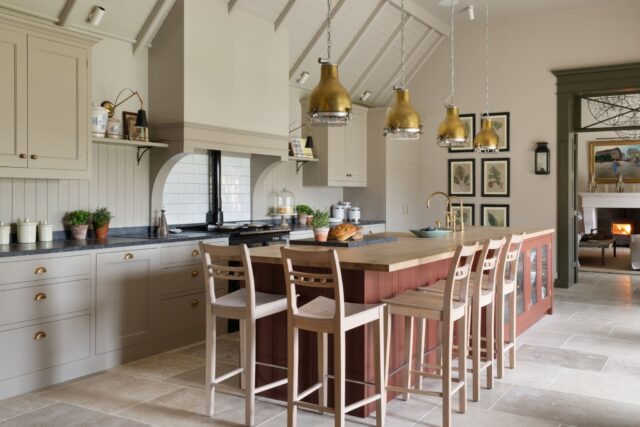
In the context of kitchens, a direct cabinetmaker is a business that takes a client’s brief, designs a bespoke kitchen around it, builds every component in their own workshop, and installs it, without a showroom, a third-party manufacturer, or a sales layer in between.
This is the oldest model in the furniture-making industry and, in some respects, the most honest. You commission something from a craftsperson, they make it for you, and it is yours, built to your exact dimensions, your specification, and your brief.
At Higham Furniture, every kitchen is designed from scratch and built by hand at the Denmead, Hampshire workshop. There are no modular cabinet systems, no flat-pack components assembled to order, and no external factories involved.
The team works from the workshop to the design studio in Fulham, London, with the client at the centre throughout. Clients are welcome to visit the workshop and see their kitchen being made, something no showroom model can offer.
This direct relationship between client, designer, and maker is not a marketing line. It is simply how cabinetmaking works.
How Does the Buying Process Differ?
The difference in process is significant, and worth understanding before you book your first appointment with anyone.
In a showroom, the process typically begins with a visit to the display floor. A designer (who is also a salesperson) works with you to configure a kitchen from the range on display, often using 3D visualisation software.
Quotations are generated based on the chosen range, and extras, worktops, appliances, installation, are often quoted separately. Lead times from order to installation are typically 10–20 weeks depending on the manufacturer.
With a direct cabinetmaker, the process begins differently, usually with a conversation rather than a showroom visit. At Higham Furniture, the first step is a free 30-minute design call, by phone, video, or in person at the Fulham studio.
This is not a sales call. It is a genuine conversation about your project: the space, the brief, the materials, the timeline. Tim Higham and the design team use this initial call to understand whether the project is the right fit and to give you honest guidance before any commitment is made.
The design process then moves through detailed plans, material selection, and when you are ready into production at the Denmead workshop.
The difference in experience is not subtle. One process is structured around a product range and a sale. The other is structured around your kitchen.
Which Is the Better Option for a Bespoke, High-Quality Kitchen?
For anyone investing seriously in a handmade kitchen for a London or South East property, the question is not which type of business is objectively “better”, it is which model is the right fit for what you actually want.
A showroom makes sense if you want a wide range of visible, touchable samples in a single location; if you are comfortable working within the constraints of an existing range; and if a fast, streamlined process is more important to you than complete design freedom.
A direct cabinetmaker makes sense if you want a kitchen designed specifically for your space with no limitations on proportion, finish, or construction; if you want to deal directly with the people making it; and if you are investing in something intended to last 20 or 30 years rather than to be replaced when it goes out of style.
Higham Furniture won the British Design and Manufacturing Award at the Designerati Awards UK 2025, a recognition of genuine craft, not retail marketing.
The winning project, the Putney Painted Oak Framed Shaker Kitchen, is the kind of work that is simply not possible within a showroom model. It was designed for a specific home, built by hand in Hampshire, and installed with the precision that only comes from a team that has been involved from the first conversation.
With more than 80 reviews on Houzz from clients who have been through the process, the track record speaks clearly. The buyers who choose a direct cabinetmaker are not simply paying for a kitchen. They are commissioning one.
Is There a Cost Difference Between the Three Models?
This is a reasonable question, and the honest answer is: it depends what you are comparing.
A premium showroom-based kitchen from a well-known brand can cost as much as, or more than, a handmade kitchen from a direct cabinetmaker.
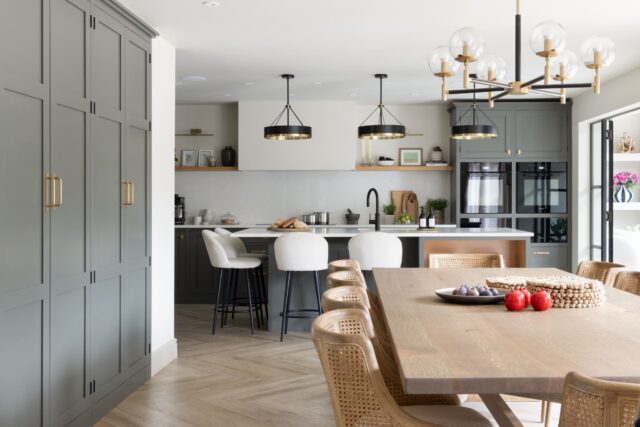
The difference is where the money goes. In a showroom model, a meaningful proportion of the budget funds the retail infrastructure, the showroom premises, the staff, the display units. In a direct-from-maker model, the budget goes into design time, materials, and craftsmanship.
This is not a reason to assume a cabinetmaker is always cheaper. Genuine handmade quality at the level Higham Furniture works to carries a price that reflects the skill, time, and materials involved. But for those comparing like-for-like, genuine handmade construction, bespoke dimensions, premium finishes, and a direct relationship with the maker, the direct model typically offers more of what you are paying for.
The Kitchen, Bedroom and Bathroom (KBB) industry body recommends that buyers ask detailed questions about who manufactures their kitchen and what the warranty covers before signing any contract.
The Federation of Master Builders similarly advises clients to visit any workshop or manufacturing facility before committing to a significant joinery project.
Starting a Conversation Before You’re Ready to Decide
Many of the best kitchen commissions begin with a conversation long before the buyer has a fixed brief, a confirmed budget, or even a definite timeline. That is, in fact, exactly the right stage to start talking to a cabinetmaker.
If you are considering a kitchen for a London home, whether you are renovating, extending, or building from scratch, the 30-minute design call at Higham Furniture is designed to give you clarity before any commitment. It costs nothing.
There is no obligation. It is simply a chance to ask anything and understand whether a handmade, direct-from-maker kitchen is right for your project.
The call can be taken by phone, video, or in person at the Fulham design studio. To arrange yours, visit .
Clarity before commitment. A better first step than a showroom visit.
Frequently Asked Questions
What is the difference between a kitchen showroom and a cabinetmaker?
A kitchen showroom is a retailer that sells kitchens made by external manufacturers, typically within a fixed product range. A cabinetmaker designs and builds kitchens from scratch in their own workshop to an individual client’s specification.
The showroom model involves a retail layer between the buyer and the manufacturer; the cabinetmaker model involves a direct relationship between the client and the people making the kitchen. Explore our recent kitchen projects
Can I visit the workshop where my kitchen will be built?
With a direct cabinetmaker like Higham Furniture, yes, clients are welcome to visit the Denmead, Hampshire workshop and see their kitchen being made. This is something a showroom model cannot offer, because the kitchen is typically manufactured off-site by a third-party supplier whose facilities are not open to clients.
Is a handmade kitchen from a cabinetmaker more expensive than a showroom kitchen?
Not necessarily on a like-for-like basis. Premium showroom kitchens from well-known brands can cost as much as, or more than, a handmade kitchen from a direct cabinetmaker.
The key difference is where the budget goes: in a showroom model, a portion funds the retail infrastructure; in a direct-from-maker model, the budget goes into materials, craftsmanship, and design time. Higham Furniture is transparent about pricing from the first design call.
What does “bespoke” actually mean in the kitchen industry?
The word “bespoke” has no legal definition and is used loosely across the industry. At its most meaningful, bespoke describes a kitchen designed from scratch to a client’s exact brief and built to the precise dimensions of the space, with no off-the-shelf components.
At Higham Furniture, every kitchen is genuinely bespoke in this sense: every cabinet is made to measure, every finish is chosen for the specific project, and nothing is taken from a standard range.
How long does the process take with a direct cabinetmaker?
The timeline varies by project complexity, but at Higham Furniture, most projects move from the initial design call through design development, material selection, workshop production, and installation over a period of approximately 12–20 weeks. The exact timeline is discussed from the first design call so clients can plan accordingly.
What should I ask a kitchen company before I commit?
The most important questions are: who actually manufactures the kitchen (is it made in-house or by a third party?), can you visit the manufacturing facility, what does the warranty cover and for how long, and who is your single point of contact from design through to installation? These questions will tell you far more about the business model than any brochure.
Written by the Higham Furniture design team. Higham Furniture is an award-winning British cabinetmaker specialising in handmade luxury kitchens, designed from the Fulham studio and built at the Denmead, Hampshire workshop.