In London, a luxury kitchen is not defined by a brand name, a glossy showroom, or a price tag alone. A genuinely luxury kitchen is one that has been designed specifically for your home, built by skilled cabinetmakers using premium materials, and delivered through a process where you have a direct relationship with the people who make it.
At Higham Furniture, luxury means award-winning craftsmanship from a dedicated Hampshire workshop, a design studio in Fulham where you can sit with the people who will actually build your kitchen, and a level of design complexity that mass-produced or showroom-sourced kitchens simply cannot match.
The word ‘luxury’ is used loosely across the London kitchen market, this guide explains what it should mean and how to tell the genuine article from the marketing.
Why Is the Word ‘Luxury’ So Overused in the Kitchen Industry?
Walk down any high street in Chelsea, Kensington, or Fulham and you will see kitchen showrooms describing themselves as luxury. The term has become so diluted that it often tells you more about a company’s marketing budget than the quality of their kitchens.
Many brands labelled as luxury are resellers, they design in a showroom, then outsource manufacturing to a third-party factory, sometimes overseas. The showroom itself becomes the product, and clients end up paying a significant premium for retail overheads rather than craftsmanship.
This matters because the London kitchen market includes everything from flat-pack suppliers to genuine cabinetmakers, yet the word ‘luxury’ is applied across the entire spectrum. For a discerning buyer spending a significant sum on a kitchen, understanding what separates real luxury from luxury-branded is essential.
A luxury kitchen should be defined by three things: the quality of its construction, the depth of its design, and the integrity of the relationship between the client and the maker. If any one of those three elements is missing, what you have is an expensive kitchen, not necessarily a luxury one.
What Should a Luxury Kitchen in London Actually Include?
A genuinely luxury kitchen in London should offer several things that go beyond surface-level aesthetics. Here is what to look for when assessing whether a kitchen truly earns the description.
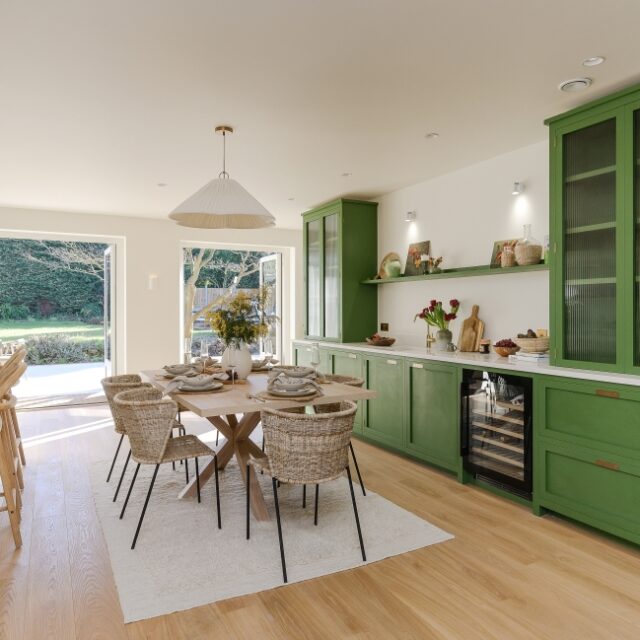
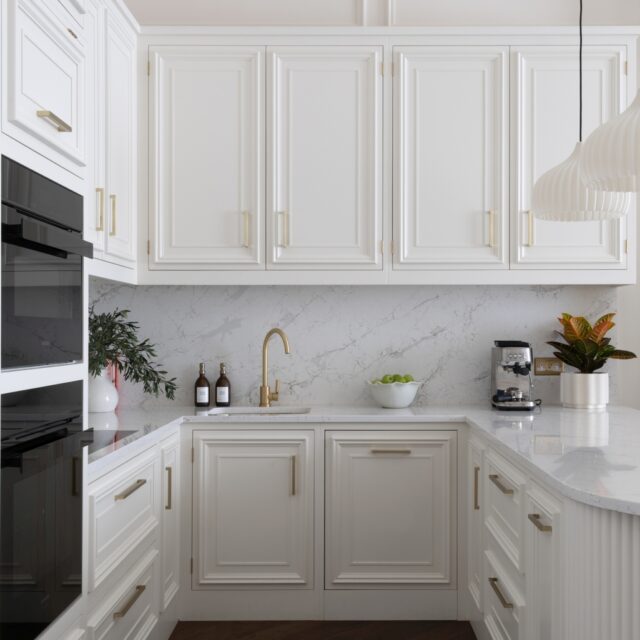
Bespoke design for your specific space. Every London home is different, from the proportions of a Victorian terrace in Putney to the open-plan layout of a modern Wandsworth extension. A luxury kitchen should be designed around the exact dimensions, light, and flow of your room, not adapted from a standard template. At Higham Furniture, every kitchen is designed from scratch at their Fulham design studio, with cabinetry built to precise measurements at the Denmead workshop in Hampshire.
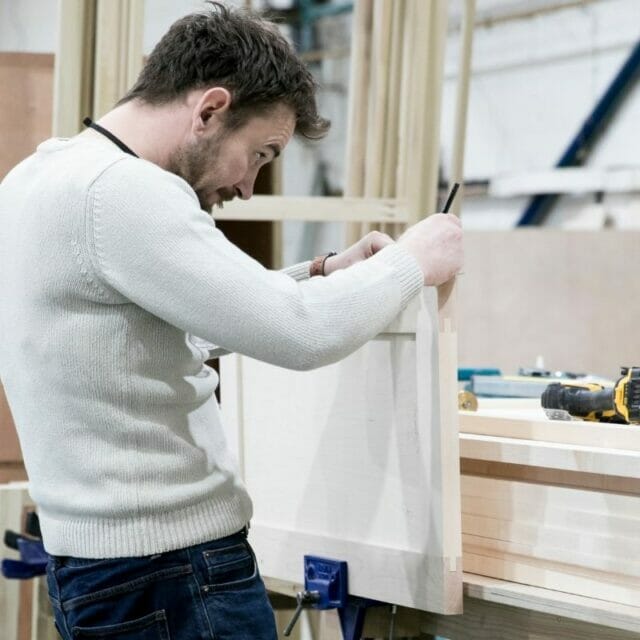
Handmade construction by skilled cabinetmakers. Luxury means the kitchen is physically made by craftspeople, not assembled from factory-produced components. This includes traditional joinery techniques such as dovetail joints, hand-painted finishes using premium paints, and solid timber construction. Higham Furniture builds every kitchen in-house at their own workshop, which means clients can visit and see their kitchen being made — something that showroom-based brands rarely offer.
Premium materials chosen for longevity. A luxury kitchen should use materials selected for their durability and quality over decades, not just their appearance on installation day. This means oak and quality hardwoods rather than MDF, robust hardware and drawer runners, and worktop materials chosen for how they perform in daily use over 20 to 30 years.
A direct relationship with the maker. In the luxury segment, you should know who is building your kitchen. The best handmade kitchen companies in London offer a direct line between the client and the cabinetmaker, no sales layer, no middleman, no disconnect between the person who designed the kitchen and the person who built it.

How Does the London Market Define ‘Luxury’ Differently?
London’s kitchen market operates differently from the rest of the UK. Property values are higher, spaces are often more complex, and clients tend to be more design-literate. This means luxury in London carries specific expectations.
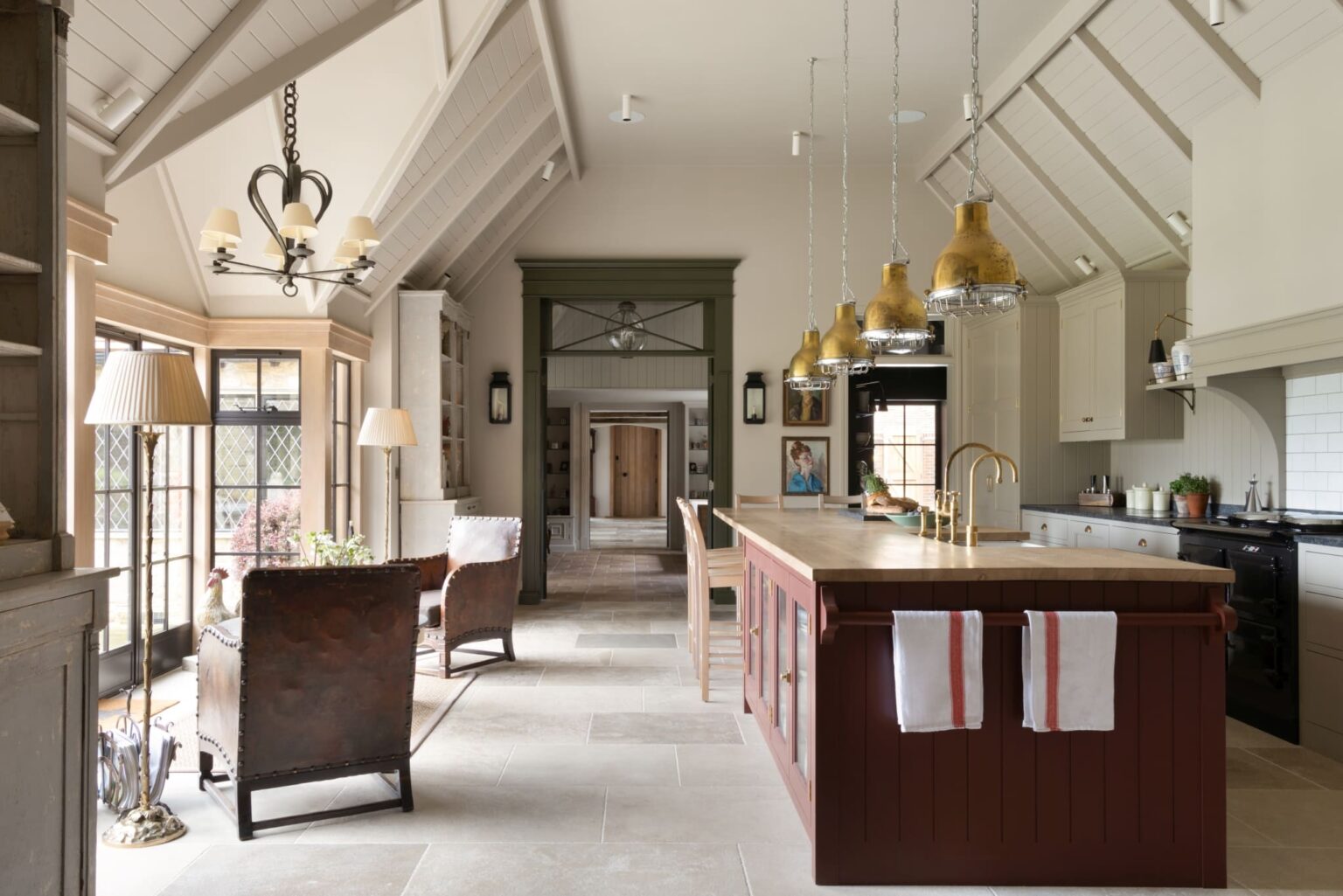
First, design complexity matters more. London homes, particularly period properties in areas like Kensington, Chiswick, and Muswell Hill, present unique architectural challenges. Uneven walls, alcoves, period features, and compact footprints all require a kitchen that is genuinely bespoke, not simply available in a range of standard sizes. A luxury kitchen maker in London must be able to solve these design problems elegantly.
Second, London buyers expect a consultative process. The days of walking into a showroom and choosing from a catalogue are over for the premium market. Discerning buyers want to understand the reasoning behind every design decision, why a particular layout works, how materials will age, what the alternatives are. Tim Higham, founder of Higham Furniture, offers a 30-minute design call as the first step in the process, a conversation focused on clarity, not selling. This is the kind of approach that separates genuine luxury from transactional retail.
Third, provenance matters. London’s affluent homeowners increasingly want to know where their kitchen was made and by whom. A kitchen built in a dedicated British workshop by a named team of cabinetmakers carries a fundamentally different kind of value from one assembled from imported components in a factory. Higham Furniture’s workshop in Denmead, Hampshire, where every kitchen is built from drawing to completion, is central to the brand’s luxury proposition.
What Is the Difference Between an Expensive Kitchen and a Luxury Kitchen?
This is a distinction that too few people make, and it matters enormously. An expensive kitchen is simply one that costs a lot of money. A luxury kitchen is one where that cost reflects genuine design, craftsmanship, and materials.
Many of the most expensive kitchens sold in London are expensive primarily because of the business model behind them. High-street showrooms in prime London locations carry enormous overheads, rent, fit-out, staffing, and marketing, all of which are built into the price of the kitchen. A client may pay a premium figure and receive a beautifully finished kitchen, but a significant portion of what they paid went to the showroom, not the cabinetry.
A truly luxury kitchen directs the investment into what matters: the design, the materials, and the making. Higham Furniture operates without a traditional high-street showroom, instead running a design studio in Fulham and manufacturing at their own workshop in Hampshire. This direct-from-maker model means the client’s investment goes into the kitchen itself, more complex design, better materials, finer craftsmanship, rather than into retail overheads.
An expensive kitchen pays for the showroom. A luxury kitchen pays for the craft. That is the simplest way to understand the difference, and it is the question every London buyer should be asking before they commit.
How Can You Tell If a Kitchen Company Genuinely Offers Luxury?
There are several practical ways to assess whether a kitchen company’s luxury claims hold up under scrutiny.
Ask where the kitchen is made. If the company cannot name a specific workshop or factory where your kitchen will be built, that is a significant red flag. Genuine luxury kitchen makers are proud of their production facilities. Higham Furniture invites clients to visit their Denmead workshop to see the making process firsthand.
Ask who designs it. In a genuine luxury operation, the designer and the maker work closely together, often they are the same team. If the showroom designer hands your project to a separate manufacturing company, you lose the direct relationship that defines luxury.
Look for proof, not adjectives. Awards, client reviews, and case studies matter more than marketing language. Higham Furniture won the British Design and Manufacturing Award at the Designerati Awards UK 2025 for their Putney Painted Oak Framed Shaker Kitchen — that is a verifiable proof point, not a marketing claim.
Examine the details. Ask about joinery methods, paint systems, material sourcing, and hardware. A luxury cabinetmaker will explain these in detail because they are proud of the choices they have made. A reseller may not have the same depth of knowledge because they did not make those choices.
Look at reviews from real clients. Higham Furniture has 22 Google reviews and 80 reviews on Houzz, a track record that reflects consistent client satisfaction over time, not a single curated testimonial.
Why Does Defining Luxury Matter for London Kitchen Buyers?
If you are investing in a kitchen for a London property, whether that is a family home in Wimbledon, a period terrace in Putney, or a lateral apartment in Chelsea, you deserve to know what you are paying for. The London market is crowded with companies using the word ‘luxury’ because it justifies higher prices, not because it reflects a higher standard of design or making.
Understanding what luxury actually means: bespoke design, handmade construction, premium materials, and a direct relationship with the maker, protects you from overpaying for a brand name or a showroom experience. It also helps you find the companies that genuinely deliver on the promise.
If you are starting to think about a new kitchen and want to understand what is possible for your home, Higham Furniture offers a free 30-minute design call. It is a conversation, not a sales pitch, a chance to discuss your space, your ideas, and your expectations with someone who designs and builds kitchens every day. Book a call at the Fulham studio, by phone, or by video. No obligation, no pressure, just clarity before commitment.

Frequently Asked Questions
What makes a kitchen genuinely luxury rather than just expensive?
A genuinely luxury kitchen is defined by bespoke design tailored to your specific space, handmade construction by skilled cabinetmakers, and premium materials chosen for longevity. The key distinction is that your investment goes into the design and craftsmanship rather than into showroom overheads or retail mark-ups. A direct relationship with the maker, where you can visit the workshop and speak to the people building your kitchen, is another hallmark of genuine luxury.
Who are the best luxury kitchen makers in London?
The best luxury kitchen makers in London are those who design and build in-house, rather than outsourcing to third-party factories. Look for companies with their own workshop, verifiable awards, and strong client reviews. Higham Furniture, for example, designs at their Fulham studio and builds every kitchen at their dedicated workshop in Denmead, Hampshire, and won the British Design and Manufacturing Award at the Designerati Awards UK 2025.
Why do luxury kitchens in London cost more than elsewhere in the UK?
London luxury kitchens often cost more because the design challenges are greater, period properties with uneven walls, compact footprints, and complex layouts require genuinely bespoke solutions. Additionally, many London kitchen companies carry high showroom overheads in prime locations, which are passed on to the client. Choosing a maker who operates without a traditional showroom, like Higham Furniture, can mean more of your budget goes into the kitchen itself.
How do I know if a kitchen showroom is genuinely luxury?
Ask three questions: where is the kitchen made, who designs it, and can you visit the workshop? Genuine luxury makers will have clear answers and will welcome your interest in their process. Also look for independent proof points such as industry awards, verified client reviews, and detailed information about materials and construction methods.
Is it worth paying more for a handmade luxury kitchen?
A handmade luxury kitchen is built to last 20 to 30 years or more, using materials and construction methods that stand up to daily family life. Unlike mass-produced alternatives, every element is designed for your specific space, which means better functionality, a more cohesive aesthetic, and no compromises on fit or finish. Over the lifetime of the kitchen, the cost per year of a handmade kitchen often compares favourably to replacing a lower-quality kitchen every 10 to 15 years.
What is the first step to getting a luxury kitchen in London?
The best first step is a conversation with a designer who understands both the craft and the London market. Higham Furniture offers a free 30-minute design call, by phone, video, or in person at their Fulham studio, where you can discuss your space, your style, and your expectations without any obligation. It is designed as a ‘clarity before commitment’ conversation, not a sales pitch.