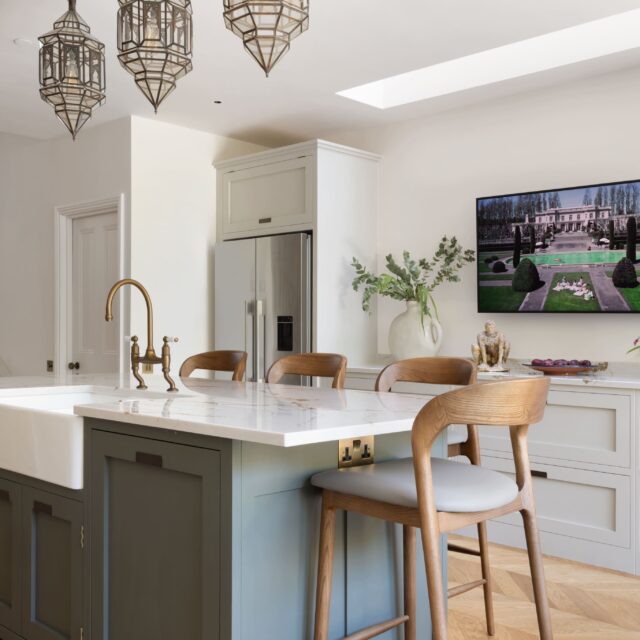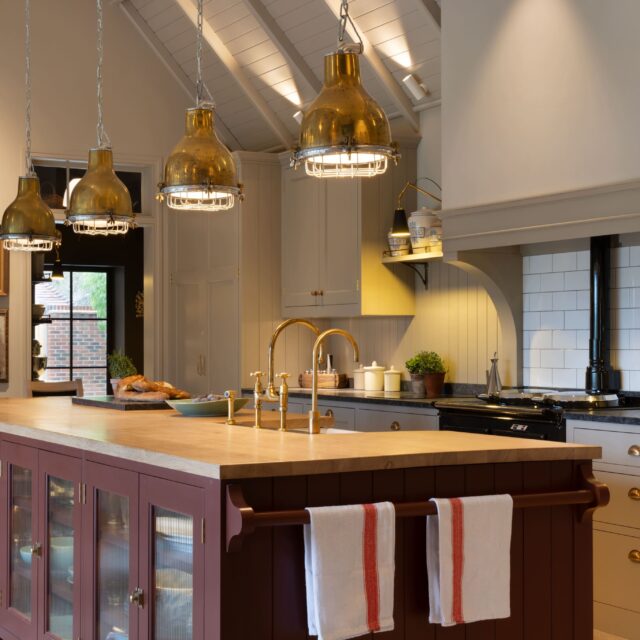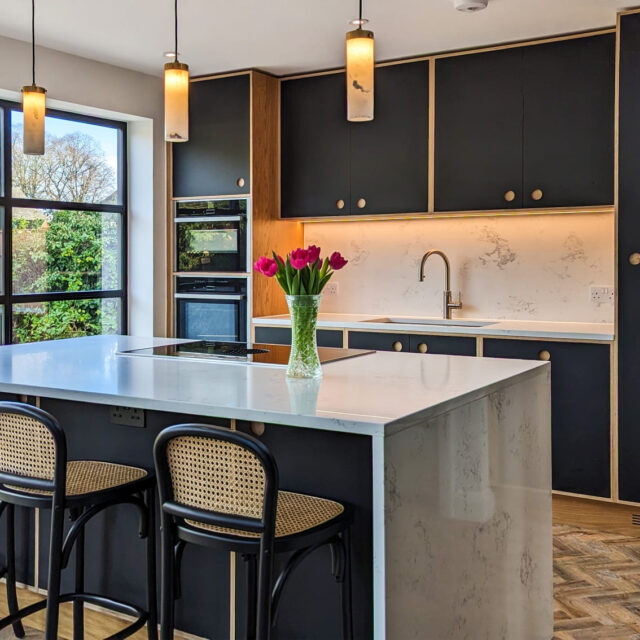

Kitchen hardware is one of those elements that buyers often leave until late in the design process, treating it as a finishing detail rather than a design decision. In practice, hardware has a disproportionate effect on how a kitchen looks, how it feels to use every day, and how well it functions over 20 years or more.
At Higham Furniture, hardware is discussed early in the design process because it affects how the kitchen is detailed, how doors and drawers are proportioned, and what kind of quality is built into the finished product. This guide explains what to look for and why the decisions matter.
Handles and the Visual Impact of Hardware
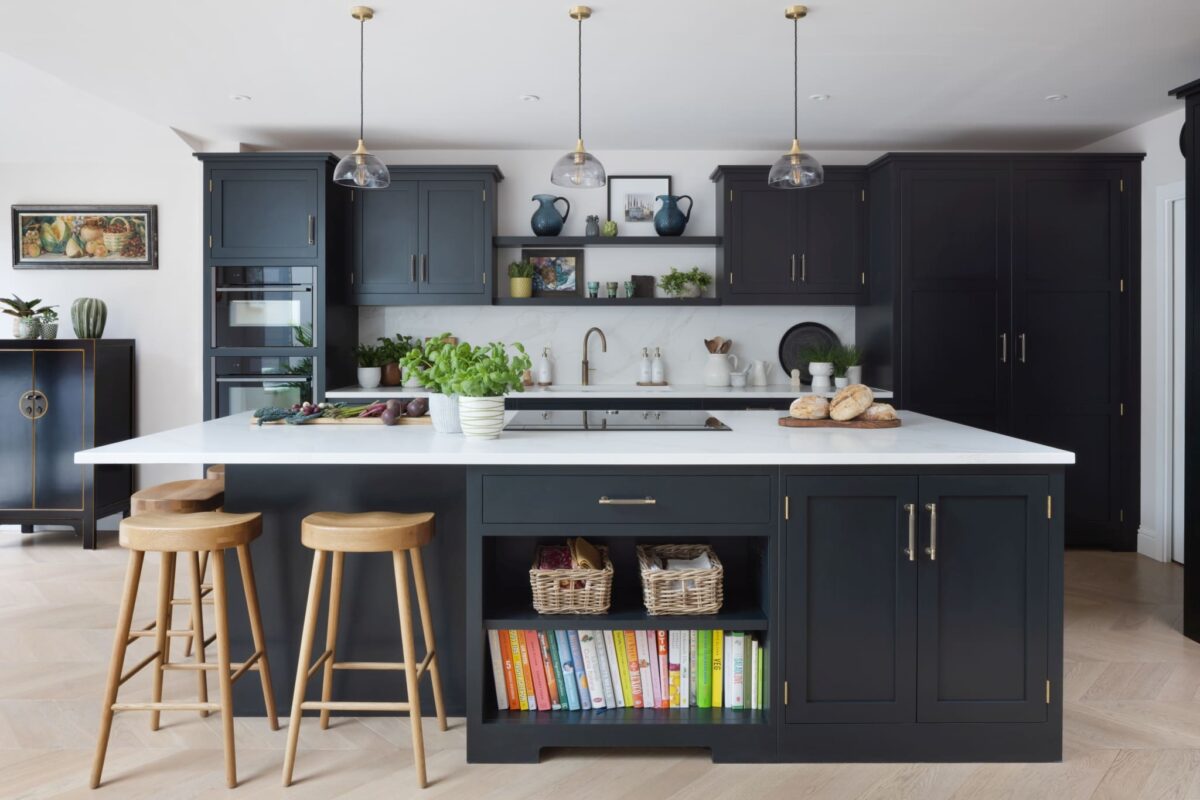
Handles are the most visible element of kitchen hardware, and they have a significant effect on the overall character of a kitchen. The wrong handle on the right cabinet can undermine the whole design. The right handle elevates it.
At the most fundamental level, handle choice is a style decision. Bar handles in brushed nickel or stainless steel read as contemporary. Cup handles in aged brass or bronze read as traditional. Inset handles, recessed into the door profile, read as refined and considered across both contemporary and traditional styles.
Higham Furniture produces kitchen hardware exclusively with Armac Martin, one of Britain’s finest hardware manufacturers. Our proprietary inset handle design is available only through Higham, and it is one of the clearest expressions of the attention to detail that goes into every kitchen we make. For more on how hardware integrates with kitchen style, see our guide to handleless, shaker, and in-frame kitchens.
Hinges: The Hardware You Do Not See
Concealed hinges are invisible when cabinet doors are closed, but they determine how a door opens, how it stays open, and how well it continues to function after years of daily use. Hinge quality varies significantly, and the difference between a well-engineered hinge and a cheaper alternative becomes apparent over time.
High-quality hinges from manufacturers such as Blum have consistent opening angles, soft-close mechanisms that engage reliably, and adjustment systems that allow the door position to be fine-tuned without removing the hinge. They are designed to function correctly after 100,000 opening cycles. Cheaper hinges are not.
In a kitchen where cabinet doors are opened multiple times a day, every day, hinge quality is not a minor detail. It is a meaningful factor in how the kitchen works five years after installation.

Drawer Runners: The Most Used Hardware in Your Kitchen
Drawers are typically the most used elements in a kitchen cabinet configuration, and the quality of the runner system determines how a drawer opens and closes for the life of the kitchen. A well-engineered drawer runner from a manufacturer such as Blum or Hettich opens smoothly across the full extension of the drawer, carries weight consistently, and closes with a soft close that is quiet and reliable.
Inferior drawer runners stick, become difficult to open under load, develop play in the running direction, and fail in their soft-close mechanism. In a deep drawer storing pots and pans, the difference in daily experience between a quality runner and a poor one is immediately apparent.
Finish Consistency Across Hardware
One of the most common hardware mistakes is mixing finishes without intention. Brushed nickel handles with polished chrome tap and aged brass pendant lights create visual confusion rather than character. Choosing a hardware finish and applying it consistently across handles, tap, and any exposed metalwork creates coherence.
Higham Furniture’s design team considers hardware finish as part of the overall design rather than leaving it as a series of separate client decisions. The result is a kitchen where every metalwork element relates to the others.
Starting the Conversation with Higham
Hardware selection at Higham is part of the design process, not an afterthought. If you are at the stage of thinking about your kitchen design and want to understand the role hardware plays in the overall outcome, book a design call here.

Frequently Asked Questions
What kitchen handle finish is most popular right now?
Brushed brass and aged brass finishes have been consistently popular in premium kitchen design for several years and continue to work well across shaker and traditional styles. Brushed nickel and matte black work well in contemporary kitchens. The most important consideration is not what is popular but what works consistently with the cabinet colour, worktop, and other metalwork in the specific kitchen.
Does handle quality affect how long a kitchen lasts?
Yes, in terms of both function and appearance. High-quality handles with durable finishes maintain their appearance and structural integrity over years of daily use. Cheaper handles with plated finishes can tarnish, scratch, and loosen. For a kitchen designed to last 25 to 30 years, hardware quality is a meaningful investment.
What is the difference between soft-close and push-to-open mechanisms?
Soft-close mechanisms slow the final movement of a door or drawer as it closes, preventing slamming and reducing wear on the cabinet. Push-to-open mechanisms open a door or drawer when pressed, without the need for a handle. Both require high-quality engineering to function reliably over time. Higham Furniture uses Blum hardware throughout for its proven performance and longevity.
Should kitchen handles match throughout the whole kitchen?
In most cases, yes. Consistent handles across all cabinets create visual coherence. Mixing handle styles within a single kitchen can work if it is a deliberate design decision, for example, different handles on island cabinets versus wall cabinets, but inconsistency without intention reads as a lack of resolution in the design.
Are Higham’s handles available separately?
No. Higham’s proprietary inset handles, produced exclusively with Armac Martin, are available only as part of a Higham Furniture kitchen. They are not available through retail channels. This exclusivity is part of the considered product offering that distinguishes a Higham kitchen from alternatives in the market.
Written by the Higham Furniture design team. Higham Furniture is an award-winning cabinetmaker based in Denmead, Hampshire, with a design studio in Fulham, London. Tim Higham and his team have been designing and building bespoke handmade kitchens for discerning homeowners across London and the South East.