
In-frame is one of those terms that appears frequently in premium kitchen marketing without always being fully explained. It describes a construction method, not a style, and it is the single most significant quality distinction available in kitchen cabinetmaking. Most buyers who encounter the term are unsure what it means, and some companies use it loosely to describe anything that looks traditional or substantial.
This article explains what in-frame construction actually involves, how it differs from the alternative, and whether the additional investment is worth making for your project.

What In-Frame Construction Means
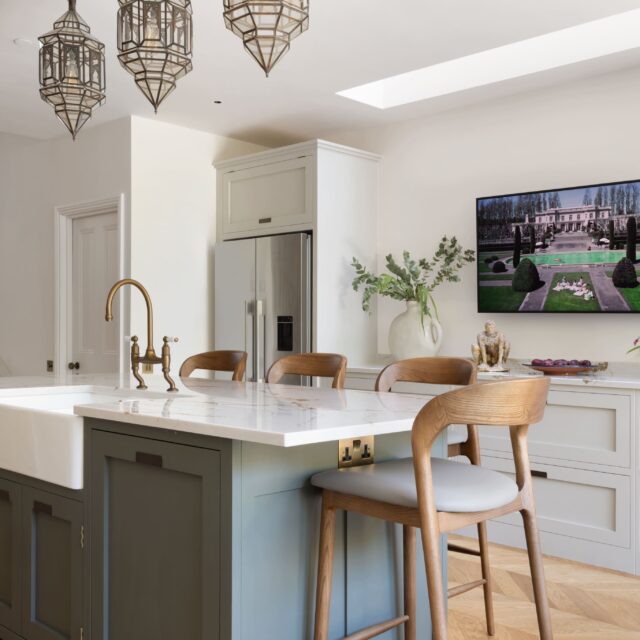
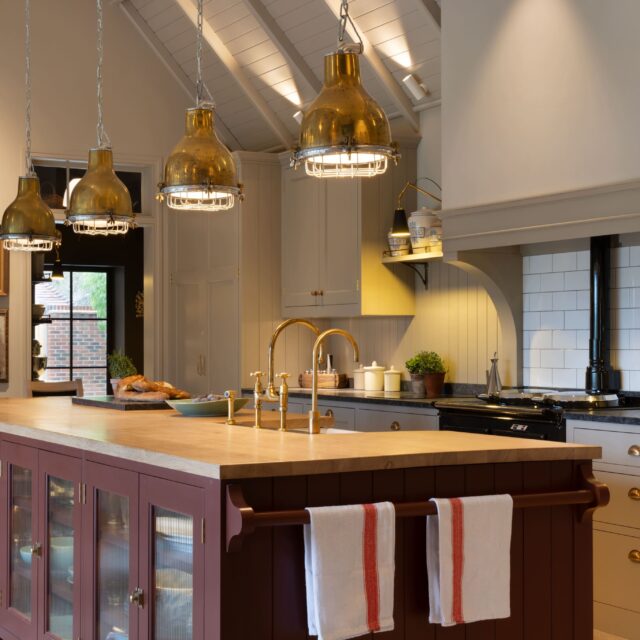
In-frame refers to how the doors and drawer fronts of a cabinet are attached relative to the cabinet structure. In a standard overlay cabinet, the door is attached to the front of the carcase, covering the frame. In an in-frame cabinet, the door sits within a solid timber frame that forms part of the cabinet structure itself. The frame is visible when the doors are open, and the door sits flush inside it.
The frame is structural. It is part of the cabinet, not a decorative addition. This means the frame must be built to precise tolerances, the doors must be fitted within it, and the whole assembly must be exactly square for the doors to hang and close correctly. This level of precision requires considerably more skill, time, and material than overlay construction.
At Higham Furniture, in-frame construction is central to our workshop’s capabilities. Every in-frame kitchen is built at our Denmead facility to the same joinery standards applied to fine furniture. The difference is immediately apparent when you see the construction in person, which is why we welcome workshop visits. For more on construction quality markers, see our guide to the questions to ask any kitchen maker.
In-Frame vs Overlay: The Practical Differences
The practical differences between in-frame and overlay construction affect both the finished product and the longevity of the kitchen.
In terms of appearance, in-frame creates a sense of architectural solidity that overlay cannot replicate. The visible frame on the face of the cabinet produces depth and shadow lines that give the kitchen the presence of fine fitted furniture. Overlay cabinets, by contrast, present a flatter face, which works well for contemporary styles but lacks the architectural weight that in-frame delivers.
In terms of longevity, in-frame construction is significantly more durable. The solid timber frame adds structural integrity to the carcase. The construction method distributes the forces on doors and hinges differently, reducing wear over time. A well-made in-frame kitchen built from quality materials and hardware can last 30 years or more without significant deterioration.
In terms of cost, in-frame is more expensive than overlay construction at the same quality level. The additional material, skill, and time involved in producing in-frame cabinetry is reflected in the price. This is a genuine quality premium, not a marketing one.

Is In-Frame Worth the Investment?
Whether in-frame construction is worth the additional investment depends on what you are looking for from a kitchen.
If your priority is longevity, in-frame is the right choice. A kitchen built to in-frame standards, with quality materials and hardware, will outlast an overlay kitchen built to comparable surface specifications. For clients who are investing in a kitchen intended to last a generation, the additional cost of in-frame construction is well justified.
If your home is a period property, in-frame is particularly appropriate. The architectural weight and presence of in-frame cabinetry aligns naturally with the detailed joinery found throughout Victorian and Edwardian homes. A kitchen that feels like fine fitted furniture rather than an installed product is a better fit for a period building.
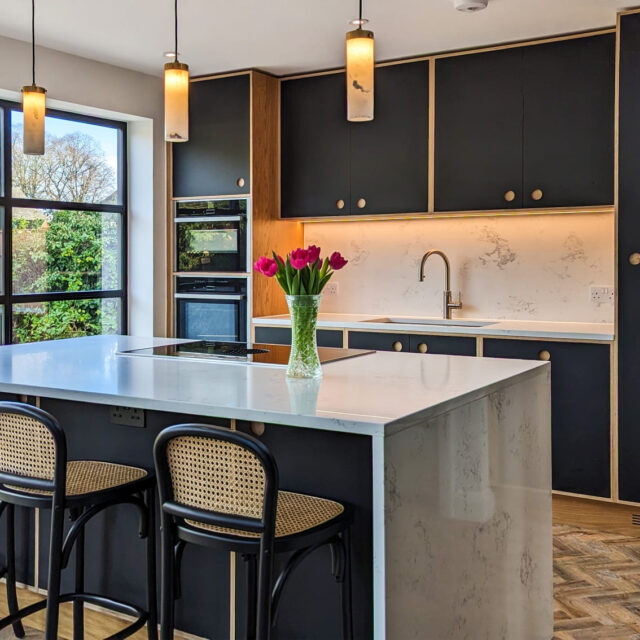
If you are looking for a contemporary, minimal aesthetic, in-frame is less relevant stylistically, though it remains a superior construction method. For handleless kitchens where the door front is the visual focus and frame detail is less prominent, overlay construction can be entirely appropriate at a high quality level.
For more on how construction method relates to style choice, see our guide to handleless, shaker, and in-frame kitchens.
Starting the Conversation
If you are considering an in-frame kitchen and want to see what the construction looks like in practice, the most informative step is a workshop visit. Higham Furniture welcomes visits to our Denmead facility for clients who want to see in-frame construction at first hand. The difference between in-frame and overlay is immediately apparent once you see and feel the cabinets in person.
Alternatively, the process begins with a private 30-minute design call. Book here.

Frequently Asked Questions
What is the difference between an in-frame and an overlay kitchen?
In an overlay kitchen, the door is attached to the front of the cabinet carcase and covers the frame. In an in-frame kitchen, the door sits within a solid timber frame that is part of the cabinet structure itself, with the frame visible when doors are open. In-frame requires greater precision, more material, and more skilled labour, and produces a cabinet with greater structural integrity and architectural presence.
Is in-frame construction more expensive?
Yes. The additional material, time, and skill involved in in-frame construction is reflected in cost. This is a genuine quality premium. For clients who want a kitchen that lasts 25 to 30 years and has the presence of fine fitted furniture, the cost is well justified.
Does in-frame only work with traditional kitchen styles?
In-frame is most commonly associated with shaker and traditional styles because the visible frame contributes architectural detail that suits period properties. It can also be used in contemporary designs where the construction quality is prioritised over the purely minimal aesthetic. The construction method and the style are related but not inseparable.
How do I know if a kitchen is genuinely in-frame?
Open the cabinet doors. In a genuine in-frame kitchen, you will see a solid timber frame forming the face of the cabinet, with the door having been fitted within it. Ask the maker directly whether the construction is in-frame or overlay, and ask to see an example either in a workshop or on a completed project.
Is in-frame worth it for a kitchen renovation in a period property?
For a period property, in-frame construction is particularly appropriate because the architectural weight and presence of the finished cabinetry aligns with the quality and character of original features. For clients investing in a kitchen intended to be in the home for 25 to 30 years, in-frame is the standard that best matches that ambition.
Written by the Higham Furniture design team. Higham Furniture is an award-winning cabinetmaker based in Denmead, Hampshire, with a design studio in Fulham, London. Tim Higham and his team have been designing and building bespoke handmade kitchens for discerning homeowners across London and the South East.