
Paint finish is one of the most visible quality differences between a well-made handmade kitchen and a factory-produced one. It is also one of the elements that buyers pay least attention to when comparing kitchens, because on a specification sheet it reads simply as “painted.” The reality is that painted finishes vary enormously in quality, durability, and character, and the difference is immediately apparent in person if you know what to look for.
At Higham Furniture, all kitchens are hand-painted using a bespoke palette developed in partnership with Little Greene Paint Company. This guide explains the options, the differences, and how to make the right choice for your kitchen.

Sprayed Lacquer: The Factory Standard
Most kitchen cabinets at the mid-market and premium end of the market are finished with sprayed lacquer applied in a controlled factory environment. The process is technically consistent and produces a smooth, even finish. At its best, sprayed lacquer looks clean and contemporary.
The limitations of sprayed lacquer become apparent over time. It can chip and scratch in ways that are difficult to repair without visible marks. The finish can have a slightly plastic quality that lacks the depth of a hand-painted surface. Touch-in repairs rarely match the original finish exactly, which is a particular problem on large flat areas of cabinetry.
Hand-Painted Finishes: The Higham Approach
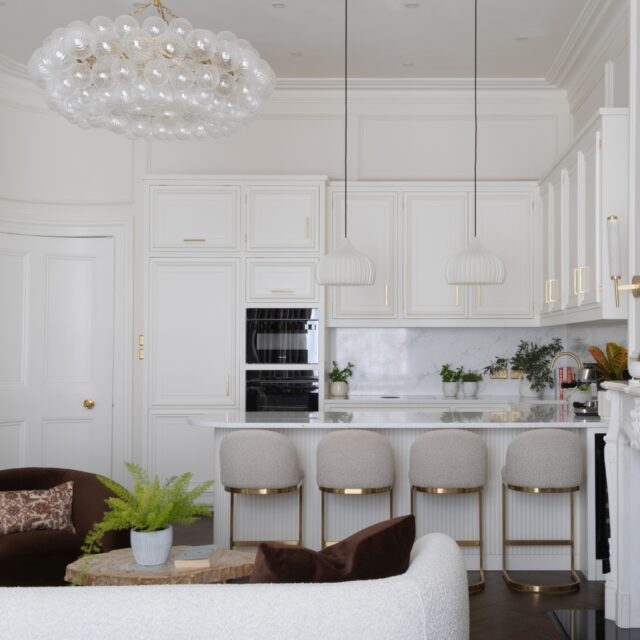
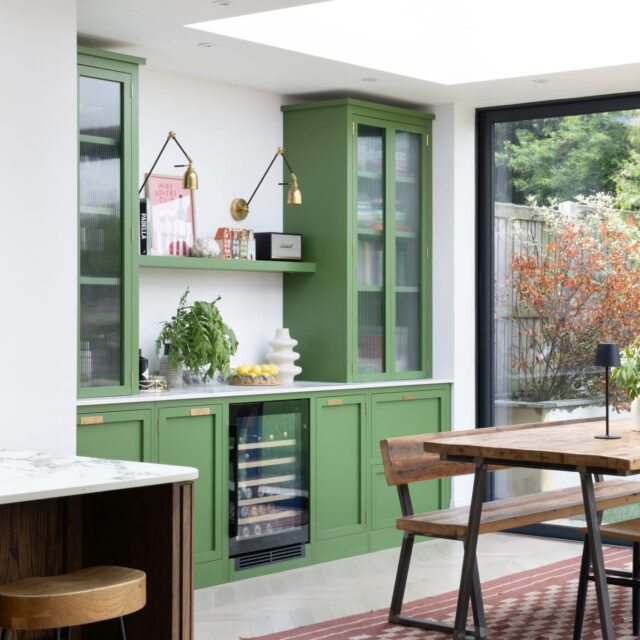
Hand-painting involves applying paint in multiple coats, allowing each coat to dry fully, and rubbing back between coats with fine abrasive paper before the next coat is applied. The result is a finish with genuine depth, one where the surface has been built up rather than applied in a single operation.
The quality difference compared to sprayed lacquer is apparent in several ways. The finish has a warmth and depth that reflects light differently from a flat sprayed surface. It is more repairable: a skilled painter can touch in a chip or mark in a way that blends with the original surface. And it improves slightly over the first few years as the paint hardens and settles.
Hand-painting takes more time than spraying, which is reflected in cost. For a kitchen designed to last 25 to 30 years, the investment in a hand-painted finish is well justified. For more on the relationship between finish quality and kitchen longevity, see our article on what makes a kitchen last 30 years.

Sheen Levels: Eggshell, Satin, and Semi-Gloss
The sheen level of a painted finish affects how it looks and how it wears. Kitchen cabinets are most commonly finished in eggshell (a low sheen level that reduces the visibility of marks) or satin (a slightly higher sheen that is easier to wipe clean but shows fingerprints more readily).
Semi-gloss finishes are occasionally used in contemporary kitchens where a higher reflectivity is part of the design intent, but they show every mark and are less forgiving in use.
For most kitchens, eggshell or a soft satin provides the best balance between appearance, practicality, and durability. Higham Furniture’s hand-painted finishes are typically in the eggshell to soft satin range, calibrated to the specific paint and colour chosen.
The Little Greene Partnership
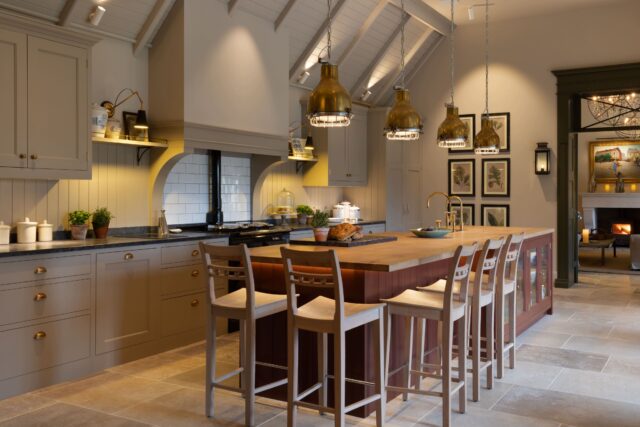
Higham Furniture’s bespoke colour palette has been developed in collaboration with Little Greene Paint Company, one of Britain’s finest independent paint manufacturers. Little Greene paints are formulated for depth and durability, and the specific palette available through Higham has been selected and tested over hundreds of completed kitchens.
Clients are not limited to this palette, but it represents colours that have been proven in kitchen environments and that work consistently well across Higham’s cabinetry profile and paint application process.
Book a design call to discuss colour and finish for your kitchen.
Frequently Asked Questions
What is the most durable paint finish for kitchen cabinets?
A hand-painted finish applied in multiple coats to prepared surfaces is generally more durable and more repairable than factory-sprayed lacquer. The quality of the paint itself, the preparation of the surface, and the number of coats applied all affect durability. Higham Furniture’s hand-painted finishes use Little Greene paints applied to a prepared primer base in multiple coats.
Is eggshell or satin better for kitchen cabinets?
Both work well. Eggshell has a lower sheen that is more forgiving in showing marks and fingerprints. Satin has a slightly higher sheen that is marginally easier to wipe clean but more likely to show fingerprints. For most kitchens, eggshell to soft satin is the right range.
Can kitchen cabinet paint be touched in if damaged?
Yes, with a hand-painted finish. A skilled painter can touch in chips and marks in a way that blends with the original surface, particularly on flat areas of cabinetry. Factory-sprayed lacquer is much harder to repair invisibly because the repair process cannot replicate the original spray application conditions.
Does the paint finish affect the cost of a kitchen?
Yes. A hand-painted finish applied in multiple coats with rubbing back between coats takes more time than a sprayed finish and is reflected in cost. For a kitchen designed to last 25 to 30 years, the additional cost of a hand-painted finish is a worthwhile investment in durability and repairability.
What paint does Higham Furniture use?
Higham Furniture uses Little Greene paints, applied by hand in multiple coats to a prepared primer base. The specific palette available through Higham has been developed in partnership with Little Greene and selected for how the colours work on Higham’s cabinetry profile and in the kinds of homes Higham’s clients live in.
Written by the Higham Furniture design team. Higham Furniture is an award-winning cabinetmaker based in Denmead, Hampshire, with a design studio in Fulham, London. Tim Higham and his team have been designing and building bespoke handmade kitchens for discerning homeowners across London and the South East.