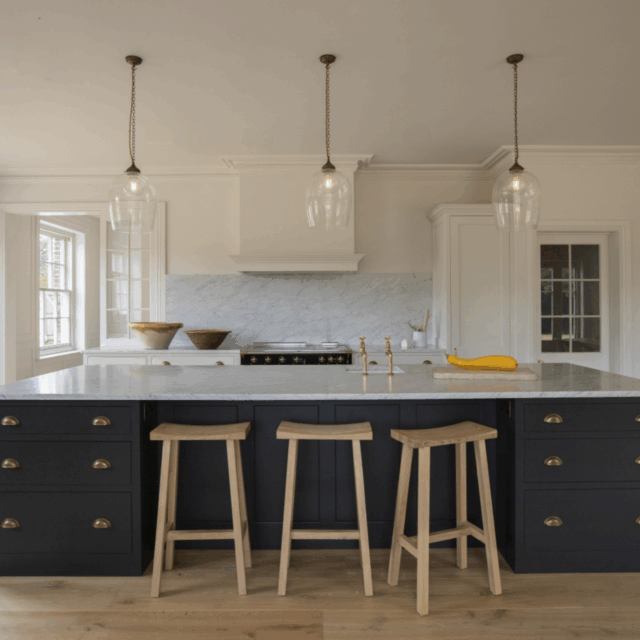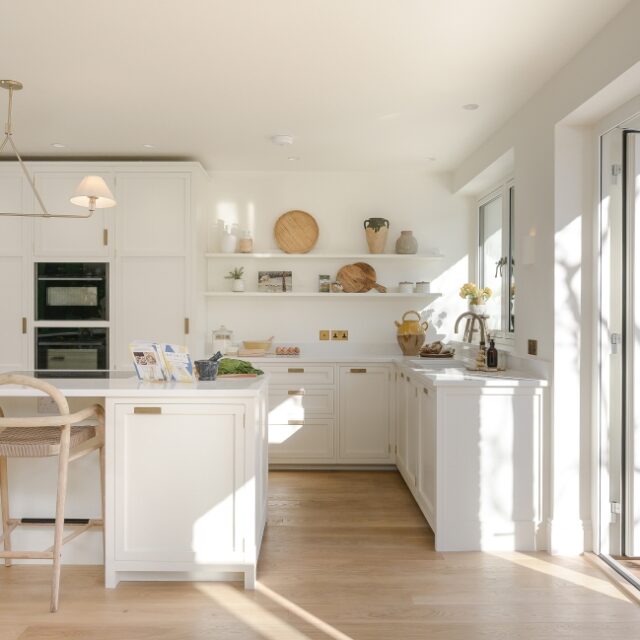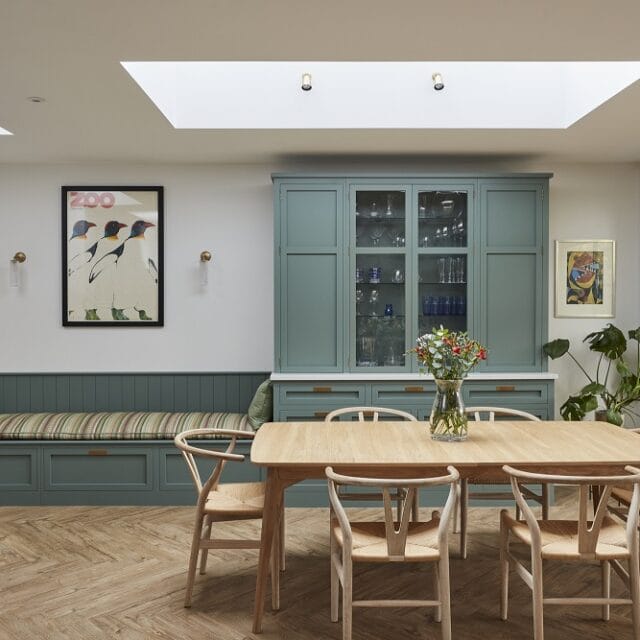

You don’t need to have everything figured out before you speak to a kitchen designer. In fact, the most useful thing you can bring to your first conversation is an honest picture of your space, a rough sense of what you want it to feel like, and a few practical constraints: budget, timeline, and how the kitchen fits into the rest of your home. At Higham Furniture, our 30-minute design call is specifically designed for people who are still in the early stages of thinking. You don’t need drawings, precise measurements, or a final decision. You just need to show up with what you know. and a willingness to ask questions.
This guide tells you exactly what to prepare before that first conversation, why each element helps, and what you can comfortably leave until later.
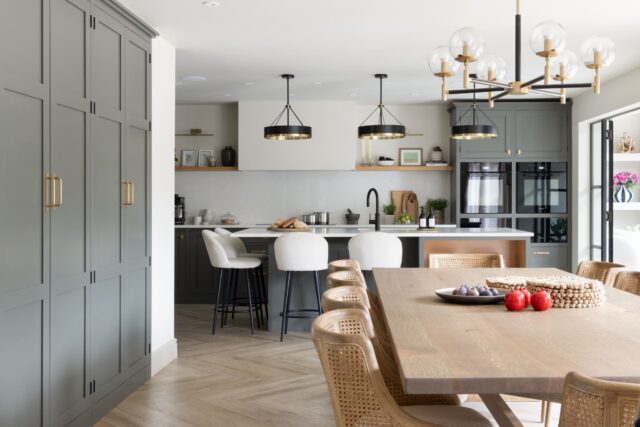
Why Briefing Matters: The Difference Between a Vague Conversation and a Useful One
A kitchen designer is, at heart, a problem-solver. But to solve your problem well, they need to understand it clearly. A brief isn’t a formal document, it’s simply a clear picture of where you are, where you want to be, and what you’re working with. The better the brief, the better the outcome.
The most common frustration homeowners describe after early design conversations isn’t that they didn’t know what they wanted. It’s that they didn’t communicate what they knew. They had a budget in mind but didn’t mention it. They knew the kitchen needed to work around a utility door but forgot to raise it. They had a strong preference for painted finishes but assumed it would come up later.
It always comes up later. But raising it upfront saves time, prevents misalignment, and gives the designer room to work creatively within the real constraints of your project. For a handmade kitchen, where every element is made to specification, not pulled from a warehouse – early clarity is especially valuable. To understand the first step in more detail, read What Happens in a 30-Minute Design Call?
What You Actually Need to Bring to a First Kitchen Design Conversation
1. Approximate Room Dimensions
You don’t need a fully measured architectural drawing. But knowing your kitchen’s approximate footprint: width, length, and ceiling height – gives the designer an immediate sense of what’s possible. If you have an island, a run of units along three walls, or a galley layout in mind, rough dimensions help enormously.
If you can measure the room yourself (even with a tape measure and a phone camera), do it. A photo of the space from each corner, alongside a rough sketch of where the doors, windows, and boiler are located, is a genuinely useful starting point. At Higham Furniture, a full measured survey is carried out later in the process, so this initial step is purely about context, not precision.
Key dimensions to note beforehand:
- Room length and width (approximate)
- Ceiling height
- Position of windows and external doors
- Location of fixed elements that can’t move (boiler, soil pipe, structural posts)
2. A Realistic Budget Range
Budget is one of the most useful, and most avoided, topics in early design conversations. Many homeowners worry that naming a number will either limit their options or invite a pitch aimed directly at that ceiling. In practice, knowing your budget range allows a designer to be genuinely helpful from the first call.
A handmade bespoke kitchen is a significant investment. Projects at Higham Furniture typically start from £50,000, with most falling in the £60,000–£100,000 range depending on scale, materials, and specification. Knowing this upfront lets both parties have an honest conversation rather than working through a design process that leads somewhere neither side intends.
If you’re not sure of your budget, that’s fine too. A rough sense of what you’re comfortable with, or what you’ve seen quoted elsewhere, gives the designer enough to work with. There’s no wrong answer here. The design call is explicitly designed to help you find clarity, not to pressure you into a number.
3. How You Use the Space (Honestly)
Every kitchen brief should include a realistic account of how the space is used, not how you imagine you’ll use it once it’s beautiful, but how you actually use it now. Do you cook every day? Do children do homework at the kitchen table? Is the kitchen open-plan, and does it need to work as a living space as well as a cooking space? Is there a dog? Regularly?
These details aren’t trivial. They affect material choices (painted finishes versus raw timber, gloss versus matte), layout decisions (island dimensions, worktop overhang, drawer depth), and the overall brief for how hardworking the kitchen needs to be. A handmade kitchen built for a family of five has different priorities than one designed for a couple who entertain formally.
At Higham Furniture, the design process begins with understanding how you live, not with a standard range or a pre-set layout. That’s what makes the outcome genuinely bespoke, rather than nominally so.
4. A Sense of the Style You’re Drawn To
You don’t need to know what you want. But if you have a sense of the styles, materials, or atmospheres that appeal to you, even loosely, it’s worth communicating that early. A board of saved images, a few screenshots from Instagram, a magazine page you’ve folded over, all of these are useful.
What tends to matter most isn’t a precise aesthetic brief, but an honest indication of direction. Do you want the kitchen to feel like it belongs to the house – period-appropriate, painted, traditionally jointed, or are you after something more contemporary, cleaner, handleless? Is wood a priority? Do you want visible grain or a uniform painted finish? Are you drawn to shaker doors, flat-fronted panels, or something with more decorative detail?
Higham Furniture’s core ranges: Shaker, In-Frame, Handleless, and Modern – cover a wide spectrum from traditional to contemporary. All are handmade in the same Denmead, Hampshire workshop, and all are fully bespoke in dimension and specification. Knowing roughly which direction appeals helps narrow the conversation to the designs that are genuinely right for your home.
5. Your Timeline, Including the Wider Project
A handmade kitchen takes time. From the first design call to the final day of installation, most projects at Higham Furniture run between 16 and 28 weeks. That’s roughly four to seven months – and that’s for a project that moves efficiently through design, approval, and production.
If your kitchen is part of a larger renovation: a loft conversion, an extension, a full house refurbishment – the timing of the kitchen needs to be planned in context. When is the structural work finished? When is first fix complete? When does the kitchen need to be in to allow the rest of the work to complete around it?
Bringing a rough project timeline, even a rough one, to the first conversation allows the designer to be honest about whether your ideal start date is achievable. It also flags early whether there’s a sequencing challenge that needs resolving before design work can begin. For a full breakdown of the project timeline, read How Long Does a Handmade Kitchen Take from First Call to Installation?
6. Any Fixed Elements You’re Working Around
Every kitchen project has constraints. Some are obvious: a structural wall that can’t move, an existing range cooker that’s staying, a window position that’s fixed because of planning rules. Others are less obvious but just as important: a back door that needs to stay accessible, a dog flap that needs incorporating, a boiler that’s due to be relocated but might not be.
The more clearly you can map these constraints at the start, the more efficiently the designer can work around them. Surprises that emerge mid-design, a soil pipe in the wrong place, a structural beam that rules out the planned island position — are the main cause of delays and redesign in kitchen projects. Surfacing them early isn’t a problem; it’s a sign of a well-prepared client.

What You Don’t Need to Prepare
It’s worth being equally clear about what you don’t need to have ready for an initial design conversation:
Precise measurements. A full measured survey is part of the Higham Furniture design process. You don’t need drawings or a floor plan, just a rough sense of the space.
A finalised style. Choosing materials, handles, worktops, and appliances comes later. In the first conversation, you’re establishing context, not signing off a specification.
A defined budget. If you know your number, share it. If you’re still working it out, that’s a fine place to start.
Architectural plans. Useful if you have them. Not a requirement.
Knowledge of kitchen industry terminology. Nobody expects you to know the difference between in-frame and overlay construction before you’ve spoken to a cabinetmaker. That’s what the conversation is for.
The Higham Furniture Approach: Clarity Before Commitment
At Higham Furniture, the 30-minute design call is built on a simple principle: you should leave with more clarity than you arrived with, and without any pressure to commit. It’s a conversation, not a pitch. You can ask about budget, about process, about timelines, about what makes a Higham kitchen different from a showroom purchase. You can bring a rough idea or a detailed brief. Both work.
The call can take place by phone, by video, or in person at the Fulham design studio, wherever is most convenient for you. Tim Higham and the design team have guided hundreds of homeowners through this process, from the early stages of wondering whether bespoke is right for them through to a finished kitchen built in Hampshire and installed in their home.
The best kitchen brief is an honest one, and the best time to start is before you think you’re ready.
To book your free 30-minute design call, visit higham.co.uk or contact the Fulham studio directly.

Frequently Asked Questions
Do I need to know my budget before speaking to a kitchen designer?
No, but it helps. If you have a budget in mind, sharing it early allows the designer to be genuinely useful from the first conversation. If you’re still working it out, a rough sense of your comfort range is enough. At Higham Furniture, the 30-minute design call is designed to help you find clarity, including on budget, rather than requiring it upfront.
What measurements should I take before a kitchen design consultation?
Approximate room dimensions are useful: length, width, ceiling height, and the position of doors, windows, and any fixed elements you can’t move. You don’t need a precise architectural drawing for an initial conversation. At Higham Furniture, a full measured survey is carried out later in the design process as a standard part of the project.
How long does a kitchen design process take from first call to installation?
At Higham Furniture, most projects run between 16 and 28 weeks from the first design conversation to the final day of installation. This includes a design development phase of four to eight weeks, a production period of ten to sixteen weeks in the Denmead, Hampshire workshop, and a professional installation typically spanning five to ten working days.
Do I need to have a kitchen style in mind before my first design call?
No. Having a rough sense of what appeals to you – a board of saved images, a style reference, a sense of whether you want something traditional or contemporary, is helpful but not required. The first conversation is about understanding your space, your life, and your project. Style and specification develop through the design process.
What is the difference between an in-frame and a frameless kitchen?
An in-frame kitchen has doors and drawers that sit within a structural frame fitted to the front of the cabinet, a traditional joinery technique that is a hallmark of fine cabinetmaking. A frameless (or overlay) kitchen has doors mounted directly onto the carcass, giving a cleaner, more contemporary appearance. Both are available at Higham Furniture, and both are handmade in the same way in the Hampshire workshop.
Is the first design call with Higham Furniture really free and without obligation?
Yes. The 30-minute design call, available by phone, video, or in person at the Fulham studio, carries no obligation and no pressure. It’s a chance to ask questions, establish whether a Higham kitchen is right for your project, and leave with more clarity than you arrived with. Most clients find it a genuinely useful first step, regardless of where they are in the planning process.