
The right worktop can anchor a luxury kitchen or quietly undermine it. For most homeowners investing in a handmade kitchen, the worktop decision comes down to four primary materials: natural stone (marble, granite, or quartzite), engineered quartz, solid timber, and large-format porcelain. Each has a genuinely different character, in maintenance, durability, visual weight, and feel underhand. At Higham Furniture, we guide clients through this decision as part of the design process, because the worktop is one of the few surfaces you touch every single day, and getting it wrong at the specification stage is an expensive problem to fix later.
This guide covers the real differences between the main worktop options, what to look for at each price point, and how to match your worktop choice to the style and function of your kitchen. If you are considering investing in a bespoke kitchen, our guide to “15 Questions to Ask Before Ordering a Bespoke Kitchen” will help you make more informed decisions before your project begins.

What Are the Best Worktop Materials for a Luxury Kitchen?
There is no single “best” worktop, there is only the right material for your kitchen’s style, how you use it, and how much maintenance you are genuinely willing to do. That said, for clients investing in a handmade kitchen, the shortlist typically narrows to five materials worth serious consideration:
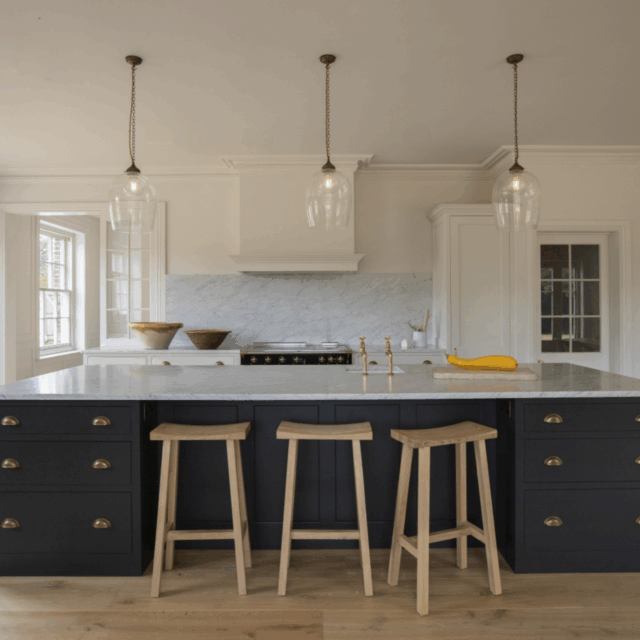
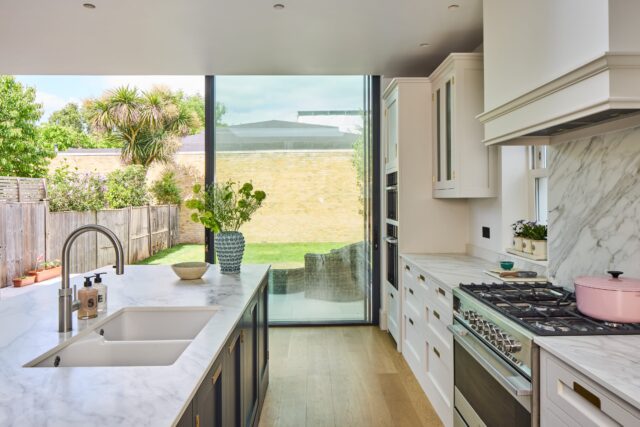
Marble is the most visually dramatic natural stone. It has an organic softness and luminosity that quartz cannot replicate. However, marble is calcium carbonate, which means it reacts to acid: citrus juice, wine, coffee, and vinegar will all etch the surface over time, creating dull marks that are distinct from stains. Honed finishes disguise this better than polished. Marble is best suited to homeowners who understand and accept this patina, or who plan to use it in lower-traffic zones such as a prep island or baker’s table rather than the primary cooking worktop.
Granite is a true igneous rock, harder than marble and naturally more resistant to etching, though it remains porous and should be sealed annually to prevent staining. Granite slabs are unique: no two pieces are identical. For clients who want natural stone on the main run with fewer maintenance concerns than marble, granite is a compelling choice. Thicknesses typically run from 20mm to 30mm, with 30mm or upstand-to-ceiling polished finishes giving the most architectural presence.
Quartzite is frequently confused with quartz (they are entirely different materials). Quartzite is a metamorphic natural stone, harder than marble, closer to granite in durability, with the look of marble. It is the premium choice for clients who want the aesthetic of Calacatta or Statuario marble with meaningfully better resistance to etching. Expect to pay a premium over standard granite but understand that you are paying for a material that performs better in a working kitchen.
Engineered quartz (brands include Silestone, Caesarstone, and Cosentino) is a composite of around 90% crushed quartz bound with resin. It is non-porous, requires no sealing, and is highly resistant to staining. It does not have the depth or natural variation of stone, and it can be damaged by prolonged heat exposure – trivets are still recommended. For clients who want a clean, low-maintenance surface, quartz is a sound and increasingly sophisticated choice, with veining patterns now much closer to natural marble than they were a decade ago.
Solid timber: oak, walnut, and American black cherry are the most common choices, brings warmth and texture that stone and engineered materials cannot provide. Timber is a living surface: it will move slightly with temperature and humidity, it needs regular oiling (typically two to three times a year), and it will develop marks, dents, and a patina over time. This is either a feature or a drawback depending on your relationship with imperfection. Many of Higham Furniture’s clients choose a combination: stone on the perimeter run and timber on a central island, which gives the best of both materials.

Is Marble Right for a Working Kitchen?
This is one of the most common questions we hear at the Higham Furniture design studio in Fulham, and the honest answer is: it depends on how you intend to use the kitchen.
Marble can absolutely work in a high-use kitchen, but only if you choose the right finish and set realistic expectations. A honed (matte) finish will conceal etching far better than polished marble, because the surface is already slightly matte and new etch marks are less visible. A polished Calacatta marble run looks extraordinary in the morning and shows every acid mark by lunchtime.
If you love the look of marble but cook heavily and want minimal maintenance, consider Calacatta quartzite as a natural alternative, or one of the better-quality veined quartz slabs. The visual result is close enough that most guests will not know the difference. The performance difference in a working kitchen is significant.
There is also a middle path: use marble in a feature position only, a quarter-round island end, a baker’s worktop insert, or a shelf above the range cooker, and pair it with a more resilient material for the primary surface. This approach lets you have the visual drama without the maintenance compromise.
Quartz vs Granite: Which Is Better for a Luxury Kitchen?
The quartz versus granite debate comes down to what you value more: the character of natural stone, or the consistency and convenience of an engineered material.
Granite is natural and unique – no two slabs are identical, the pattern cannot be predicted from a sample tile, and the depth of colour and movement in the stone is genuinely different from anything manufactured. It requires annual sealing to remain stain-resistant, and darker granites tend to show watermarks and fingerprints more readily. On a 3-metre run, granite will have visible joins; how these are booked and matched is a mark of a quality installation.
Quartz is consistent, non-porous, and requires no maintenance beyond normal cleaning. The surface is identical from one end of the run to the other, which suits kitchens with a clean, geometric aesthetic. It cannot withstand sustained high heat (placing a hot pan directly from the hob will damage the resin binder), but for normal domestic use, it performs exceptionally well.
For the kitchens Higham Furniture makes – shaker, in-frame, and handleless designs where the cabinetry and joinery are the centrepiece – either material works, provided the specification is handled well. The choice comes down to the client’s maintenance preference and their affinity for natural material versus engineered precision.
Why Does Worktop Thickness Matter?
In a premium kitchen, worktop thickness is a visible signal of quality. Standard laminate worktops are typically 28mm thick. A 20mm natural stone slab is considered mid-range; 30mm is the specification most associated with luxury kitchen design. Some projects use 40mm or even 60mm stone, typically on a waterfall island end, creating a visual statement that reads as genuinely substantial.
Timber worktops are most often supplied at 40mm for use on an island or breakfast bar, and 30mm for standard runs. Thicker timber handles heavy use better and ages more gracefully than thin sections that can cup or warp with humidity changes.
At Higham Furniture, we typically specify 30mm stone for primary runs and islands, and 40mm timber where solid oak or walnut is used on a central island. The difference in cost between 20mm and 30mm stone is measurable, but the visual difference – particularly on an island where the edge profile is visible from the room – is significant enough to justify the upgrade in most projects.
What Worktop Works Best with a Shaker or Painted Kitchen?
The award-winning Putney Painted Oak Framed Shaker Kitchen – Higham Furniture’s Designerati Award-winning project – used a combination of materials that illustrates the thinking behind pairing cabinetry with worktops well: the warm tones of painted oak frame with a honed natural stone that does not compete with the joinery detail.
This is the general principle: the worktop should complement the cabinetry, not compete with it. In a shaker or in-frame kitchen, where the door detailing and frame profiles are doing visual work, a worktop with heavy veining can feel busy. A calmer, more tonal stone, a honed Bianco Carrara, a light grey quartzite, or a warm-toned granite, allows the cabinetry to remain the focal point.
Conversely, in a handleless or modern kitchen where the cabinet faces are flat and minimal, a dramatically veined marble or bookmatched granite can carry the room without overwhelming it.
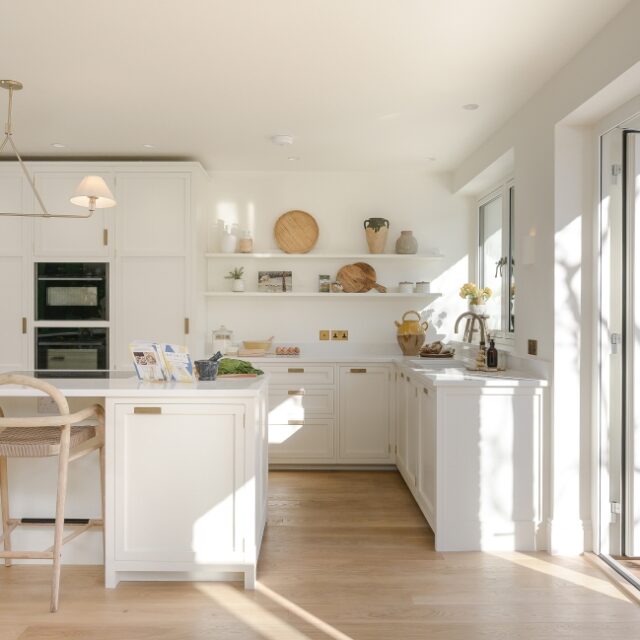
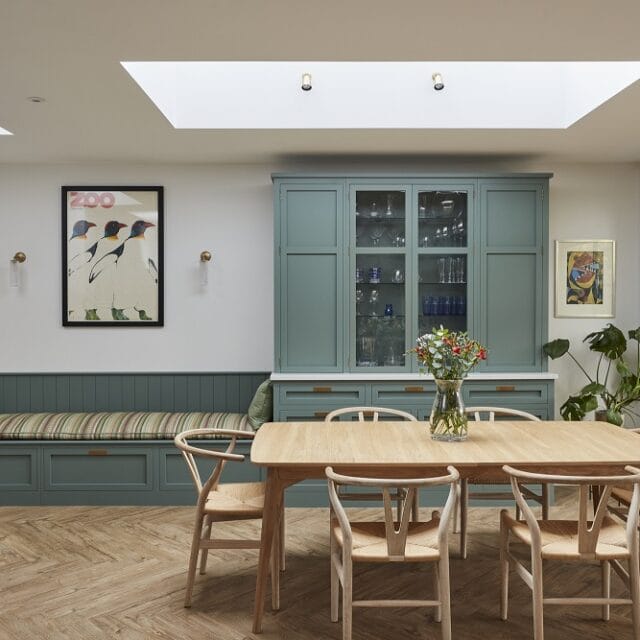
Painted kitchens in particular benefit from considering undertones. A kitchen painted in a cool grey or blue-grey often sits best with a cooler stone (Calacatta Gold, grey quartzite, white quartz). Warmer greens, cream, and off-whites pair well with warm stones, oak, and walnut.
If you are planning a handmade kitchen project, read our guide “How Long Does a Handmade Kitchen Take from First Call to Installation?” to better understand the process and expected timelines from design through to completion.
How Do You Find the Right Worktop for Your Project?
The worktop decision is best made alongside, not after, the cabinet design. At Higham Furniture, worktop material, colour, and thickness are discussed as part of the initial design conversation, because they affect everything: the island proportions, the edge profile, the lighting design, and even the hardware choices.
The 30-minute free design call at the Higham Furniture Fulham studio is the right place to start this conversation. You can come with ideas, images, or nothing but a vague sense of what you want – the call is structured around clarity, not selling. Tim Higham and the design team will talk through the materials you are drawn to, the way you actually use your kitchen, and the finishes that will work with your cabinetry and your home.
There is no obligation, no pressure, and no showroom theatre. Just a focused conversation about your project, at the beginning of a process that produces a kitchen that will serve your home for 20 to 30 years.
Book a 30-minute design call, phone, video, or in person at the Fulham studio.
Frequently Asked Questions
What is the most durable worktop for a luxury kitchen?
Quartzite and engineered quartz are generally the most durable options for a high-use kitchen. Quartzite offers the look of marble with significantly better resistance to etching, while engineered quartz is non-porous and requires no sealing. Granite is also highly durable when sealed annually. The right choice depends on your usage patterns and maintenance preferences.
Can you use marble in a family kitchen?
Yes, but with the right expectations. A honed marble finish will conceal everyday marks much better than a polished surface. Many families choose to accept marble’s natural patina as part of the character of the kitchen, particularly in homes where the kitchen is designed to feel lived-in rather than showroom-perfect. Alternatively, a veined quartzite gives a similar look with better performance.
How thick should a kitchen worktop be?
For a premium kitchen, 30mm is the standard specification for natural stone and quartz. Timber worktops are typically 40mm for islands and 30mm for standard runs. Thicker worktops, 40mm or 60mm, are sometimes used on waterfall island ends for a more architectural statement. Anything below 20mm tends to read as entry-level in a luxury context.
What worktop material suits a shaker kitchen?
Shaker kitchens, particularly painted or in-frame designs, tend to work best with worktops that complement rather than compete with the cabinet detailing. A honed natural stone in a calm colour (light grey, warm cream, or soft green) is a classic pairing. Solid timber is also an excellent choice where warmth is a priority. Heavily veined marble can work but requires careful selection so the pattern does not overwhelm the joinery.
How often does a timber worktop need oiling?
Solid timber worktops should be oiled two to three times in the first year and once or twice annually thereafter, depending on use. Danish oil, tung oil, and specialist worktop oils are all suitable. Timber that is properly maintained will last for decades and develop a rich patina. Neglected timber worktops can dry out, crack, or develop surface mould around sinks, maintenance is not optional.
Does Higham Furniture help with worktop selection?
Yes. At Higham Furniture, worktop material and specification is discussed as part of the initial design process, not as an afterthought. The design team at the Fulham studio will walk you through options that work with your cabinetry choice, your budget, and your lifestyle, and can arrange slab viewings at stone yards when the project reaches that stage.