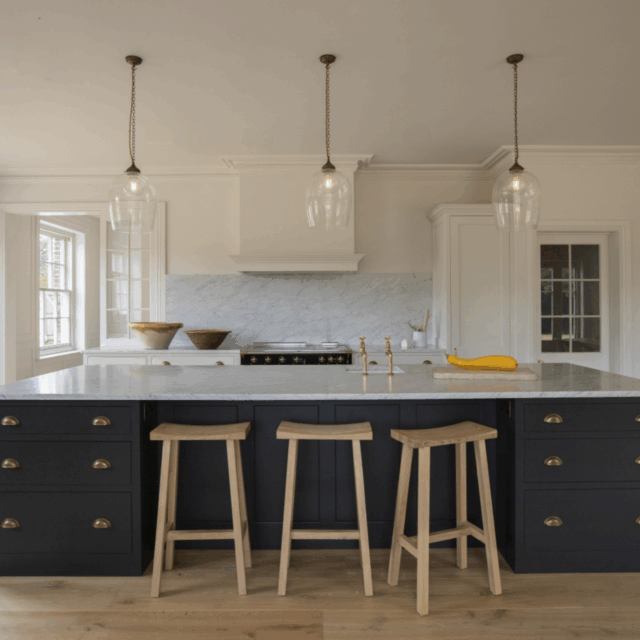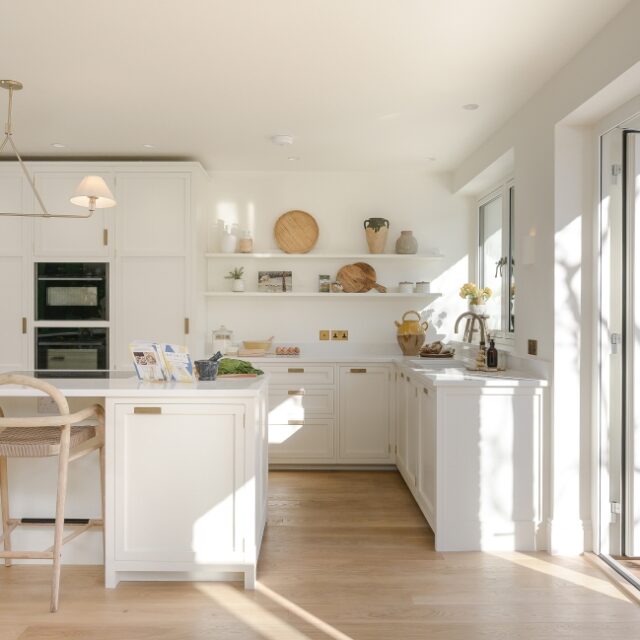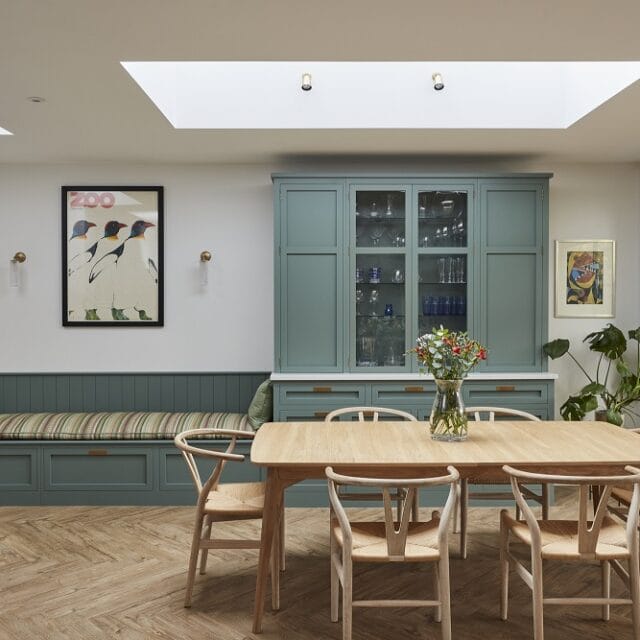
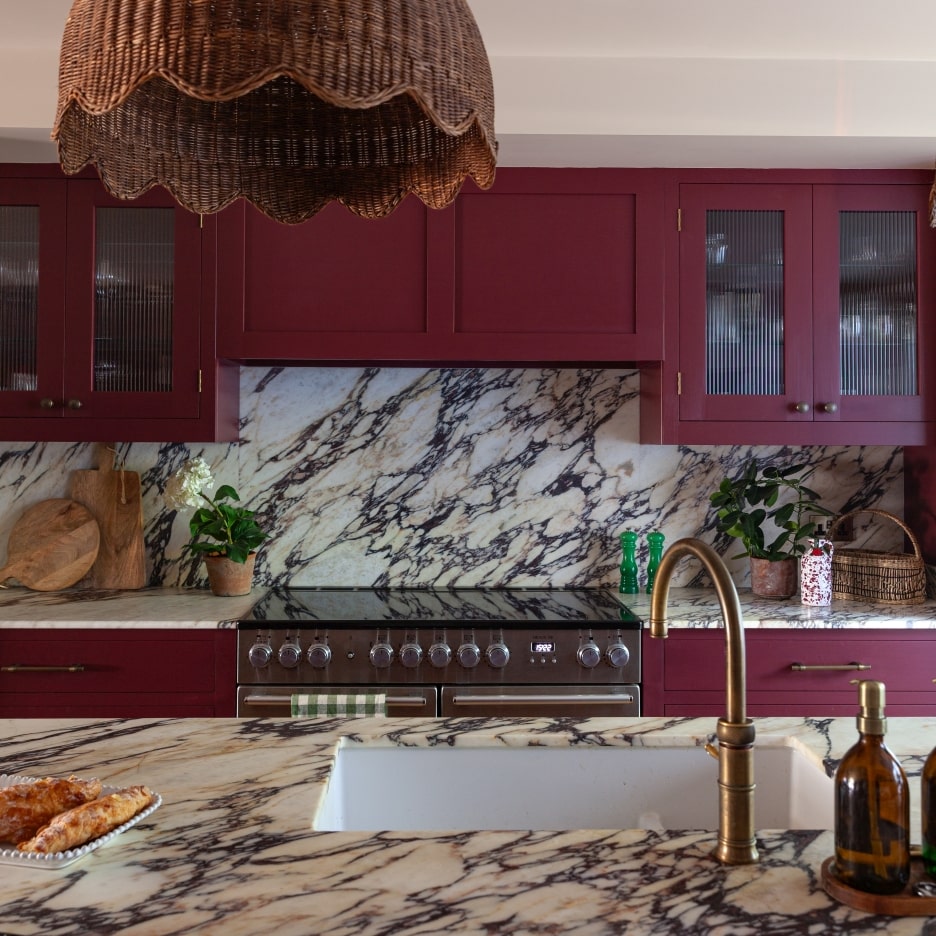
A high-quality painted kitchen, applied correctly in a controlled workshop environment, will last 15 to 25 years without needing a full repaint – and in many cases, considerably longer. The real question isn’t whether painted kitchens last. It’s whether the painting was done to a standard that makes longevity possible. At Higham Furniture, every painted kitchen is finished by hand in our Denmead workshop in Hampshire, using premium cabinet-grade paints and a preparation process that takes as long as the painting itself. The result is a finish that ages beautifully rather than one that deteriorates.
This guide addresses the most common concerns about painted kitchen durability: what causes paint to fail, what separates a lasting finish from a fragile one, and what you should realistically expect from a properly made painted kitchen over time. For a deeper understanding of what goes into designing a truly bespoke kitchen, you may find our guide to the 15 essential questions worth considering helpful.

How Long Does a Painted Kitchen Actually Last?
The honest answer: it depends almost entirely on how it was painted, not on the fact that it was painted.
A hand-painted kitchen finished with specialist cabinet paint: properly primed, applied in controlled conditions, and left to cure fully – will hold up exceptionally well under daily kitchen use. Realistically, you should expect 15 to 20 years before the finish shows meaningful wear, and in many cases the kitchen will still look excellent beyond that. The wood beneath a painted finish is typically solid timber or high-quality veneered ply, which will last decades regardless of the finish on top.
By contrast, a kitchen painted with standard decorating paint over inadequate preparation may begin to show chips and wear within 2 to 3 years. This is why the same finish “painted” can produce such wildly different results. The category is not the variable. The craftsmanship is.
For Higham kitchens, the painted finish is applied after the cabinetry is built, using premium paints that require a full cure period of up to 30 days before reaching their maximum hardness. Clients visiting the Denmead workshop during the build process will sometimes see the kitchen in various stages of this process, the time allowed for each coat to dry and cure properly is not a shortcut any serious maker can afford to take. You can also explore how our commitment to craftsmanship was recognised at the Designerati Awards, celebrating excellence in handmade kitchen design.
What Causes Painted Kitchen Finishes to Chip or Fade?
Most paint failures on kitchen cabinetry come down to one of four causes:
Inadequate surface preparation. This is the most common culprit. Paint applied over poorly sanded, uncleaned, or improperly primed surfaces will never adhere properly, regardless of the quality of the topcoat. Every coat of paint is only as strong as what it’s bonded to beneath it. Proper preparation typically involves sanding back to bare wood, applying a dedicated wood primer, and allowing each coat to dry fully before the next is applied. In a working kitchen this process might take several days. In a quality workshop, that time is built into the production schedule.
Wrong paint specification. Standard emulsions and decorating paints are not designed for kitchen cabinet surfaces. A proper painted kitchen requires specialist cabinet paint, oil-based or water-based alkyd, formulated for hardness, adhesion, and resistance to cleaning chemicals, grease, and steam. Using the wrong product is a common cut-corner that only reveals itself six months after installation.
Application in unsuitable conditions. Paint applied in cold, damp, or very humid environments will not cure correctly, leading to a finish that remains soft and vulnerable to impact. Workshop painting in a temperature-controlled environment, typically between 15°C and 22°C, ensures each coat bonds and hardens as the manufacturer intends. This is one of the genuine advantages of a workshop-made kitchen over one painted on-site at the end of an installation.
Normal wear in high-traffic areas. Even on a perfectly painted kitchen, the areas that take the most daily contact, around handles, drawer edges, and beside the sink, will show signs of wear over time. This is not a failure of the finish; it is the honest ageing of a natural material. On a well-made kitchen, this can look characterful. On a poorly made one, it looks like the kitchen is falling apart.
What’s the Difference Between a Hand-Painted and Spray-Painted Kitchen Finish?
Both methods can produce excellent results. Both can also produce poor ones. The difference lies in what each method is best suited to.
Spray painting, done professionally in a controlled spray booth, produces an extremely consistent, smooth, factory-like finish with minimal brush marks. It is the dominant method used by larger kitchen manufacturers and is well-suited to high volumes of standardised components. At its best, it is fast, even, and highly repeatable.
Hand painting, the approach used at Higham, produces a finish that is subtly different in character. Applied in multiple coats with specialist brushes or rollers, it has a very slight texture that some clients find warmer and more appropriate to a traditional or in-frame kitchen.
More practically, hand painting is better adapted to highly bespoke cabinetry, unusual moulding profiles, and custom configurations where each piece is genuinely unique. When you are making a kitchen to exact client specifications rather than pulling from a standard parts library, the flexibility of hand application is often the practical reality.
The meaningful distinction is not hand versus spray, but controlled workshop conditions versus rushed on-site touching-up. Many kitchens end up with both: factory components that are spray-finished, combined with on-site paint applied to fill chips, cover fixings, and blend joints. It is this final on-site layer that tends to fail fastest, and it’s precisely what a workshop-finished kitchen avoids.
Higham kitchens are finished entirely in the Denmead workshop before installation, which means the on-site team is fitting a completed kitchen, not finishing an incomplete one.
What Maintenance Does a Painted Kitchen Actually Need?
Considerably less than many people expect. A well-painted kitchen requires no specialist maintenance, just sensible everyday care.
Cleaning. Use a soft cloth and a mild detergent-based cleaner. Avoid abrasive scouring pads, harsh chemicals, and anything with a high acid content (citrus-based cleaners, undiluted bleach). These will dull and eventually break down the finish regardless of its quality. For most painted kitchens, a warm damp cloth with a drop of washing-up liquid is all you ever need.
Steam and humidity. Modern kitchens are typically built with extraction systems that reduce prolonged moisture exposure on cabinet surfaces. In kitchens without adequate extraction, sustained steam is the paint finish’s greatest enemy, not because it chips the paint, but because it can work its way into the wood beneath and cause the paint film to lift. The practical solution is good ventilation and avoiding direct water pooling on unprotected surfaces.
Minor touch-ups. If a chip or mark does appear, typically on a vulnerable edge or around a handle, it is entirely possible to touch it up without repainting the whole kitchen. This works best when the original paint specification is known and the touch-up paint has been stored correctly. At Higham, clients are supplied with touch-up paint as standard at the point of installation. A small chip managed early will remain a small chip. Left alone, it can spread.
Full repainting. A high-quality painted kitchen might need refreshing after 10 to 15 years if the owners want to restore a perfectly pristine appearance, or if they wish to change the colour. Because Higham kitchens are made from genuine solid timber and quality ply rather than foil-wrapped chipboard, they can be stripped and repainted, the underlying structure is designed to last far longer than any one finish.
How Do You Recognise a Well-Painted Kitchen Before You Buy?
If you are comparing painted kitchens from different makers, these are the markers worth asking about:
Where was the painting done? Workshop painting in controlled conditions consistently outperforms on-site finishing. A maker who can tell you the exact conditions in which the finish was applied knows what they are doing.
How many coats were applied? A quality painted kitchen will typically involve a minimum of 1 to 2 coats of primer and 2 to 3 coats of topcoat, 4 to 5 layers in total. Fewer coats can still work, but they leave less margin for error and tend to produce a thinner, more vulnerable finish.
What paint is specified? Ask the maker to name the paint. Specialist cabinet paints from reputable manufacturers, whether oil-based or water-based alkyd, will be something the maker is confident naming. Vague answers (“a good quality paint”) suggest the specification was driven by cost rather than performance.
Can you see finished examples? Visiting a kitchen that has been in daily use for several years is the most reliable indicator of how a finish performs. Higham’s design studio in Fulham shows examples of the firm’s work, and the team is happy to discuss the history and care of the finishes on display.
The Right Kitchen Is the One That Lasts
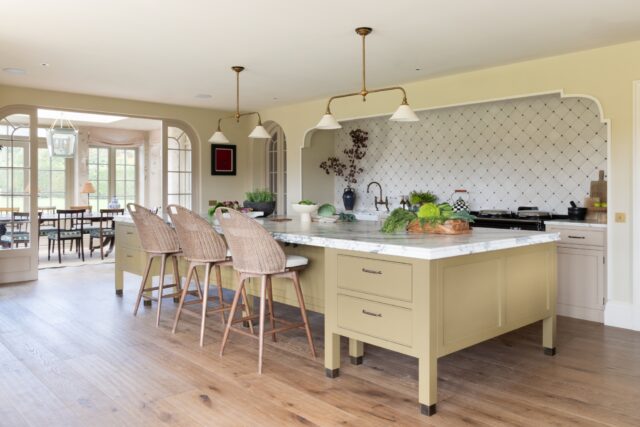
Painted kitchens have earned a reputation for high maintenance in some quarters, and that reputation belongs to poorly painted kitchens, not to the category as a whole. The Putney Painted Oak Framed Shaker Kitchen, which won Higham Furniture the British Design and Manufacturing Award at the Designerati Awards UK 2025, is an example of what painted cabinetry can achieve: a kitchen made for daily life, finished with precision, and built to improve with age rather than deteriorate.
If you are weighing up a painted finish and have questions about what a kitchen of this quality genuinely involves, from material specification to expected lifespan, a 30-minute design call with the Higham team costs nothing and commits you to nothing. It is a conversation with people who make these kitchens, not people who sell them.
Book a call by phone, video, or in person at our Fulham design studio. Come with questions.

Frequently Asked Questions
Do painted kitchens chip easily?
A well-painted kitchen made with proper preparation and specialist cabinet paint is surprisingly chip-resistant in normal daily use. The most vulnerable areas are high-traffic edges and zones around handles, but on a quality finish these will show wear rather than chip. Poor preparation, wrong paint type, or application in unsuitable conditions are the real causes of early chipping, not the painted finish itself.
How long does a painted kitchen last before needing repainting?
A professionally workshop-painted kitchen using premium cabinet paint can last 15 to 25 years before the finish needs full refreshing. Many Higham clients find the finish remains in excellent condition well beyond this. Areas that see the most contact may benefit from a minor touch-up earlier, which is why Higham supplies touch-up paint at installation.
Can I change the colour of a painted kitchen later?
Yes, and this is one of the practical advantages of a properly made painted kitchen over a wrapped or laminate alternative. Provided the underlying cabinet construction is solid timber or quality veneered ply (as it is in all Higham kitchens), the kitchen can be stripped and repainted in any colour. The structure is made to outlast any single finish.
Is hand-painted better than spray-painted?
Both methods can produce excellent, long-lasting finishes when done correctly. Hand painting is particularly well-suited to bespoke cabinetry with custom profiles and unusual configurations. Spray painting produces a very consistent, smooth result and is commonly used for standardised components. The more important factor is whether the painting was done in controlled workshop conditions, with the correct paint specification and sufficient drying time between coats.
What’s the best way to clean a painted kitchen?
A soft cloth with warm water and a small amount of mild detergent is all a painted kitchen needs day-to-day. Avoid abrasive cloths, scouring pads, and high-acid cleaners. Dry surfaces after heavy steam exposure. A painted kitchen that is cleaned gently and regularly will remain in excellent condition for many years without any specialist treatment.
How do I know if a painted kitchen has been properly finished?
Ask the maker where the painting was done (workshop vs on-site), how many coats were applied, and what paint was specified. A maker confident in their finishing process will answer all three without hesitation. Ask to see examples of work that has been in daily use for several years, aged examples are far more informative than freshly installed showroom pieces.