Shaker and traditional are two of the most used terms in kitchen design, and they are often treated as interchangeable. They are not quite the same thing, and understanding the differences helps to clarify which direction suits your home and your long-term vision for the kitchen.
At Higham Furniture, we offer both styles, and the conversation about which suits a specific home is one we have regularly. This guide explains the differences, who each style suits, and how to decide.
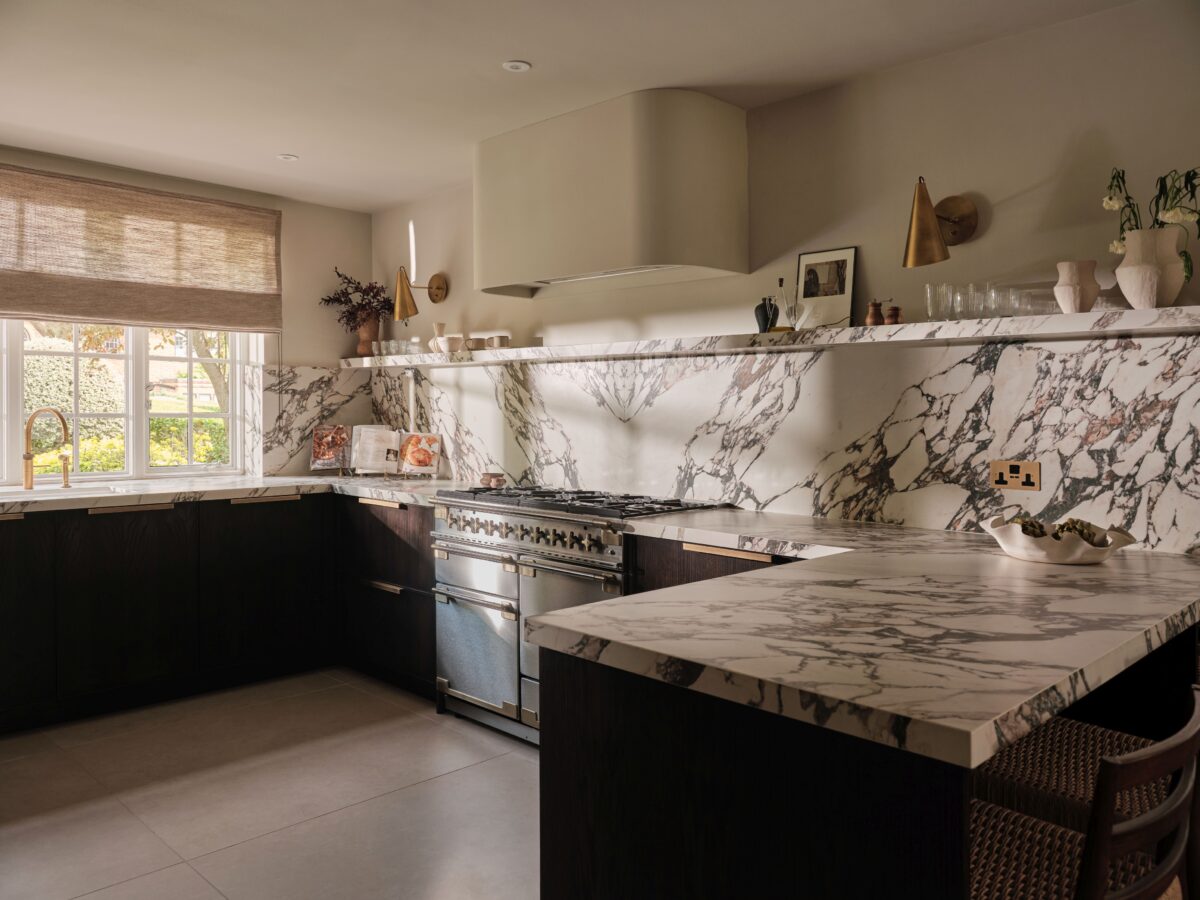
What Is a Shaker Kitchen?
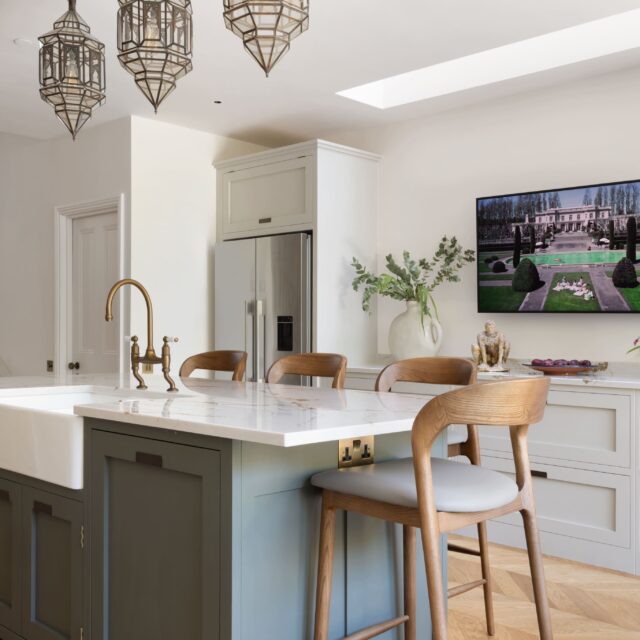
Shaker style originated in the 18th century Shaker movement in America, which prioritised function, simplicity, and craftsmanship. The defining characteristic is the recessed-panel door, a flat centre panel set within a frame of consistent proportions. The style is clean, unornamented, and versatile.
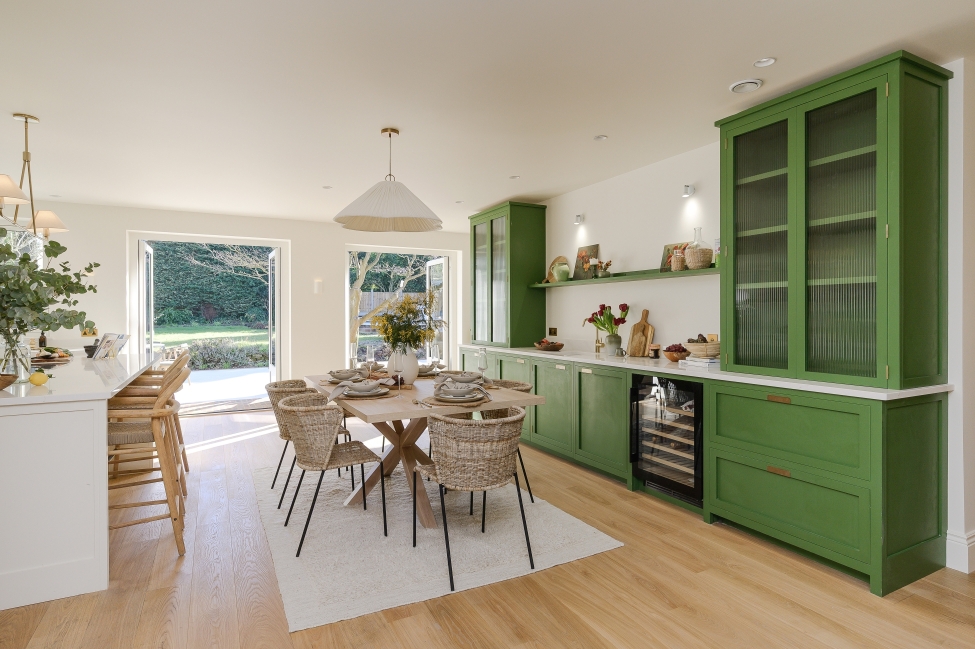
The shaker’s enduring appeal lies in its neutrality. It does not impose on a room. It works in Victorian terraced houses and modern rear extensions. It accepts a wide range of colours, from chalky off-whites to deep forest greens, without losing its character. It pairs with almost any hardware style. It is one of the few kitchen styles that can genuinely be described as timeless.
What Is a Traditional Kitchen?
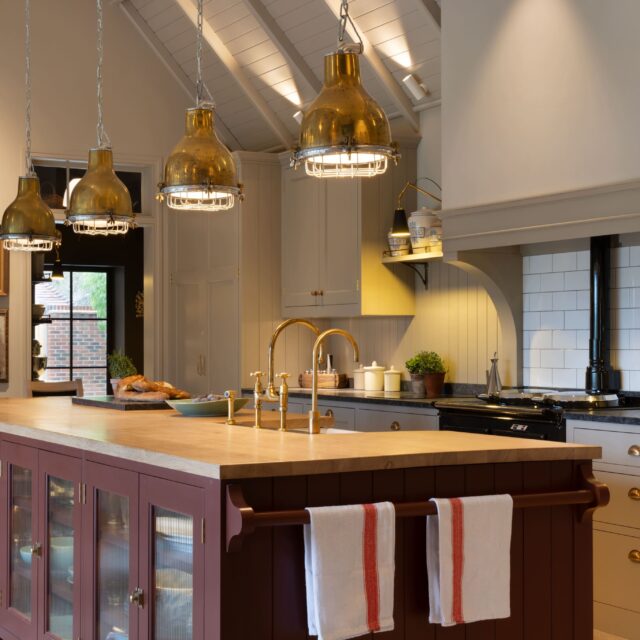
Traditional kitchen style draws on the language of English country house furniture and fine cabinetmaking. It typically features more elaborate door profiles, beaded detailing, applied mouldings, corbels, and the kind of decorative elements that make a kitchen feel like fitted furniture designed as part of a grand interior rather than a utilitarian room.
Traditional kitchens tend to feel more specific to their setting than shaker kitchens. They are most at home in larger properties with generous room proportions, high ceilings, and the architectural scale to carry decorative detail without it feeling overstated.

Key Differences in Detail and Proportion
The practical differences between shaker and traditional styles are most visible in door detail and cabinetry proportions. A shaker door has a consistent stile and rail width and a simple flat panel. A traditional door may have a bolection moulding around the panel, a beaded inner edge, or a raised and fielded panel with graduated depth.
These differences are matters of degree rather than kind. A shaker kitchen can feel refined and substantial at the premium end. A traditional kitchen can be restrained rather than ornate. The distinction is in the direction of travel: shaker works toward simplicity, traditional works toward richness of detail.
For context on how construction method interacts with style, see our guide to what an in-frame kitchen is and whether it is worth it. Both shaker and traditional styles can be built in-frame or overlay.
Which Style Suits Your Home?
The most useful guide is the architecture of your property. Shaker works well in Victorian terraced houses, period flats, modern extensions, and any property where the kitchen is intended to be present without being dominant. Traditional styles work best in larger period properties where the scale and architectural ambition of the design can be supported.
If you are uncertain which direction suits your home, the best approach is to look at the existing joinery in the property. The skirting profiles, the door mouldings, the fireplace surround, if there is one, all give clues about the architectural language of the building and the kitchen style that will feel natural within it.
Starting the Conversation with Higham
Higham Furniture offers both shaker and traditional kitchen styles, handmade at our Denmead workshop to the exact dimensions of your room. If you are at the stage of deciding which direction suits your home, book a design call and we can discuss what works for your specific property.

Frequently Asked Questions
Is a shaker kitchen more traditional than a handleless kitchen?
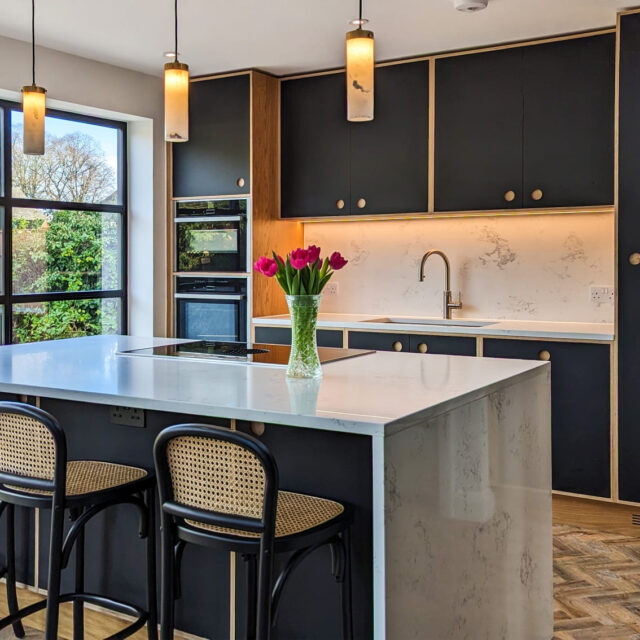
Shaker is a traditional style in origin but has become sufficiently versatile to work in both traditional and contemporary contexts. Handleless is a firmly contemporary style. The distinction between shaker and handleless is clearer than the distinction between shaker and traditional, which are closely related styles differentiated primarily by the degree of decorative detail.
Which style is more popular for London homes?
Shaker is consistently the most popular style across Higham Furniture’s London client base, particularly in Victorian and Edwardian properties in Fulham, Chelsea, Putney, and Wimbledon. Its versatility across colour, hardware, and worktop combinations makes it the most adaptable choice for London homes.
Can a traditional kitchen look contemporary?
A traditional kitchen can be made to feel contemporary through colour choice and hardware restraint. A traditional door profile in a deep navy or forest green with simple bar hardware reads very differently from the same door in cream with ornate cup handles. The style direction is traditional; the expression can be modern.
Is a shaker kitchen suitable for a large country house?
Yes, particularly a shaker kitchen with in-frame construction and generous proportions. A well-made in-frame shaker kitchen scaled to a large country house kitchen can have significant architectural presence. For a property with particularly grand proportions and extensive decorative detail, a traditional style may feel more congruent with the architecture.
What is the difference between a Higham shaker and a Higham traditional kitchen?
The differences lie in the door profile and cabinetry detail. A Higham shaker kitchen uses a clean recessed-panel door with consistent stile and rail proportions. A Higham traditional kitchen uses more elaborate door profiles and detailing drawn from the language of English country house furniture. Both are built on the same plywood carcase construction and finished to the same hand-painted standard.
Written by the Higham Furniture design team. Higham Furniture is an award-winning cabinetmaker based in Denmead, Hampshire, with a design studio in Fulham, London. Tim Higham and his team have been designing and building bespoke handmade kitchens for discerning homeowners across London and the South East.