
Period properties present one of the most interesting and rewarding briefs in kitchen design. The challenge is to create a kitchen that functions to a fully modern standard while respecting, rather than contradicting, the architectural character of a building that may be 100 to 150 years old. Get it right and the kitchen feels as though it belongs to the building. Get it wrong and it looks like an installation dropped into a house rather than designed for it.
At Higham Furniture, period properties make up the majority of our London client base. This guide draws on that experience to explain the principles that produce kitchens in period buildings that work both functionally and architecturally.

Understand the Architecture Before Choosing a Style
The starting point for a kitchen in a period property is the architecture of the specific building, not a mood board or a kitchen trend. A Victorian terraced house in Fulham has different proportions, different ceiling heights, different window sizes, and different architectural detail from an Edwardian semi-detached in Wimbledon. Both are period properties, but they are different buildings, and the kitchens that suit them are not identical.
Before any style decision is made, the design process at Higham begins with understanding the architecture. What is the character of the existing joinery? What are the ceiling heights? What light conditions does the kitchen receive? Are there original features that need to be respected or integrated? The answers to these questions shape the design.
Working with Architectural Features Rather Than Around Them
Period properties frequently have architectural features that create complications for kitchen design: chimney breasts, original alcoves, irregular wall angles, structural posts, and window positions that seem to conflict with an efficient kitchen layout.
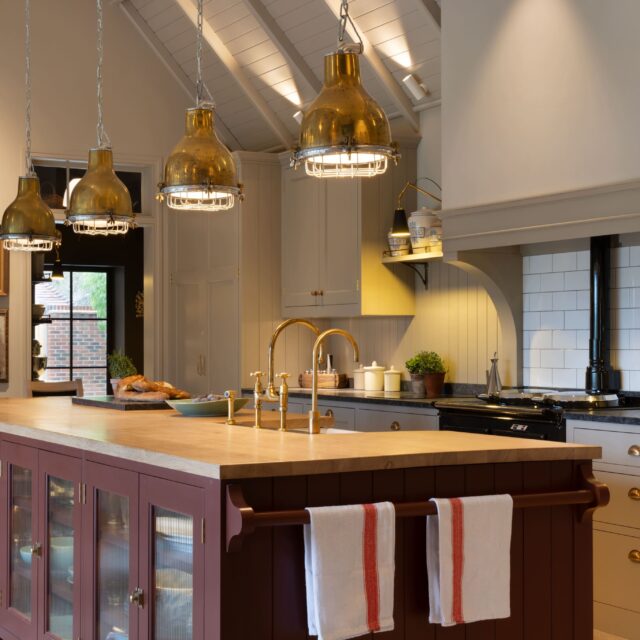
In a standard kitchen installation, these features are treated as obstacles to work around, sometimes clumsily. In a genuinely bespoke kitchen designed for the specific room, they become opportunities. A chimney breast can anchor a cooking range and create a focal point. Original alcoves can be used for larder storage or open shelving. Irregular angles can be accommodated by cabinetry made to the exact dimensions of the space rather than forced to approximate.
This is one of the clearest advantages of bespoke cabinetry in a period property: there are no standard sizes to compromise against, and no features that require ignoring.

Style Choices for Period Properties
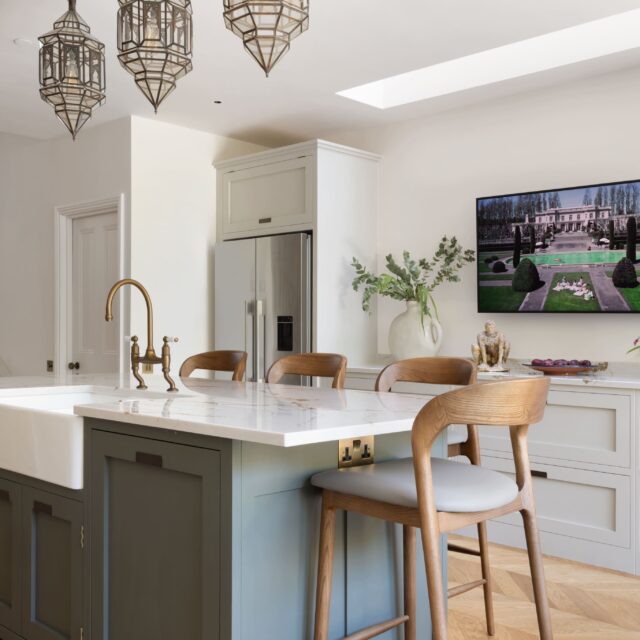
Shaker and in-frame styles are the most consistently successful choices for period properties. Both create cabinetry with the architectural depth and detail that relates naturally to the joinery language of period buildings. For a detailed comparison of these styles and how they work in different spaces, see our guide to the best kitchen style for a Victorian house.
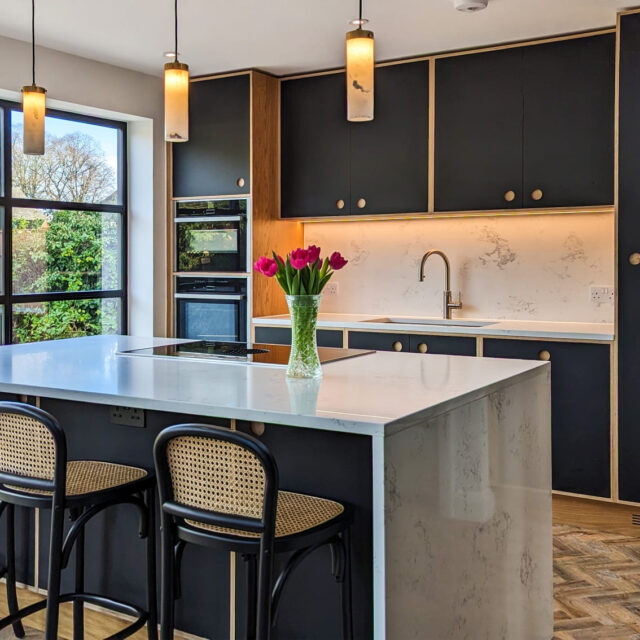
Handleless kitchens can work in period properties, particularly in rear extensions where the design intent is a deliberate contrast between old and new. In original Victorian or Edwardian footprints, the visual flatness of a handleless style can be at odds with the architectural richness of period features.
Colour in Period Properties
Colour choice in a period property should respond to the quality and direction of the light in the specific kitchen and to the broader material palette of the home. Deep, warm tones and cool chalky off-whites both work well in period kitchens. Warm mid-tones that are dependent on direct sunlight to look their best can be problematic in north or east-facing Victorian kitchens.
For guidance on colour in relation to light direction, see our article on kitchen colours for north-facing rooms.
Starting Your Period Property Kitchen with Higham
If you are planning a kitchen in a period property in London or the South East, book a design call with Higham Furniture. Home visits are available for clients who would like a designer to see the space in person.

Frequently Asked Questions
What is the best kitchen style for a period property?
Shaker and in-frame styles are the most consistently successful for period properties. Their architectural detail and construction depth relate naturally to the joinery language of Victorian and Edwardian buildings. Handleless styles can work in contemporary extensions within period properties but are harder to get right in original period footprints.
How do I incorporate original features into a kitchen design?
Through bespoke cabinetry designed around the specific room. A chimney breast can anchor a cooking range. An alcove can be fitted with a larder unit or open shelving. Original features become design assets rather than obstacles when the cabinetry is made to work with them rather than around them.
Does a kitchen in a period property need planning permission?
Generally no, unless the property is listed. Internal alterations including kitchen installation do not typically require planning consent. Listed buildings require listed building consent for any works that affect the character of the building, including kitchens, so it is always worth confirming before beginning a project.
Can you have a modern kitchen in a period house?
Yes, particularly in contemporary extensions. The most successful approach is to design the kitchen with awareness of the architectural context rather than ignoring it. A kitchen that responds to the character of the building, even if contemporary in specification, will feel more appropriate than one designed without reference to it.
How do I balance original features with a modern kitchen layout?
Start with the features and design around them. An original range opening, a chimney breast, or a run of original flagstones can anchor the kitchen design. A layout designed in response to these features will feel more natural in the space than one that ignores them in favour of a theoretically optimal plan.
Written by the Higham Furniture design team. Higham Furniture is an award-winning cabinetmaker based in Denmead, Hampshire, with a design studio in Fulham, London. Tim Higham and his team have been designing and building bespoke handmade kitchens for discerning homeowners across London and the South East.