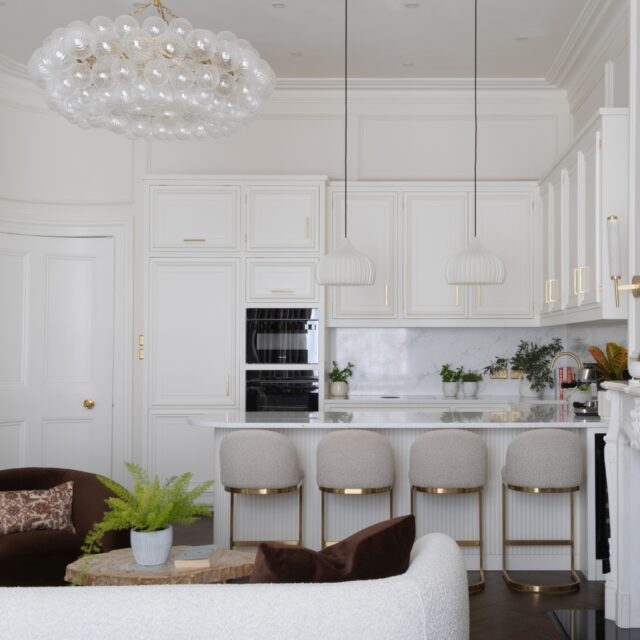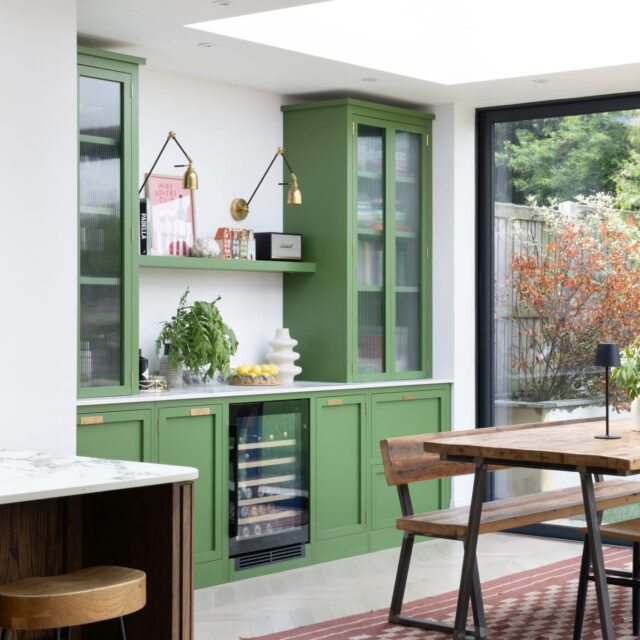
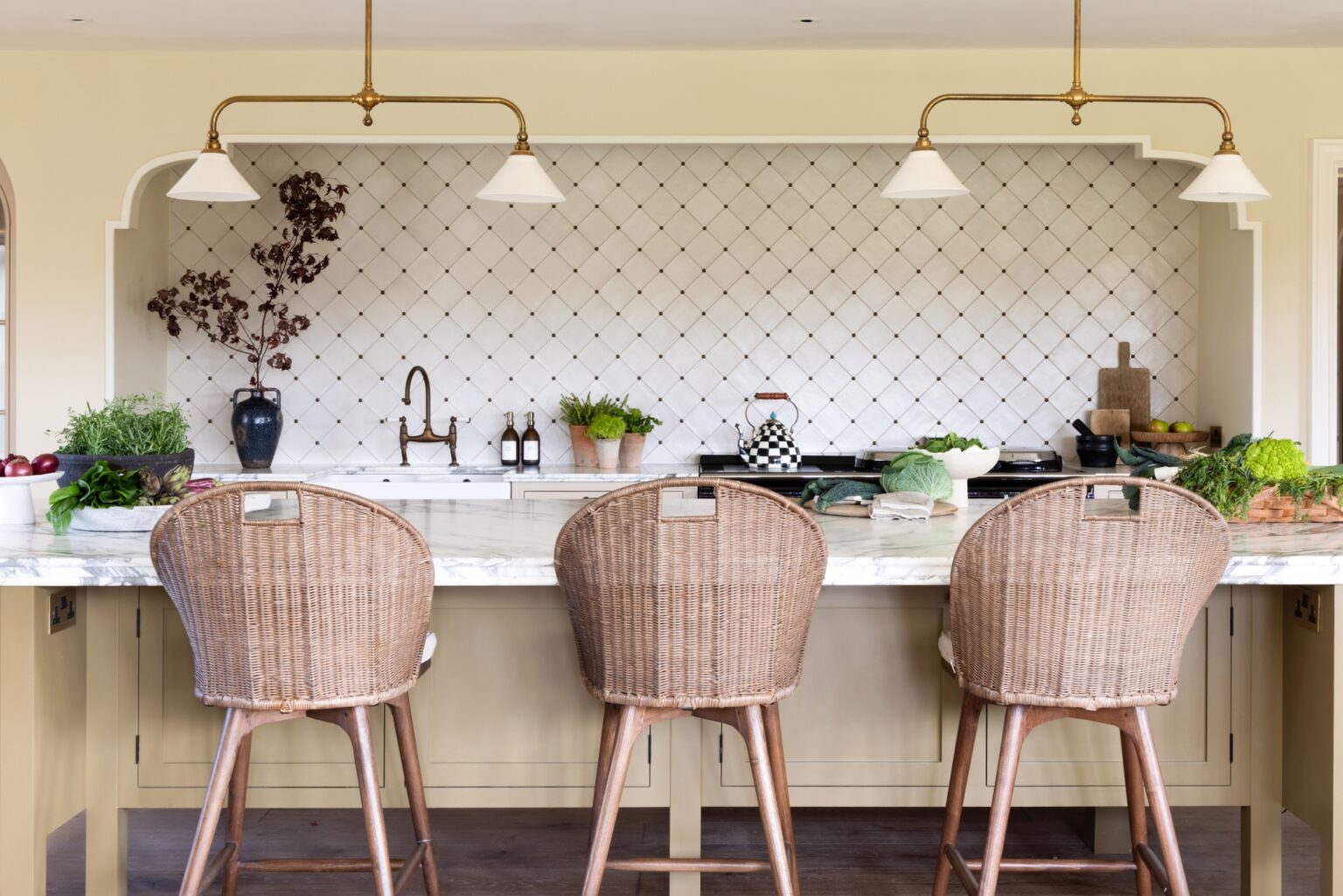
The word bespoke appears everywhere in the kitchen industry. It is used by companies that design and manufacture their own cabinetry in dedicated workshops. It is also used by companies that select cabinets from a manufacturer’s catalogue, adjust the sizes slightly, and install them in your home. Both call the result bespoke. Only one of them is.
Understanding what bespoke actually means, and how to verify it, is one of the most useful things a buyer can do before beginning a kitchen project. At Higham Furniture, we use the word because it accurately describes how we work. This article explains what it should mean, and how to test whether a company’s use of it is genuine.

The Literal Meaning and Why It Has Been Diluted
Bespoke originally referred to goods that had been spoken for, specifically commissioned and made to order for a particular person. In tailoring, a bespoke suit is cut from scratch to an individual’s measurements. Nothing is taken from stock; nothing is adjusted to approximate a fit. The garment is made specifically for you.
In kitchen design, genuinely bespoke means the same thing. Every cabinet is designed and built to the exact dimensions of your room. There are no standard sizes being adapted. There are no filler strips filling gaps between units and walls. Every proportion, every junction, every detail is specific to your space.
The dilution of the word began when kitchen retailers realised it was commercially valuable. Made-to-measure, which involves selecting from a range of standard unit widths and heights, began to be described as bespoke. Semi-custom ranges, where standard carcases are fitted with custom door fronts, were marketed as bespoke. The word lost its precision.
What Genuinely Bespoke Kitchen Design Involves
A genuinely bespoke kitchen begins with a blank sheet. The designer does not open a catalogue and select units. They measure your room, understand your priorities, and design cabinetry to suit your specific space. This might mean a run of base units at a non-standard depth to allow for an architectural feature. It might mean a corner cabinet designed around an existing chimney breast. It might mean an island scaled precisely to the proportions of your kitchen rather than built to the nearest available stock size.
The construction follows from the design. At Higham Furniture, every cabinet carcase is cut, assembled, and finished at our workshop in Denmead, Hampshire. The doors, drawers, and frames are made to the measurements of that specific cabinet, in that specific kitchen, for that specific client. Nothing is taken from a warehouse. For more on what this means in practice, see our guide to the questions to ask any kitchen maker before you commission.
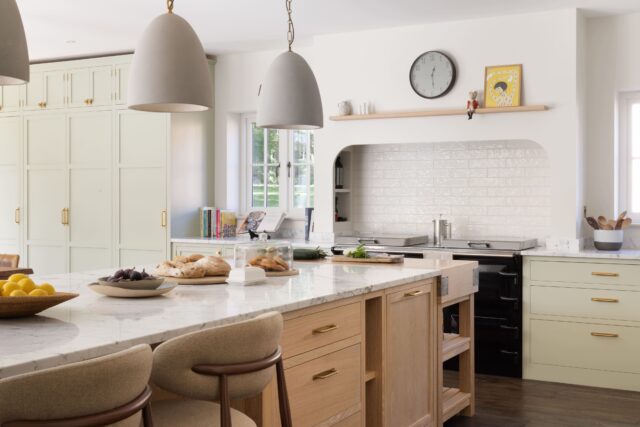
Made-to-Measure Is Not the Same as Bespoke
Made-to-measure kitchens involve selecting from a range of standard cabinet widths, typically in 100mm increments, and combining them to fill your space as closely as possible. Where units don’t align with walls or corners precisely, filler strips are used to close the gaps.
This is a legitimate product at a lower price point, and it suits many homes well. But it is not bespoke. The fundamental distinction is this: in a made-to-measure kitchen, the room adapts to the cabinet range. In a genuinely bespoke kitchen, the cabinetry is designed around the room.
The presence of filler strips is one of the clearest signs that a kitchen is not genuinely bespoke. At Higham Furniture, filler strips are not used because they are not needed. Every cabinet is made to the exact dimension required. For more on this, see our article on why bespoke kitchens have no filler strips.
How to Verify Whether a Kitchen Is Genuinely Bespoke
Ask the company whether they manufacture their own cabinets or buy them in. A genuine cabinetmaker will answer directly. Ask whether you can visit their workshop. Ask what happens in rooms with unusual dimensions or awkward features. Ask whether filler strips are used.
The answers reveal whether the word bespoke is being used accurately or aspirationally. A company that manufactures nothing and buys all its cabinetry from a third-party supplier is not a bespoke kitchen maker, whatever language it uses in its marketing.
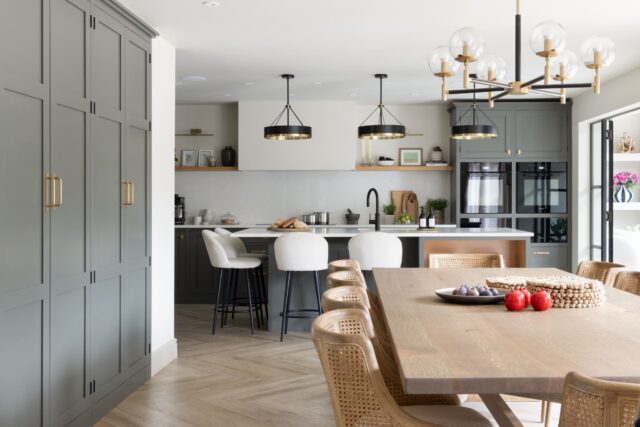
Why It Matters for Your Project
The difference between genuinely bespoke and made-to-measure has practical consequences. A bespoke kitchen fits your room perfectly, handles unusual dimensions without compromise, and gives you full control over every proportion and detail. A made-to-measure kitchen is installed in your room to a reasonable approximation of fit.
For a kitchen investment of £50,000 or more, the difference is significant. The kitchen that fits your room exactly, built from materials chosen for longevity rather than production efficiency, represents a fundamentally different value proposition from one assembled from stock components. For context on what this means over the lifespan of a kitchen, see our article on what makes a kitchen last 30 years.
Starting with Higham Furniture
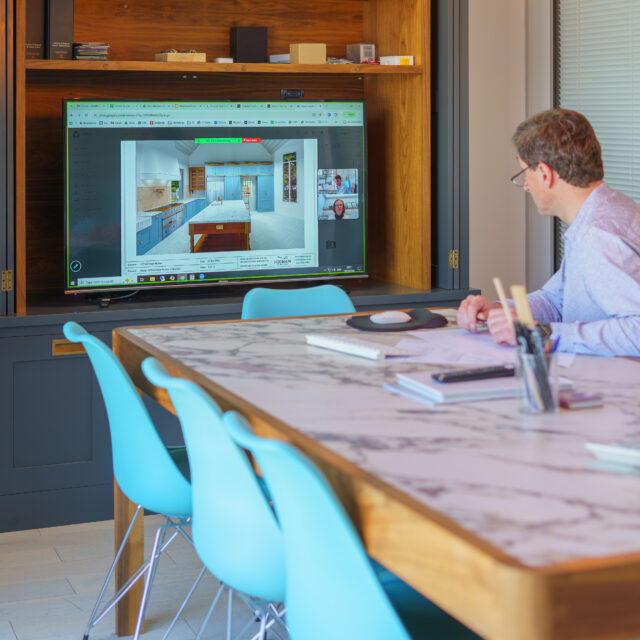
Higham Furniture designs and handcrafts genuinely bespoke kitchens from a studio in Fulham and a workshop in Denmead, Hampshire. The process begins with a private 30-minute design call. There is no showroom, no standard range, and no catalogue. Every kitchen starts with your room.
If you are at the stage of evaluating whether a company’s use of the word bespoke matches the reality of how they work, book a design call and ask us directly.
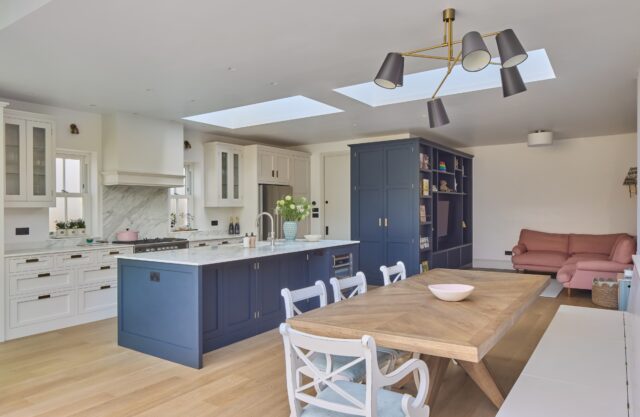
Frequently Asked Questions
Is bespoke the same as made-to-measure in kitchen design?
No. Made-to-measure means standard cabinet sizes are selected and adjusted to fill your space as closely as possible, with filler strips used to close gaps. Bespoke means every cabinet is designed and built from scratch to the exact dimensions of your room. Higham Furniture builds every kitchen to bespoke standards. No standard sizes, no filler strips.
How do I know if a kitchen company is genuinely bespoke?
Ask whether they manufacture their own cabinets and where. Ask to visit the workshop. Ask what they do in rooms with unusual dimensions or awkward architectural features. Ask whether filler strips are used. A genuine bespoke cabinetmaker will answer all of these directly and confidently.
Why do so many kitchen companies use the word bespoke?
Because it is commercially valuable. The word has been stretched to cover everything from fully handmade cabinetry to slightly adjusted standard units. Buyers who understand the distinction are better placed to evaluate whether a company’s use of the term reflects the reality of their product.
Does bespoke mean more expensive?
Genuinely bespoke cabinetry, designed and built specifically for your room, costs more than standard or made-to-measure alternatives because it involves more design time, more skilled labour, and more material precision. At Higham Furniture, the absence of a showroom means overhead savings that are passed directly to clients, making the value comparison more competitive than it might appear.
What is the main visual difference between a bespoke and a made-to-measure kitchen?
In a made-to-measure kitchen, filler strips are used where cabinets meet walls or where standard unit widths leave gaps. In a genuinely bespoke kitchen, cabinetry meets the walls and architectural features of the room exactly because it was designed and built specifically for that space. The absence of filler strips is one of the clearest quality signals in a finished kitchen.
Written by the Higham Furniture design team. Higham Furniture is an award-winning cabinetmaker based in Denmead, Hampshire, with a design studio in Fulham, London. Tim Higham and his team have been designing and building bespoke handmade kitchens for discerning homeowners across London and the South East.