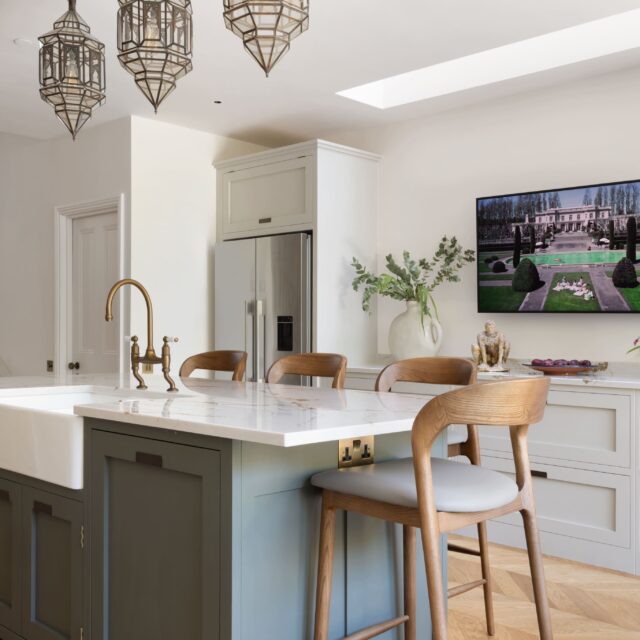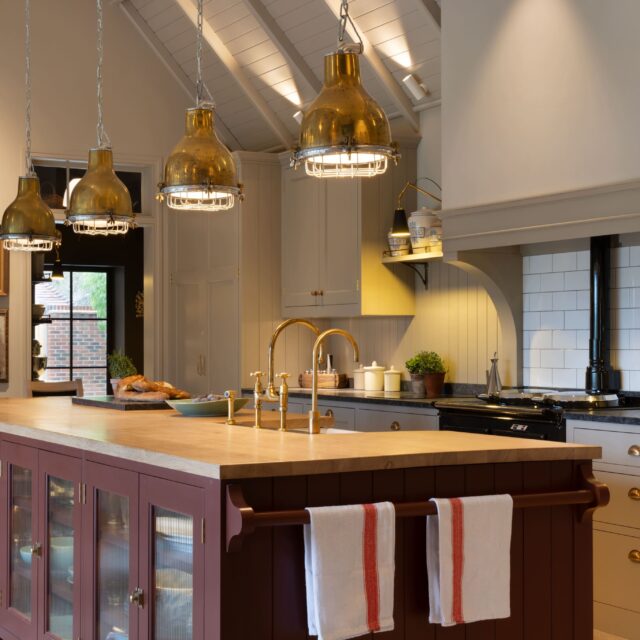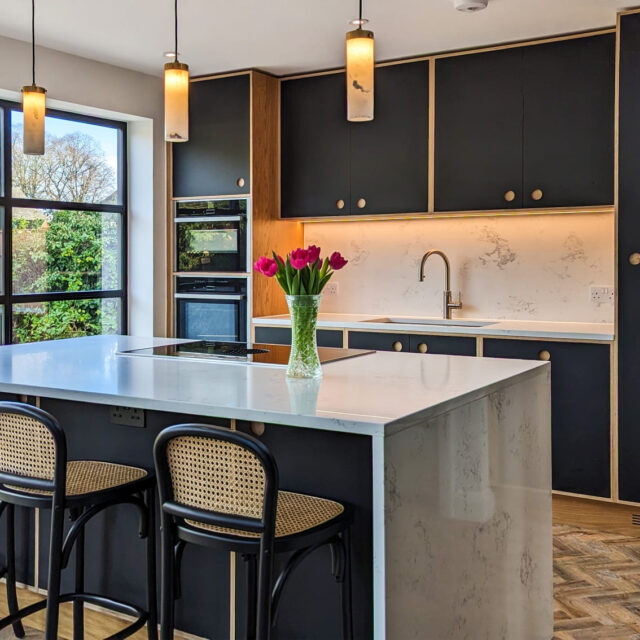

Handmade and fitted are two words that appear constantly in kitchen marketing, often used interchangeably, occasionally used together. They do not mean the same thing, and understanding the difference helps explain why two kitchens that look broadly similar in photographs can differ enormously in quality, longevity, and value.
At Higham Furniture, every kitchen we make is both handmade and fitted, but the handmade part is what distinguishes us. This article explains what each term actually means and why the distinction matters when you are making a significant investment in your home.

What Does Fitted Mean?
A fitted kitchen is one where cabinetry is built into the room rather than freestanding. The units are fixed to walls and floors, integrated with appliances, and designed to work within a specific space. This is the standard model for modern kitchen installations across all price points, from flat-pack to handmade.
Fitted, in other words, describes how a kitchen is installed rather than how it is made. A flat-pack kitchen bought from a high street retailer and assembled on site is a fitted kitchen. So is a fully bespoke kitchen handcrafted in a dedicated workshop. The word tells you about the relationship between the cabinets and the room, not about the quality of the cabinetry itself.
What Does Handmade Actually Mean?
Handmade is where the meaningful distinction lies, and where the term is most frequently misused. In its genuine sense, handmade means the cabinetry is produced by skilled craftspeople using workshop techniques rather than factory automation. Joints are cut by hand or by machine under direct human control. Frames are assembled, checked, and fitted individually. Painted finishes are applied by hand rather than sprayed by machine in a production line.
The practical implications are significant. Handmade construction allows for the kind of precision and individual attention that factory production cannot replicate. A handmade cabinet can be built to exact non-standard dimensions. Details can be refined in response to what the material does. Painted finishes can be built up in layers and rubbed back between coats in a way that produces a depth and quality that sprayed lacquer cannot match.
At Higham Furniture, every cabinet is made by hand at our workshop in Denmead, Hampshire. The team that makes our kitchens are cabinetmakers and joiners, not assembly operatives. For more on what that means for a finished project, see our guide to what questions to ask when choosing a kitchen maker.

The Difference in Materials
Handmade and factory-made kitchens also differ in the materials used for cabinet construction. Factory-produced kitchens at all price points, including those sold in premium showrooms, typically use MDF (medium-density fibreboard) for cabinet carcases because it is consistent, easy to machine at volume, and cheaper than alternatives.
Handmade kitchens built to a higher standard use plywood, typically oak-veneered, for cabinet carcases. Plywood is structurally superior. It is more resistant to moisture, holds fixings more reliably, and is considerably more durable across the lifespan of a kitchen. It is also heavier and more expensive to work with, which is why production-line kitchens avoid it.
Higham Furniture uses oak-veneered plywood throughout. The choice reflects a commitment to longevity rather than production efficiency. For more on how material choice affects how long a kitchen lasts, see our article on what makes a kitchen last 30 years.
The Difference in Paint Finish
Paint finish is one of the most visible quality differences between handmade and factory-produced kitchens. Factory-finished kitchens are sprayed in lacquer in a controlled production environment. The results are consistent and technically competent, but they lack the depth and character of a hand-painted finish.
At Higham Furniture, kitchen cabinets are hand-painted using a bespoke palette developed in partnership with Little Greene Paint Company. Paint is applied in multiple coats, rubbed back between layers, and finished by hand. The result is a surface with genuine depth, one that wears well over years rather than chipping and fading in the way that sprayed lacquer often does.

Why the Distinction Matters for Your Project
When you are evaluating kitchen companies, the question to ask is not just whether a kitchen is fitted, but how and where the cabinetry is made. A fitted kitchen made in a factory from MDF components and finished with sprayed lacquer is a very different proposition from a fitted kitchen made by hand in a dedicated workshop using plywood carcases and hand-painted finishes, even if both are described as premium.
The difference shows in the finished kitchen, in how it looks, how it feels when you open a drawer, how it wears after five or ten years, and in how much it is worth when you eventually sell your home.
Booking a Design Call with Higham
If you are at the stage of comparing kitchen companies and want to understand exactly how Higham’s kitchens are made, the best place to start is a private 30-minute design call. You can also visit our workshop in Denmead to see the construction process in person.
Book a design call here. No obligation, no sales pressure, just a direct conversation with a senior designer.

Frequently Asked Questions
Is a handmade kitchen always better than a fitted kitchen?
Handmade and fitted describe different things. A handmade kitchen refers to how the cabinetry is produced. A fitted kitchen refers to how it is installed. Most quality kitchens are both. The meaningful distinction is between handmade cabinetry produced by skilled craftspeople and factory-produced cabinetry made at volume from standard components.
What materials are used in a genuinely handmade kitchen?
A genuinely handmade kitchen built to a high standard will use oak-veneered plywood for cabinet carcases rather than MDF, solid timber for frames and face components, and hand-painted finishes applied in multiple coats rather than sprayed lacquer. These material choices add cost but significantly affect longevity and quality.
Can I tell the difference between a handmade and a factory-made kitchen by looking at it?
In photographs, the differences can be subtle. In person, they are more apparent. Look at the paint finish (hand-painted finishes have depth that sprayed lacquer lacks), the joints and junctions between components, the weight and feel of doors and drawers, and the precision of how cabinets meet walls and corners.
Are handmade kitchens only available in traditional styles?
No. Higham Furniture produces handmade kitchens across shaker, handleless, and traditional styles. The construction method, handmade at a dedicated workshop using quality materials, applies equally across all styles. For more on style choices, see our guide to handleless, shaker, and in-frame kitchens.
How do I verify that a kitchen company genuinely makes their own cabinetry by hand?
Ask to visit the workshop. A company that makes its own cabinetry by hand will welcome the visit. Ask where the cabinets are made, who makes them, and what materials are used. Ask whether you can speak to the craftspeople responsible for the work. These questions are easy to answer if the product is genuinely handmade, and difficult to answer convincingly if it is not.
Written by the Higham Furniture design team. Higham Furniture is an award-winning cabinetmaker based in Denmead, Hampshire, with a design studio in Fulham, London. Tim Higham and his team have been designing and building bespoke handmade kitchens for discerning homeowners across London and the South East.