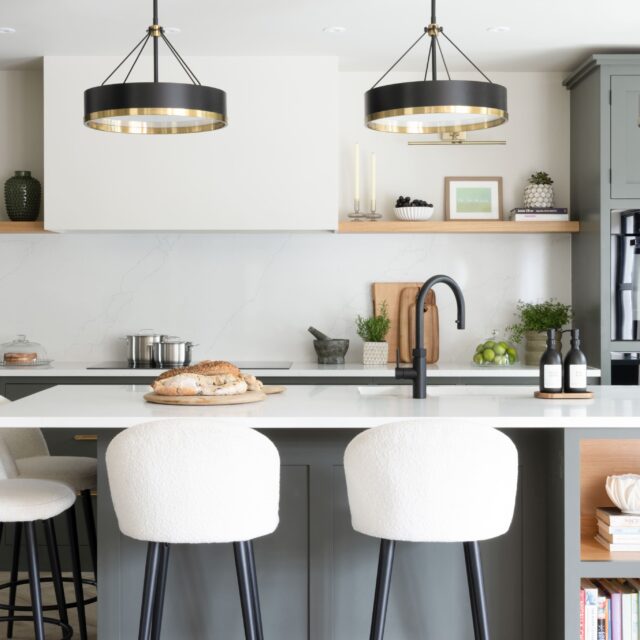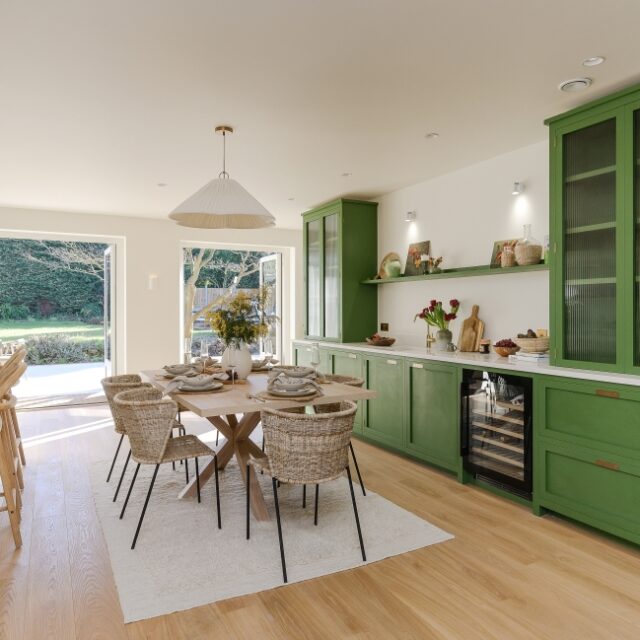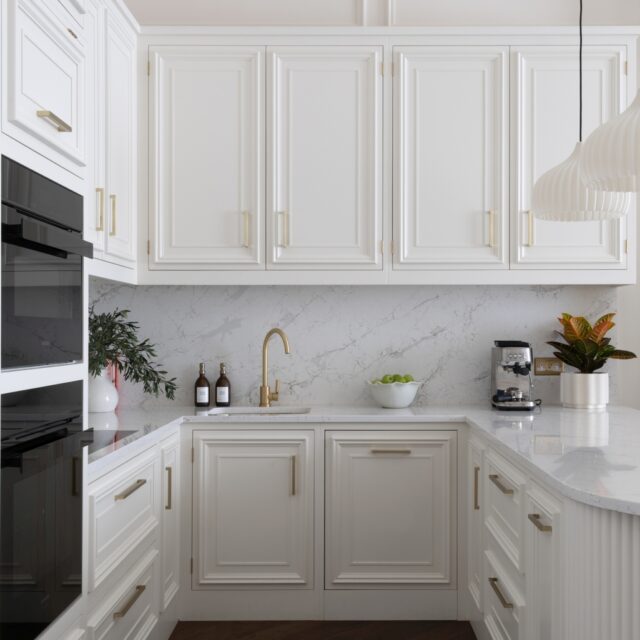

A handmade kitchen is one that has been designed, crafted, and assembled by skilled cabinetmakers working to bespoke specifications, not produced by factory machinery to standard dimensions.
True handmade kitchens are built in real workshops using traditional joinery techniques such as dovetail joints, solid timber frames, and hand-painted finishes applied by craftspeople rather than automated spray lines.
At Higham Furniture, every kitchen is designed at our Fulham studio and built in our own workshop in Denmead, Hampshire; there is no factory, no flat-pack assembly, and no outsourced production.
The term “handmade” is used freely across the industry, but relatively few kitchen companies actually deliver on it. This guide explains what genuinely handmade construction looks like, and how to tell the difference before you commit to anything.
What Does “Handmade” Actually Mean in Kitchen Cabinetmaking?
In the cabinetmaking trade, “handmade” has a specific meaning. It describes furniture that has been designed and built by a skilled craftsperson using tools, timber, and joinery knowledge, not a kitchen assembled from factory-cut panels and clicked together in a warehouse or showroom.
A genuinely handmade kitchen begins with design. The cabinetmaker or designer works closely with the homeowner to create a kitchen that is specific to that space; its exact dimensions, proportions, ceiling
height, and requirements.
Nothing is taken from a standard catalogue and adjusted to fit. Everything is made to fit from the outset.
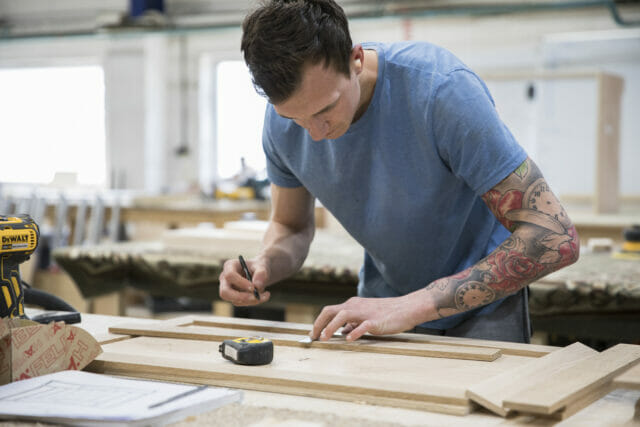
The cabinetry is then constructed in a dedicated workshop. Solid timber is cut, jointed, and assembled by skilled craftspeople.
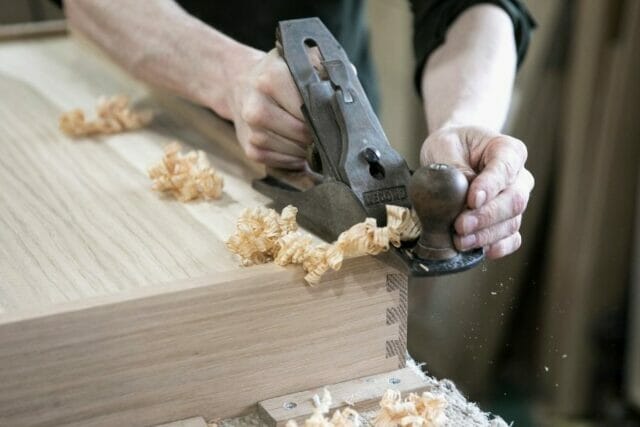
Traditional techniques such as dovetail joints, where interlocking pins and tails are cut at precise angles to create exceptionally strong corner joints, are used in drawer boxes and carcase construction.
In-frame construction, where doors sit within a structural timber frame rather than overlaying it, is a further hallmark of genuine cabinetmaking. It requires more skill and more material than overlay construction, but it produces a kitchen that is significantly more rigid, durable, and architecturally refined.
At Higham Furniture, every kitchen begins in the Fulham design studio and is built by our cabinetmakers at the Denmead workshop in Hampshire.
Tim Higham, the company’s founder, has built Higham around the principle that clients should have a direct relationship with the people making their kitchen which is rare in an industry that typically places several layers of intermediary between the buyer and the bench.
How is a Handmade Kitchen Difference from a Mass-Produce One?
The differences between a handmade kitchen and a mass-produced one are structural as well as aesthetic.
Mass-produced kitchens, including most of what is sold through high-street showrooms. are manufactured in large factories to standard dimensions.
Cabinet sizes come in fixed increments, typically every 100mm, which means they are adapted to your space rather than made for it. Filler panels, end panels, and trim pieces are used to cover the inevitable gaps.
The construction method typically uses MDF or particleboard carcases with foil or laminate finishes applied by machine. Assembly is largely a matter of combining pre-cut components.
A handmade kitchen is built the other way around. The space is measured first, and the kitchen is designed and manufactured specifically for it.
Cabinet dimensions are not constrained by factory line increments, they are determined by the room and the brief.
The materials are different too: Higham Furniture builds with oak-veneered plywood carcases rather than MDF, which is more dimensionally stable, holds fixings more securely, and is substantially more resistant to moisture over the lifetime of the kitchen.
Paint finishes also tell the story clearly. Factory kitchens use spray-applied vinyl wraps or lacquers applied en masse, they cannot be matched, repaired, or customised with the same precision as a hand-applied finish.
A hand-painted kitchen uses premium paints, applied in controlled conditions by skilled painters, in the exact colour chosen by the client for that specific project.
The result is a kitchen that has been made for one specific home, not one that has been adjusted to fit it.
What Are the Signs of a Genuinely Well-Made Handmade Kitchen?
If you are comparing kitchen companies and trying to assess whether a “handmade” claim holds up, there are several things worth examining closely.
Dovetail joints in drawer boxes.
Open a drawer and look at the corner joints. Genuine dovetail joints, the interlocking pin-and-tail design used by fine cabinetmakers for centuries are a reliable indicator of handmade craftsmanship. Factory kitchens typically use cam-lock or stapled construction in drawer boxes because they are faster and cheaper to produce.
In-frame or face-framed construction.
Ask whether the doors sit within a structural timber frame (in-frame) or overlay the carcase (frameless). In-frame construction demands greater precision, more material, and more skilled labour but it produces a more
structurally sound, better-proportioned result. It is the hallmark of traditional fine cabinetmaking.
Solid timber and plywood, not MDF.
Ask what the carcases and frames are made from. Premium handmade kitchens use solid timber for face frames and oak-veneered plywood for carcases. MDF is common in factory production; it is cheaper, heavier, and less durable, particularly in the humid conditions kitchens endure over 20 or 30 years.
Truly bespoke dimensions.
Ask whether every cabinet is made to measure for your specific space, or adapted from a standard range. A genuinely bespoke kitchen will have no filler panels, the cabinetry will meet the walls cleanly because it was built to those precise measurements from the start.
Access to the workshop.
A genuine cabinetmaker will invite you to see their workshop and, in many cases, to
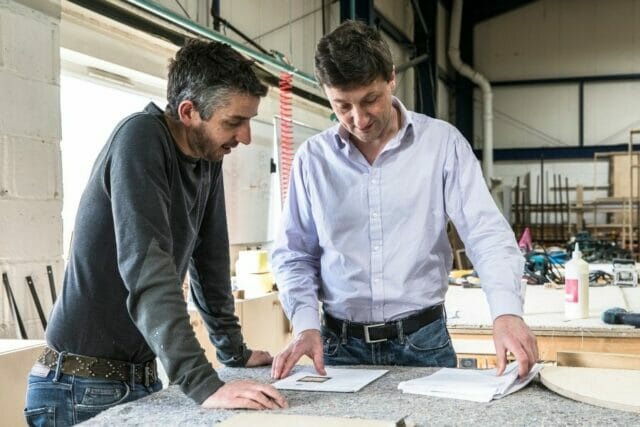
see your own kitchen being built. At Higham Furniture, clients can visit the Denmead workshop in Hampshire at any point during production. Showroom-based brands typically cannot offer this because their manufacturing is done offsite by third parties they have no direct relationship with.
Why Are So Many Kitchens Labelled “Handmade” When They Aren’t?
The term “handmade” is not regulated in the kitchen industry. Any brand can use it, regardless of how their kitchens are actually produced. This makes it a marketing claim as much as a manufacturing
description, and it places the burden of scrutiny squarely on the buyer.
The Federation of Master Builders and the British Woodworking Federation both provide guidance on what to look for when vetting a craftsperson or
cabinetmaker, but there is no official classification system for “handmade” kitchens in the UK.
The phrase is used to describe everything from genuinely workshop-crafted furniture to kitchens assembled by hand from factory-produced components, a distinction that matters enormously when you are making a long-term investment.
What you can look for is evidence. A genuine cabinetmaker will be able to show you their workshop, name the joinery techniques they use, explain their materials in detail, and connect you directly with the
people who will build your kitchen. They will not rely solely on brochure photography and showroom display models as their proof of quality.
Higham Furniture won the British Design & Manufacturing Award at the Designerati Awards UK 2025 for the Putney Painted Oak Framed Shaker Kitchen — an industry accolade awarded on the basis of genuine design
and manufacturing excellence, not marketing.
The company holds 80 reviews on Houzz and 22 on Google, from clients who have been through the full design, build, and installation process. Reviews that reference the workshop experience, specific craftsmanship details, or the direct relationship with the making team are far more reliable than polished PR.
What Is the Difference Between “Handmade” and “Bespoke”?
These terms overlap but they are not identical, and understanding the distinction matters when you are evaluating kitchen companies.
“Bespoke” means made to a specific brief, for a specific client, in specific dimensions. A bespoke kitchen is one where nothing is taken from a standard catalogue, every element is designed and specified
for that individual project and that individual space. No two bespoke kitchens are the same.
“Handmade” refers to the method of manufacture, that the kitchen has been built by skilled craftspeople using traditional techniques and genuine materials, rather than produced by factory machinery.
The two are closely related. A genuinely bespoke kitchen almost always requires handmade production, because factory lines are designed for standard dimensions and cannot accommodate the degree of customisation
that bespoke design demands. But a handmade kitchen is not automatically bespoke if the designs are repeated from a fixed range without meaningful adaptation.
The strongest combination, and the one that Higham Furniture delivers, is a kitchen that is both genuinely bespoke in its design and genuinely handmade in its construction. That combination is rarer in the market than the marketing language suggests. Discover more of our beautifully crafted kitchens here.
How to Start the Conversation
If you are at the stage of exploring whether a handmade kitchen is right for your home, the best first step is a conversation, not a showroom visit, and not a commitment to anything.
At Higham Furniture, the starting point is a free 30-minute design call. It can be taken by phone, video, or in person at the Fulham design studio in London.
There is no obligation, no sales pressure, and no requirement to have a formed brief before the call. It is a chance to discuss your space, your timeline, and your thinking, with someone who understands what genuinely handmade kitchen-making actually involves.
Higham calls this “Clarity Before Commitment.” It is designed to help you make a better decision, whether that decision ultimately involves Higham or not. To arrange a call, visit or contact the Fulham studio directly.
Frequently Asked Questions
What makes a kitchen genuinely handmade?
A genuinely handmade kitchen is designed and built to bespoke specifications by skilled cabinetmakers using traditional joinery techniques, including dovetail joints, solid timber frames, and hand-applied paint finishes.
It is produced in a dedicated workshop, not on a factory line, and every cabinet is made to the precise dimensions of the space rather than adapted from standard modules. The making process involves real craftsmanship at every stage.
How can I tell if a kitchen company genuinely makes by hand?
Ask to see the workshop, ask what joinery techniques are used in the drawer boxes and carcases, and ask whether dimensions are truly bespoke or adapted from standard sizes.
A genuine cabinetmaker will answer these questions clearly and invite you to see work in progress. At Higham Furniture, clients are welcome to visit the Denmead workshop in Hampshire to see their kitchen being built.
What is the difference between in-frame and overlay kitchen construction?
In-frame construction means doors sit within a structural timber frame, a more demanding technique that requires greater precision and produces a more rigid, architecturally refined result.
Overlay construction means the doors cover the front of the carcase. In-frame is the hallmark of traditional fine cabinetmaking and a reliable indicator of genuine craft quality.
Is MDF acceptable in a handmade kitchen?
MDF is widely used in factory production because it is cheap and consistent to manufacture.
Premium handmade kitchens typically use solid timber for face frames and oak-veneered plywood for carcases, materials that are stronger, more dimensionally stable, and better at holding fixings over decades of use.
At Higham Furniture, carcases are built from oak-veneered plywood rather than MDF, which contributes significantly to the longevity of the finished kitchen.
Does “bespoke” mean the same thing as “handmade”?
Not exactly. “Bespoke” describes a kitchen designed to specific dimensions for a specific client, rather than drawn from a standard catalogue.
“Handmade” describes how it is built. The two are closely linked, a genuinely bespoke kitchen almost always demands handmade production, but they describe different aspects of the same process. The best kitchens are both.
How do I start the process of commissioning a handmade kitchen?
The best first step is a conversation, not a showroom visit. At Higham Furniture, we offer a free 30-minute design call by phone, video, or in person at our Fulham studio, where you can ask anything, discuss
your space and brief, and get a clear sense of what is involved.
There is no obligation to proceed and no sales pressure. We call it “Clarity Before Commitment.”
Written by the Higham Furniture design team. Higham Furniture is an award-winning cabinetmaker with a design studio in Fulham, London and a workshop in Denmead, Hampshire. Learn more.