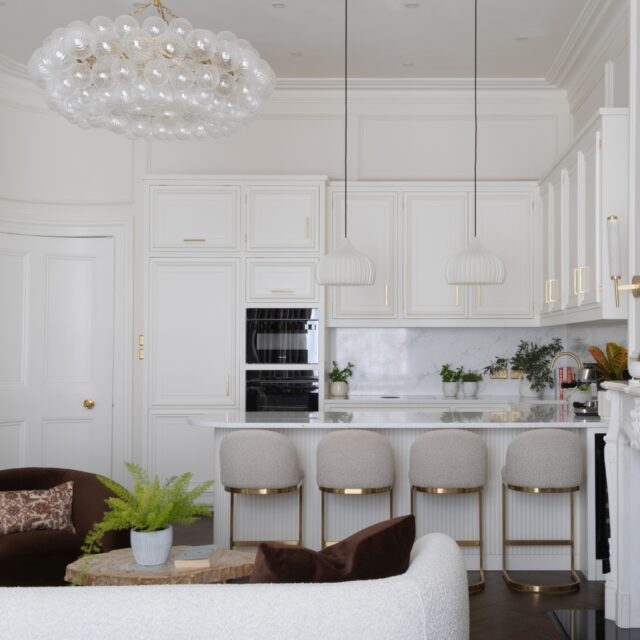

Victorian properties make up a significant proportion of London’s housing stock, and they present a specific set of design conditions that influence kitchen decisions in ways that more recently built homes do not. High ceilings, original cornicing, panelled hallways, original floorboards, and relatively compact kitchen footprints are common characteristics. So is the particular quality of light in a rear-facing Victorian kitchen, often filtered through a single sash window or a narrow return extension.
At Higham Furniture, the majority of our London clients live in Victorian or Edwardian properties across Fulham, Chelsea, Kensington, Putney, Wimbledon, and surrounding areas. This guide draws on that experience to explain which kitchen styles work best in these homes and why.

Why Architecture Should Drive Style Choice
Kitchen style decisions are often made in isolation from architectural context, based on what looks appealing in a magazine or on a mood board rather than what will sit correctly within a specific room. In a Victorian house, this approach frequently leads to kitchens that feel at odds with the building rather than part of it.
Victorian architecture is characterised by depth, texture, and detail. Cornicing has profile. Skirtings are substantial. Doors have panels. Windows have reveals. A kitchen style chosen without reference to this character may look fine in isolation but wrong in context. The best approach is to start with the architecture and work forward to the kitchen, not the other way around.
Shaker Kitchens in Victorian Houses
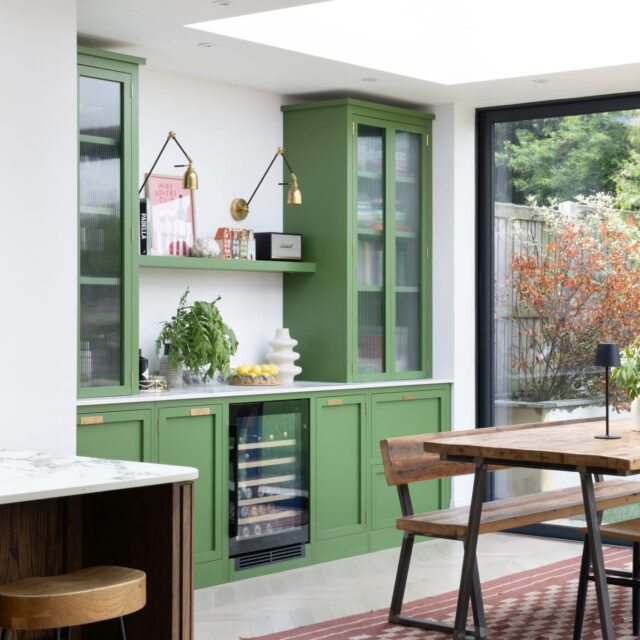
The shaker style is the most versatile and consistently successful choice for Victorian properties. Its defining features, recessed-panel doors, clean proportions, and restrained hardware, create a visual language that respects period architecture without attempting to mimic it exactly.
Shaker kitchens work in Victorian houses for several reasons. The recessed panel in the door echoes the panelled language of period joinery throughout the house. The proportions are flexible enough to suit both original Victorian kitchen footprints and modern rear extensions. The palette of colours and hardware options is wide enough to be adapted to the character of individual properties without looking generic.
At Higham Furniture, the shaker is our most popular style across our London client base, and for good reason. A well-made shaker kitchen in a Victorian house can look entirely appropriate for the building while still functioning as a fully contemporary kitchen space. For more on shaker construction and what distinguishes a well-made example, see our guide to handleless, shaker, and in-frame kitchens.

In-Frame Kitchens in Victorian Houses
In-frame construction is particularly well suited to Victorian properties because it produces cabinetry with the architectural weight and presence that period buildings demand. The visible frame on the face of the cabinet creates structural depth and shadow lines that align naturally with the detailed joinery found throughout a Victorian house.
An in-frame kitchen in a Victorian property feels like fitted furniture rather than an installed appliance. The cabinets have the permanence and solidity of built-in joinery that belongs to the building. For clients who want the highest construction standard available and who are investing in a kitchen intended to last 25 to 30 years, in-frame is the most appropriate choice for a period property.
Why Handleless Kitchens Are Harder to Get Right in Victorian Houses
Handleless kitchens deliver clean, contemporary lines with no protruding hardware. In the right space, they are architecturally striking. In a Victorian house, they require careful consideration.
The characteristic flatness of a handleless kitchen front can read as thin and at odds with the textural richness of period architecture. Where a shaker or in-frame kitchen adds depth and detail that complements original features, a handleless kitchen can create a visual discontinuity, particularly in original Victorian kitchen spaces with substantial cornicing and period joinery elsewhere in the room.
This is not an absolute rule. A Victorian house with a significant contemporary rear extension can use handleless cabinetry successfully in the new space, particularly when a deliberate contrast between old and new is part of the design intent. In the original footprint, shaker or in-frame is almost always the stronger choice.
Colour in a Victorian Kitchen
Colour choice has a significant impact on how a kitchen sits within a period property. Deep, saturated tones, forest greens, warm navies, chalky off-whites, and warm greys, tend to work well in Victorian kitchens because they align with the depth and seriousness of period architecture.
Very pale, cool tones can feel washed out in original Victorian kitchen spaces, particularly those with limited natural light. The direction the room faces, the height of the ceilings, and the scale of the windows all affect how a colour reads in practice. For more on colour in relation to light direction, see our guide to kitchen colours for north-facing rooms.
Starting Your Victorian Kitchen Project with Higham
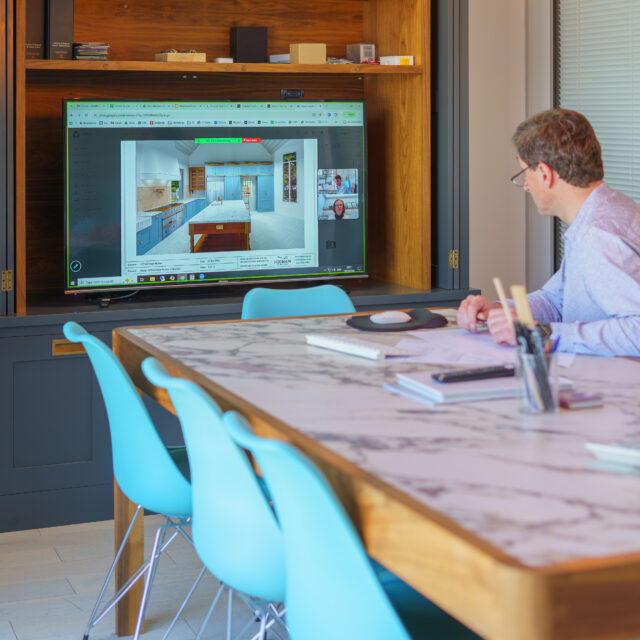
If you are renovating a Victorian property in London or the South East and want to discuss which kitchen style suits your specific home, the process at Higham Furniture begins with a private 30-minute design call. Home visits are available across London for clients who would like a designer to see the space in person before making any decisions.
Book a design call here. The conversation costs nothing and commits you to nothing.

Frequently Asked Questions
What is the best kitchen style for a Victorian terraced house?
Shaker is the most consistently successful choice for Victorian terraced houses. Its recessed panel doors echo the panelled joinery language found throughout Victorian properties, and its proportions work equally well in original footprints and rear extensions. In-frame construction adds further architectural weight that suits period buildings particularly well.
Can you have a contemporary kitchen in a Victorian house?
Yes, particularly in rear extensions where a deliberate contrast between old and new is part of the architectural intent. Handleless kitchens can work well in a contemporary extension while more traditional cabinetry is used in the original footprint. The key is making the contrast deliberate rather than accidental.
What kitchen colours work best in a Victorian house?
Deep, warm tones tend to work well in Victorian kitchens, forest greens, warm navies, chalky whites, and warm mid-greys. These tones align with the depth and character of period architecture. Very pale or cool tones can feel at odds with the warmth and substance of Victorian interiors.
Should a kitchen in a Victorian house match the rest of the original joinery?
Not necessarily match, but respond to it. A kitchen that ignores the architectural character of the building can feel jarring. A kitchen designed with awareness of the existing joinery, proportions, and material palette will sit more naturally within the home, even if it uses contemporary materials and finishes.
Is it worth investing in in-frame construction for a Victorian house?
In-frame construction is worth considering for any client who wants a kitchen with genuine architectural presence and a lifespan of 25 to 30 years. In a Victorian property, the weight and solidity of in-frame cabinetry aligns particularly well with the character of the building and the quality of original features.
Written by the Higham Furniture design team. Higham Furniture is an award-winning cabinetmaker based in Denmead, Hampshire, with a design studio in Fulham, London. Tim Higham and his team have been designing and building bespoke handmade kitchens for discerning homeowners across London and the South East.