
What Questions Should I Ask When Choosing a Bespoke Kitchen Maker?
The questions that distinguish a genuine cabinetmaker from a reseller, and why the answers matter before you commit.

The questions that distinguish a genuine cabinetmaker from a reseller, and why the answers matter before you commit.
A clear, honest guide to bespoke kitchen lead times and why the timeline is a sign of quality.

Invite team members
make it again: # Designing a Kitchen That Works for Real Life, Not Just Photography
A kitchen designed for real life looks different from a kitchen designed for a photoshoot. The most functional, liveable kitchens prioritise workflow, storage depth, durable materials, and layout logic — not just visual impact. At Higham Furniture, every kitchen begins with a conversation about how you actually use the space: how many people cook at once, where the children do homework, where the dog bowls live, and whether you host dinner parties or early-morning chaos. That conversation is what separates a kitchen worth investing in from one that photographs beautifully but frustrates you daily.
—
## Why Do So Many Beautiful Kitchens Fail in Practice?
The modern kitchen industry has a photography problem. Showrooms and design magazines are filled with immaculate, object-free surfaces — no kettle, no bread bin, no school bags — arranged under perfect lighting in spaces large enough to host a wedding. These images sell the dream beautifully. They rarely reflect real life.
The result is that buyers make decisions based on aesthetic inspiration rather than functional intelligence. They choose a kitchen style, a colour palette, a handleless profile — and trust that the rest will somehow work out. Often, it doesn’t. Common functional failures include:
– Island placements that look centred and dramatic but obstruct the natural flow between fridge, hob, and sink
– Deep base cabinets with fixed shelving that render the back 30cm unreachable and therefore wasted
– Handleless doors that require a strong pull-mechanism — fine in a showroom, infuriating at 7am with wet hands
– Open shelving that looks beautifully curated in a photoshoot and becomes a daily battle with dust in a working kitchen
– Worktops chosen for visual drama that mark, stain, or chip under normal household use
None of these are design sins in themselves. Each can work brilliantly in the right context, with the right client, in the right house. The problem is when the decision is driven by aesthetics alone, with no consideration of how the kitchen will actually be used across 20 or 30 years of daily life.
—
## What Does Designing for Real Life Actually Involve?
Designing a kitchen for real life means starting with behaviour, not beauty. Before Higham Furniture’s team discusses any door profile, paint colour, or worktop material, they want to understand the client’s domestic reality.
Practical questions that shape a Higham kitchen design include:
– How many people cook simultaneously? This determines whether an island needs seating on both sides, whether a second prep zone is necessary, and how wide the main walkways need to be. The minimum recommended clearance between parallel runs is 900mm; for two cooks working together, 1,200mm is more comfortable.
– Do you entertain regularly? Clients who host dinner parties need thought put into the link between kitchen and dining zone, the placement of the wine fridge, and whether the island works as a serving surface as well as a preparation one.
– Do children use the kitchen for homework or eating breakfast? This affects the height and depth of seating at an island or peninsula, the positioning of plug sockets, and whether a designated children’s zone should be carved out of the layout.
– What appliances do you use every day? A client who makes fresh coffee every morning doesn’t want the bean grinder in a low cupboard. A client who bakes weekly needs significantly more worktop depth than one who orders dinner most nights.
These are not exotic considerations. They are the questions a good cabinetmaker asks before drawing a single line. At Higham’s Fulham design studio, the 30-minute design call exists precisely to surface this information — well before any design commitment is made.
—
## Which Kitchen Features Make the Biggest Difference Day-to-Day?
The gap between a kitchen that looks good and a kitchen that works is usually found in a handful of high-frequency details that never appear in a photoshoot.
Drawer depth and internal organisation. Proper deep drawers — typically 200–250mm internally — with quality runners and sensible dividers transform how a kitchen functions. Everything from cutlery to pots and pans becomes accessible in a single motion. Compare this to fixed shelving in a base cabinet, where pans stack on pans and the back half of the cabinet becomes a graveyard for wedding gifts.
Waste management. Few things affect how a kitchen feels to use more than a poorly thought-out waste and recycling system. In an era of four-bin sorting, this needs to be planned for — not retrofitted into whatever space is left. In a Higham kitchen, waste is treated as a design element, not an afterthought.
Lighting at three levels. The most common lighting failure in kitchens is relying on a single overhead source. A well-designed kitchen needs task lighting directly over the worktop (typically LED strips under wall units), ambient lighting for atmosphere, and accent lighting to highlight the craftsmanship of the cabinetry itself. This matters both for functionality and for the feel of the kitchen at different times of day.
Socket placement. A kitchen with sockets in the wrong positions — or not enough of them — is a daily irritation. Sockets should be positioned at worktop level at the point of use, not clustered where the electrician found it easiest to run the cable.
Soft-close and quality hardware. This is often the difference clients notice first when moving from a builder-grade kitchen to a Higham kitchen. Soft-close drawers and doors don’t just feel satisfying — they last. The quality of hinges, runners, and pull mechanisms determines how the kitchen performs after 10 years of daily use, not just after six months.
—
## What Materials Age Well Rather Than Just Looking Good in a Catalogue?
Material selection is where the gap between a photogenic kitchen and a liveable kitchen is most keenly felt. Some of the most striking materials — dramatic marbled surfaces, ultra-matte lacquers, brushed brass fittings — require significant maintenance and can deteriorate visibly under real domestic conditions.
At Higham Furniture’s Hampshire workshop, the approach to materials is guided by a clear question: how will this look and feel after 15 years of daily use?
Hand-painted cabinetry, when properly applied over a stable substrate such as oak-veneered plywood (not MDF), is far more durable than most clients expect. Small chips and marks can be touched in by a local decorator. The colour can be refreshed over time without replacing the carcasses. This is one reason painted shaker kitchens — including Higham’s award-winning Putney Painted Oak Framed Shaker Kitchen — have become so enduring in British homes: they improve with age rather than dating.
Worktop choice is similarly governed by use rather than appearance. Solid stone, whether granite, quartzite, or high-quality quartz, wears well and is easy to maintain. Solid oak or walnut brings warmth and patinas beautifully with age — but requires sealing and occasional oiling. Sintered surfaces offer near-indestructible practicality. No single material is right for everyone; the right choice depends on how the kitchen is used, who uses it, and what the owner is willing to do in terms of maintenance.
The same logic applies to taps, handles, and hardware. Higham specifies quality suppliers because the physical experience of a kitchen — the weight of a drawer, the resistance of a tap — is part of what makes a kitchen feel worth the investment over a long period of time.
—
## How Does the Design Process Uncover What “Real Life” Looks Like for Each Client?
The honest answer is that most clients don’t know exactly what they need until someone asks the right questions. People can tell you what they like — they’ve been saving Pinterest images for months. What they find harder to articulate is how the kitchen will need to function at 7:30am on a Tuesday, or at Christmas when three generations are in the house simultaneously.
This is why Higham Furniture places so much emphasis on the conversation before the design. Tim Higham and his team use the initial design call not to sell, but to listen. The questions they ask — about lifestyle, layout habits, storage frustrations, and aesthetic preferences — form the brief that guides every design decision that follows.
The relationship doesn’t end with the design, either. Because Higham builds every kitchen in their own workshop in Denmead, Hampshire, clients maintain a direct line to the people making their kitchen. Questions about drawer configuration or worktop edge profiles can be resolved quickly, without the delay that comes from communicating through a showroom sales team to a remote factory.
—
## Ready to Design a Kitchen That Actually Works for You?
The best kitchen is not the one that photographs best. It’s the one that makes your mornings easier, your evenings more enjoyable, and your home more valuable — for the next 25 years.
If you’re beginning to think about a new kitchen and want a clearer sense of what’s possible, Higham Furniture offers a free 30-minute design call — by phone, video, or in person at the Fulham studio. No obligation, no pressure. Just a genuine conversation about what you need and whether Higham is the right maker for your project. Clarity before commitment.
[Book your free design call at higham.co.uk]
—
Written by the Higham Furniture design team. Higham Furniture has been designing and building handmade kitchens from their Denmead, Hampshire workshop since the 1980s. Winner of the British Design and Manufacturing Award at the Designerati Awards UK 2025.
—
## Frequently Asked Questions
### What is the difference between a kitchen designed for real life versus one designed for photography?
A photographic kitchen prioritises visual drama — clean surfaces, carefully curated objects, and perfect proportions for a wide-angle lens. A kitchen designed for real life prioritises workflow, storage, durability, and the specific habits of the people who use it every day. The best kitchens do both, but function must come first. At Higham Furniture, every design begins with questions about how the client actually lives, before any aesthetic decisions are made.
### How do I know if my kitchen layout is practical before it’s built?
A good kitchen designer will assess your layout against established principles: the work triangle (the path between fridge, sink, and hob), minimum clearance widths between parallel runs, and the placement of appliances relative to where you prepare food. At Higham’s Fulham studio, this analysis happens during the initial design consultation, well before any commitment is made.
### What kitchen features make the biggest difference to everyday usability?
The features clients most consistently value after living with a Higham kitchen for several years are: deep drawers with quality runners, integrated waste management, task lighting directly over the worktop, well-placed sockets, and soft-close hardware throughout. These elements rarely appear in photoshoots but define how satisfying — or frustrating — a kitchen is to use over the long term.
### Does hand-painted cabinetry hold up to daily family use?
Yes, when properly specified. Higham Furniture uses a stable oak-veneered plywood substrate rather than MDF, which reduces the risk of movement and paint failure over time. Hand-painted cabinetry can be touched in locally if minor marks occur and can be refreshed without replacing the underlying structure. Higham’s award-winning Putney Painted Oak Framed Shaker Kitchen is a practical demonstration that painted finishes can be both beautiful and robust.
### How long does a well-made kitchen last compared to a builder-grade option?
A well-made handmade kitchen, built with quality materials and hardware, should last 25–35 years before any significant refresh is needed. Builder-grade kitchens typically require replacement or significant remedial work within 10–15 years. Over a 30-year period, the higher upfront investment of a handmade kitchen often represents a lower total cost of ownership, as well as a significantly better daily experience throughout.
### What questions should I ask before my first kitchen design meeting?
Before your first design conversation, it’s worth noting: how many people cook at once, where you struggle for storage in your current kitchen, what appliances you use daily, whether you entertain and how, and roughly when your project would need to be complete. You don’t need to have everything figured out — Higham’s design call is specifically designed to help you work through these questions with an expert.
Designing a Kitchen That Works for Real Life, Not Just Photography
A kitchen designed for real life looks different from a kitchen designed for a photoshoot. The most functional, liveable kitchens prioritise workflow, storage depth, durable materials, and layout logic — not just visual impact.
I need the whole blog post without changing any words: # Designing a Kitchen That Works for Real Life, Not Just Photography
A kitchen designed for real life looks different from a kitchen designed for a photoshoot. The most functional, liveable kitchens prioritise workflow, storage depth, durable materials, and layout logic — not just visual impact. At Higham Furniture, every kitchen begins with a conversation about how you actually use the space: how many people cook at once, where the children do homework, where the dog bowls live, and whether you host dinner parties or early-morning chaos. That conversation is what separates a kitchen worth investing in from one that photographs beautifully but frustrates you daily.
—
## Why Do So Many Beautiful Kitchens Fail in Practice?
The modern kitchen industry has a photography problem. Showrooms and design magazines are filled with immaculate, object-free surfaces — no kettle, no bread bin, no school bags — arranged under perfect lighting in spaces large enough to host a wedding. These images sell the dream beautifully. They rarely reflect real life.
The result is that buyers make decisions based on aesthetic inspiration rather than functional intelligence. They choose a kitchen style, a colour palette, a handleless profile — and trust that the rest will somehow work out. Often, it doesn’t. Common functional failures include:
– Island placements that look centred and dramatic but obstruct the natural flow between fridge, hob, and sink
– Deep base cabinets with fixed shelving that render the back 30cm unreachable and therefore wasted
– Handleless doors that require a strong pull-mechanism — fine in a showroom, infuriating at 7am with wet hands
– Open shelving that looks beautifully curated in a photoshoot and becomes a daily battle with dust in a working kitchen
– Worktops chosen for visual drama that mark, stain, or chip under normal household use
None of these are design sins in themselves. Each can work brilliantly in the right context, with the right client, in the right house. The problem is when the decision is driven by aesthetics alone, with no consideration of how the kitchen will actually be used across 20 or 30 years of daily life.
—
## What Does Designing for Real Life Actually Involve?
Designing a kitchen for real life means starting with behaviour, not beauty. Before Higham Furniture’s team discusses any door profile, paint colour, or worktop material, they want to understand the client’s domestic reality.
Practical questions that shape a Higham kitchen design include:
– How many people cook simultaneously? This determines whether an island needs seating on both sides, whether a second prep zone is necessary, and how wide the main walkways need to be. The minimum recommended clearance between parallel runs is 900mm; for two cooks working together, 1,200mm is more comfortable.
– Do you entertain regularly? Clients who host dinner parties need thought put into the link between kitchen and dining zone, the placement of the wine fridge, and whether the island works as a serving surface as well as a preparation one.
– Do children use the kitchen for homework or eating breakfast? This affects the height and depth of seating at an island or peninsula, the positioning of plug sockets, and whether a designated children’s zone should be carved out of the layout.
– What appliances do you use every day? A client who makes fresh coffee every morning doesn’t want the bean grinder in a low cupboard. A client who bakes weekly needs significantly more worktop depth than one who orders dinner most nights.
These are not exotic considerations. They are the questions a good cabinetmaker asks before drawing a single line. At Higham’s Fulham design studio, the 30-minute design call exists precisely to surface this information — well before any design commitment is made.
—
## Which Kitchen Features Make the Biggest Difference Day-to-Day?
The gap between a kitchen that looks good and a kitchen that works is usually found in a handful of high-frequency details that never appear in a photoshoot.
Drawer depth and internal organisation. Proper deep drawers — typically 200–250mm internally — with quality runners and sensible dividers transform how a kitchen functions. Everything from cutlery to pots and pans becomes accessible in a single motion. Compare this to fixed shelving in a base cabinet, where pans stack on pans and the back half of the cabinet becomes a graveyard for wedding gifts.
Waste management. Few things affect how a kitchen feels to use more than a poorly thought-out waste and recycling system. In an era of four-bin sorting, this needs to be planned for — not retrofitted into whatever space is left. In a Higham kitchen, waste is treated as a design element, not an afterthought.
Lighting at three levels. The most common lighting failure in kitchens is relying on a single overhead source. A well-designed kitchen needs task lighting directly over the worktop (typically LED strips under wall units), ambient lighting for atmosphere, and accent lighting to highlight the craftsmanship of the cabinetry itself. This matters both for functionality and for the feel of the kitchen at different times of day.
Socket placement. A kitchen with sockets in the wrong positions — or not enough of them — is a daily irritation. Sockets should be positioned at worktop level at the point of use, not clustered where the electrician found it easiest to run the cable.
Soft-close and quality hardware. This is often the difference clients notice first when moving from a builder-grade kitchen to a Higham kitchen. Soft-close drawers and doors don’t just feel satisfying — they last. The quality of hinges, runners, and pull mechanisms determines how the kitchen performs after 10 years of daily use, not just after six months.
—
## What Materials Age Well Rather Than Just Looking Good in a Catalogue?
Material selection is where the gap between a photogenic kitchen and a liveable kitchen is most keenly felt. Some of the most striking materials — dramatic marbled surfaces, ultra-matte lacquers, brushed brass fittings — require significant maintenance and can deteriorate visibly under real domestic conditions.
At Higham Furniture’s Hampshire workshop, the approach to materials is guided by a clear question: how will this look and feel after 15 years of daily use?
Hand-painted cabinetry, when properly applied over a stable substrate such as oak-veneered plywood (not MDF), is far more durable than most clients expect. Small chips and marks can be touched in by a local decorator. The colour can be refreshed over time without replacing the carcasses. This is one reason painted shaker kitchens — including Higham’s award-winning Putney Painted Oak Framed Shaker Kitchen — have become so enduring in British homes: they improve with age rather than dating.
Worktop choice is similarly governed by use rather than appearance. Solid stone, whether granite, quartzite, or high-quality quartz, wears well and is easy to maintain. Solid oak or walnut brings warmth and patinas beautifully with age — but requires sealing and occasional oiling. Sintered surfaces offer near-indestructible practicality. No single material is right for everyone; the right choice depends on how the kitchen is used, who uses it, and what the owner is willing to do in terms of maintenance.
The same logic applies to taps, handles, and hardware. Higham specifies quality suppliers because the physical experience of a kitchen — the weight of a drawer, the resistance of a tap — is part of what makes a kitchen feel worth the investment over a long period of time.
—
## How Does the Design Process Uncover What “Real Life” Looks Like for Each Client?
The honest answer is that most clients don’t know exactly what they need until someone asks the right questions. People can tell you what they like — they’ve been saving Pinterest images for months. What they find harder to articulate is how the kitchen will need to function at 7:30am on a Tuesday, or at Christmas when three generations are in the house simultaneously.
This is why Higham Furniture places so much emphasis on the conversation before the design. Tim Higham and his team use the initial design call not to sell, but to listen. The questions they ask — about lifestyle, layout habits, storage frustrations, and aesthetic preferences — form the brief that guides every design decision that follows.
The relationship doesn’t end with the design, either. Because Higham builds every kitchen in their own workshop in Denmead, Hampshire, clients maintain a direct line to the people making their kitchen. Questions about drawer configuration or worktop edge profiles can be resolved quickly, without the delay that comes from communicating through a showroom sales team to a remote factory.
—
## Ready to Design a Kitchen That Actually Works for You?
The best kitchen is not the one that photographs best. It’s the one that makes your mornings easier, your evenings more enjoyable, and your home more valuable — for the next 25 years.
If you’re beginning to think about a new kitchen and want a clearer sense of what’s possible, Higham Furniture offers a free 30-minute design call — by phone, video, or in person at the Fulham studio. No obligation, no pressure. Just a genuine conversation about what you need and whether Higham is the right maker for your project. Clarity before commitment.
[Book your free design call at higham.co.uk]
—
Written by the Higham Furniture design team. Higham Furniture has been designing and building handmade kitchens from their Denmead, Hampshire workshop since the 1980s. Winner of the British Design and Manufacturing Award at the Designerati Awards UK 2025.
—
## Frequently Asked Questions
### What is the difference between a kitchen designed for real life versus one designed for photography?
A photographic kitchen prioritises visual drama — clean surfaces, carefully curated objects, and perfect proportions for a wide-angle lens. A kitchen designed for real life prioritises workflow, storage, durability, and the specific habits of the people who use it every day. The best kitchens do both, but function must come first. At Higham Furniture, every design begins with questions about how the client actually lives, before any aesthetic decisions are made.
### How do I know if my kitchen layout is practical before it’s built?
A good kitchen designer will assess your layout against established principles: the work triangle (the path between fridge, sink, and hob), minimum clearance widths between parallel runs, and the placement of appliances relative to where you prepare food. At Higham’s Fulham studio, this analysis happens during the initial design consultation, well before any commitment is made.
### What kitchen features make the biggest difference to everyday usability?
The features clients most consistently value after living with a Higham kitchen for several years are: deep drawers with quality runners, integrated waste management, task lighting directly over the worktop, well-placed sockets, and soft-close hardware throughout. These elements rarely appear in photoshoots but define how satisfying — or frustrating — a kitchen is to use over the long term.
### Does hand-painted cabinetry hold up to daily family use?
Yes, when properly specified. Higham Furniture uses a stable oak-veneered plywood substrate rather than MDF, which reduces the risk of movement and paint failure over time. Hand-painted cabinetry can be touched in locally if minor marks occur and can be refreshed without replacing the underlying structure. Higham’s award-winning Putney Painted Oak Framed Shaker Kitchen is a practical demonstration that painted finishes can be both beautiful and robust.
### How long does a well-made kitchen last compared to a builder-grade option?
A well-made handmade kitchen, built with quality materials and hardware, should last 25–35 years before any significant refresh is needed. Builder-grade kitchens typically require replacement or significant remedial work within 10–15 years. Over a 30-year period, the higher upfront investment of a handmade kitchen often represents a lower total cost of ownership, as well as a significantly better daily experience throughout.
### What questions should I ask before my first kitchen design meeting?
Before your first design conversation, it’s worth noting: how many people cook at once, where you struggle for storage in your current kitchen, what appliances you use daily, whether you entertain and how, and roughly when your project would need to be complete. You don’t need to have everything figured out — Higham’s design call is specifically designed to help you work through these questions with an expert.
Designing a Kitchen That Works for Real Life, Not Just Photography
A kitchen designed for real life looks different from a kitchen designed for a photoshoot. The most functional, liveable kitchens prioritise workflow, storage depth, durable materials, and layout logic — not just visual impact. At Higham Furniture, every kitchen begins with a conversation about how you actually use the space: how many people cook at once, where the children do homework, where the dog bowls live, and whether you host dinner parties or early-morning chaos. That conversation is what separates a kitchen worth investing in from one that photographs beautifully but frustrates you daily.
Why Do So Many Beautiful Kitchens Fail in Practice?
The modern kitchen industry has a photography problem. Showrooms and design magazines are filled with immaculate, object-free surfaces — no kettle, no bread bin, no school bags — arranged under perfect lighting in spaces large enough to host a wedding. These images sell the dream beautifully. They rarely reflect real life.
The result is that buyers make decisions based on aesthetic inspiration rather than functional intelligence. They choose a kitchen style, a colour palette, a handleless profile — and trust that the rest will somehow work out. Often, it doesn’t. Common functional failures include:
Island placements that look centred and dramatic but obstruct the natural flow between fridge, hob, and sink
Deep base cabinets with fixed shelving that render the back 30cm unreachable and therefore wasted
Handleless doors that require a strong pull-mechanism — fine in a showroom, infuriating at 7am with wet hands
Open shelving that looks beautifully curated in a photoshoot and becomes a daily battle with dust in a working kitchen
Worktops chosen for visual drama that mark, stain, or chip under normal household use
None of these are design sins in themselves. Each can work brilliantly in the right context, with the right client, in the right house. The problem is when the decision is driven by aesthetics alone, with no consideration of how the kitchen will actually be used across 20 or 30 years of daily life.
What Does Designing for Real Life Actually Involve?
Designing a kitchen for real life means starting with behaviour, not beauty. Before Higham Furniture’s team discusses any door profile, paint colour, or worktop material, they want to understand the client’s domestic reality.
Practical questions that shape a Higham kitchen design include:
How many people cook simultaneously? This determines whether an island needs seating on both sides, whether a second prep zone is necessary, and how wide the main walkways need to be. The minimum recommended clearance between parallel runs is 900mm; for two cooks working together, 1,200mm is more comfortable.
Do you entertain regularly? Clients who host dinner parties need thought put into the link between kitchen and dining zone, the placement of the wine fridge, and whether the island works as a serving surface as well as a preparation one.
Do children use the kitchen for homework or eating breakfast? This affects the height and depth of seating at an island or peninsula, the positioning of plug sockets, and whether a designated children’s zone should be carved out of the layout.
What appliances do you use every day? A client who makes fresh coffee every morning doesn’t want the bean grinder in a low cupboard. A client who bakes weekly needs significantly more worktop depth than one who orders dinner most nights.
These are not exotic considerations. They are the questions a good cabinetmaker asks before drawing a single line. At Higham’s Fulham design studio, the 30-minute design call exists precisely to surface this information — well before any design commitment is made.
Which Kitchen Features Make the Biggest Difference Day-to-Day?
The gap between a kitchen that looks good and a kitchen that works is usually found in a handful of high-frequency details that never appear in a photoshoot.
Drawer depth and internal organisation. Proper deep drawers — typically 200–250mm internally — with quality runners and sensible dividers transform how a kitchen functions. Everything from cutlery to pots and pans becomes accessible in a single motion. Compare this to fixed shelving in a base cabinet, where pans stack on pans and the back half of the cabinet becomes a graveyard for wedding gifts.
Waste management. Few things affect how a kitchen feels to use more than a poorly thought-out waste and recycling system. In an era of four-bin sorting, this needs to be planned for — not retrofitted into whatever space is left. In a Higham kitchen, waste is treated as a design element, not an afterthought.
Lighting at three levels. The most common lighting failure in kitchens is relying on a single overhead source. A well-designed kitchen needs task lighting directly over the worktop (typically LED strips under wall units), ambient lighting for atmosphere, and accent lighting to highlight the craftsmanship of the cabinetry itself. This matters both for functionality and for the feel of the kitchen at different times of day.
Socket placement. A kitchen with sockets in the wrong positions — or not enough of them — is a daily irritation. Sockets should be positioned at worktop level at the point of use, not clustered where the electrician found it easiest to run the cable.
Soft-close and quality hardware. This is often the difference clients notice first when moving from a builder-grade kitchen to a Higham kitchen. Soft-close drawers and doors don’t just feel satisfying — they last. The quality of hinges, runners, and pull mechanisms determines how the kitchen performs after 10 years of daily use, not just after six months.
What Materials Age Well Rather Than Just Looking Good in a Catalogue?
Material selection is where the gap between a photogenic kitchen and a liveable kitchen is most keenly felt. Some of the most striking materials — dramatic marbled surfaces, ultra-matte lacquers, brushed brass fittings — require significant maintenance and can deteriorate visibly under real domestic conditions.
At Higham Furniture’s Hampshire workshop, the approach to materials is guided by a clear question: how will this look and feel after 15 years of daily use?
Hand-painted cabinetry, when properly applied over a stable substrate such as oak-veneered plywood (not MDF), is far more durable than most clients expect. Small chips and marks can be touched in by a local decorator. The colour can be refreshed over time without replacing the carcasses. This is one reason painted shaker kitchens — including Higham’s award-winning Putney Painted Oak Framed Shaker Kitchen — have become so enduring in British homes: they improve with age rather than dating.
Worktop choice is similarly governed by use rather than appearance. Solid stone, whether granite, quartzite, or high-quality quartz, wears well and is easy to maintain. Solid oak or walnut brings warmth and patinas beautifully with age — but requires sealing and occasional oiling. Sintered surfaces offer near-indestructible practicality. No single material is right for everyone; the right choice depends on how the kitchen is used, who uses it, and what the owner is willing to do in terms of maintenance.
The same logic applies to taps, handles, and hardware. Higham specifies quality suppliers because the physical experience of a kitchen — the weight of a drawer, the resistance of a tap — is part of what makes a kitchen feel worth the investment over a long period of time.
How Does the Design Process Uncover What “Real Life” Looks Like for Each Client?
The honest answer is that most clients don’t know exactly what they need until someone asks the right questions. People can tell you what they like — they’ve been saving Pinterest images for months. What they find harder to articulate is how the kitchen will need to function at 7:30am on a Tuesday, or at Christmas when three generations are in the house simultaneously.
This is why Higham Furniture places so much emphasis on the conversation before the design. Tim Higham and his team use the initial design call not to sell, but to listen. The questions they ask — about lifestyle, layout habits, storage frustrations, and aesthetic preferences — form the brief that guides every design decision that follows.
The relationship doesn’t end with the design, either. Because Higham builds every kitchen in their own workshop in Denmead, Hampshire, clients maintain a direct line to the people making their kitchen. Questions about drawer configuration or worktop edge profiles can be resolved quickly, without the delay that comes from communicating through a showroom sales team to a remote factory.
Ready to Design a Kitchen That Actually Works for You?
The best kitchen is not the one that photographs best. It’s the one that makes your mornings easier, your evenings more enjoyable, and your home more valuable — for the next 25 years.
If you’re beginning to think about a new kitchen and want a clearer sense of what’s possible, Higham Furniture offers a free 30-minute design call — by phone, video, or in person at the Fulham studio. No obligation, no pressure. Just a genuine conversation about what you need and whether Higham is the right maker for your project. Clarity before commitment.
[Book your free design call at higham.co.uk]
Written by the Higham Furniture design team. Higham Furniture has been designing and building handmade kitchens from their Denmead, Hampshire workshop since the 1980s. Winner of the British Design and Manufacturing Award at the Designerati Awards UK 2025.
Frequently Asked Questions
What is the difference between a kitchen designed for real life versus one designed for photography?
A photographic kitchen prioritises visual drama — clean surfaces, carefully curated objects, and perfect proportions for a wide-angle lens. A kitchen designed for real life prioritises workflow, storage, durability, and the specific habits of the people who use it every day. The best kitchens do both, but function must come first. At Higham Furniture, every design begins with questions about how the client actually lives, before any aesthetic decisions are made.
How do I know if my kitchen layout is practical before it’s built?
A good kitchen designer will assess your layout against established principles: the work triangle (the path between fridge, sink, and hob), minimum clearance widths between parallel runs, and the placement of appliances relative to where you prepare food. At Higham’s Fulham studio, this analysis happens during the initial design consultation, well before any commitment is made.
What kitchen features make the biggest difference to everyday usability?
The features clients most consistently value after living with a Higham kitchen for several years are: deep drawers with quality runners, integrated waste management, task lighting directly over the worktop, well-placed sockets, and soft-close hardware throughout. These elements rarely appear in photoshoots but define how satisfying — or frustrating — a kitchen is to use over the long term.
Does hand-painted cabinetry hold up to daily family use?
Yes, when properly specified. Higham Furniture uses a stable oak-veneered plywood substrate rather than MDF, which reduces the risk of movement and paint failure over time. Hand-painted cabinetry can be touched in locally if minor marks occur and can be refreshed without replacing the underlying structure. Higham’s award-winning Putney Painted Oak Framed Shaker Kitchen is a practical demonstration that painted finishes can be both beautiful and robust.
How long does a well-made kitchen last compared to a builder-grade option?
A well-made handmade kitchen, built with quality materials and hardware, should last 25–35 years before any significant refresh is needed. Builder-grade kitchens typically require replacement or significant remedial work within 10–15 years. Over a 30-year period, the higher upfront investment of a handmade kitchen often represents a lower total cost of ownership, as well as a significantly better daily experience throughout.
What questions should I ask before my first kitchen design meeting?
Before your first design conversation, it’s worth noting: how many people cook at once, where you struggle for storage in your current kitchen, what appliances you use daily, whether you entertain and how, and roughly when your project would need to be complete. You don’t need to have everything figured out — Higham’s design call is specifically designed to help you work through these questions with an expert.
image.png
image.png
image.png
alt tags for images seo based for the article which I sent above
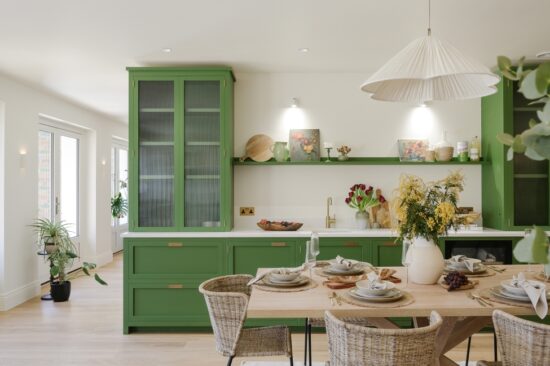
Green handmade kitchen with open shelving, wine fridge and dining table
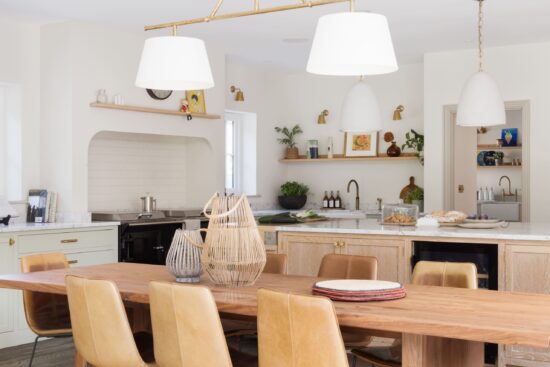
White shaker kitchen with island, pendant lighting and traditional range cooker
Classic handmade kitchen island with upholstered seating and pendant lights
tags with comas
Green handmade kitchen with open shelving, wine fridge and dining table, White shaker kitchen with island, pendant lighting and traditional range cooker, Classic handmade kitchen island with upholstered seating and pendant lights
excerpt?
A practical guide to designing a kitchen that works beautifully for everyday life, from layout and storage to durable materials, lighting and thoughtful details.

How long do painted kitchens really last? Discover what affects durability, how to spot a quality finish, and why workshop-painted kitchens age so well.
Before investing in a bespoke kitchen, asking the right questions can make all the difference. This guide outlines fifteen essential questions to help you distinguish genuine cabinetmakers from showrooms and make a confident, informed decision.

Discover the hidden long-term cost of a cheap kitchen, from early wear and failed hardware to full replacement far sooner than expected. This guide explains why a well-made handmade kitchen offers better value, greater longevity, and a more considered investment over time.

As with many of our kitchens, this one may at first glance look quite simple, but we are always aware of the importance of symmetry and balance in any of our designs. It’s not just a matter of fitting in as many cupboards and appliances as required, it’s about making the layout work harmoniously within…

A breakfast cupboard is a clever way of keeping the morning rush for breakfast a bit more organised and tidy than it might otherwise be
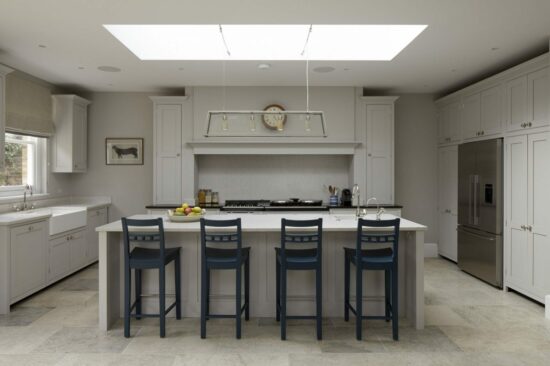
An island is a must-have for today’s kitchen. It’s not just a sociable addition, it’s a highly practical and useful feature too

23 Stylish Ways to Include Shelving in Your Kitchen